
 admin
admin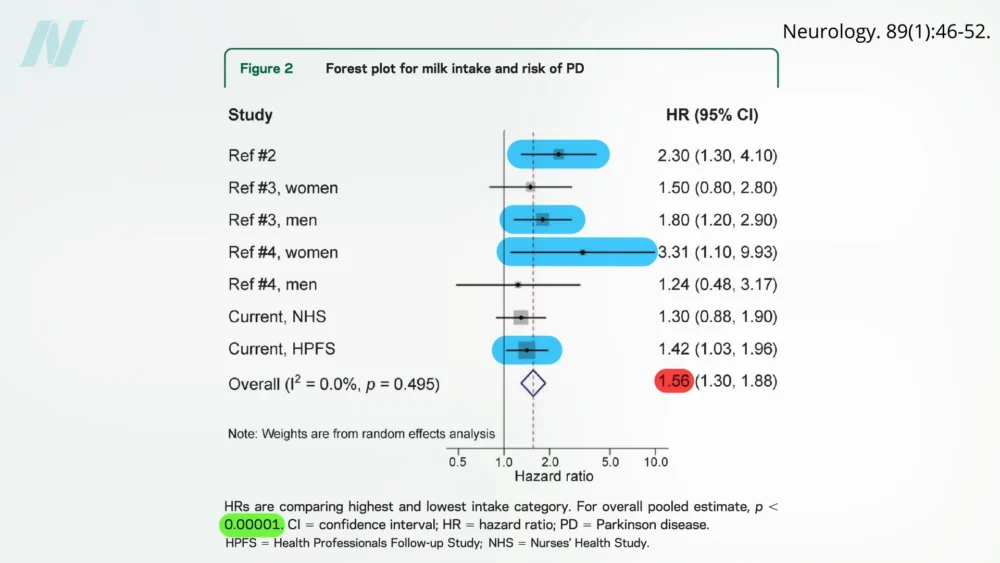
Parkinson’s disease, a relentless neurodegenerative disorder affecting millions worldwide, has long been a subject of intense scientific inquiry. While its exact etiology remains elusive, a consistent and compelling dietary association has emerged from numerous large-scale studies: dairy consumption. This dietary factor stands out as the strongest, most consistently linked food group to an elevated risk of developing Parkinson’s disease, prompting a critical examination of potential mechanisms. The scientific community is now grappling with two primary hypotheses to explain this correlation: the presence of the banned pesticide heptachlor in dairy products and the inherent properties of galactose, a sugar component of milk.
A Growing Body of Evidence Linking Dairy to Parkinson’s Disease
The association between dairy intake and Parkinson’s disease is not a recent discovery. Over the past decade, at least five major prospective studies have corroborated this link, providing robust statistical evidence. Among the most significant are the long-term observational studies conducted by Harvard University: the Nurses’ Health Study and the Health Professionals Follow-up Study. Collectively, these cohorts have tracked the health of over 100,000 individuals for several decades, amassing a wealth of data that represents, to date, the largest analysis of dairy consumption and Parkinson’s disease.
These extensive investigations consistently revealed a significant correlation. Individuals who reported the highest milk consumption exhibited an approximate 50% increase in their risk of developing Parkinson’s disease compared to those who consumed the least. The statistical significance of these findings is striking, with p-values falling below 0.00001, indicating an extremely low probability that such an association could arise by chance. This level of statistical certainty underscores the robustness of the observed link, moving it beyond mere coincidence to a pattern demanding further investigation.
Exploring Potential Culprits: Heptachlor Residues
The question then arises: what within dairy products could be responsible for this elevated risk? Early research efforts focused on environmental contaminants, particularly pesticides, that might accumulate in milk. One prominent hypothesis centers on heptachlor, an organochlorine insecticide that was banned in many countries due to its persistence in the environment and potential health hazards.
A pivotal study shed light on this possibility by examining brain tissue at autopsy. This research correlated midlife milk consumption with the density of substantia nigra neurons, the specific type of nerve cells critically affected in Parkinson’s disease. The findings were compelling: individuals who had consumed the most milk throughout their adult lives showed a significantly lower density of these crucial neurons. Even after excluding individuals diagnosed with Parkinson’s disease, those who drank approximately two cups (473 mL) of milk daily had up to 40% fewer dopaminergic neurons in key brain regions compared to non-milk drinkers.
Crucially, the study also detected residues of heptachlor epoxide, a breakdown product of heptachlor, in the brain tissue of a vast majority (9 out of 10) of the highest milk consumers. This finding provided a potential causal pathway, suggesting that chronic exposure to pesticide residues through milk consumption could be directly contributing to the neurodegeneration characteristic of Parkinson’s disease. The presence of these persistent toxins, even at trace levels, accumulating over years of consumption, could explain the observed link between dairy and the loss of vital brain cells.
The Galactose Hypothesis: A Sweet Toxin in Milk?
While the heptachlor hypothesis offers a plausible explanation, it is not the sole contender. Another significant theory has emerged, focusing on the natural components of milk itself. Lactose, the primary sugar in milk, is broken down in the body into two simpler sugars: glucose and galactose. The focus of this hypothesis is on galactose.

Research has demonstrated that galactose is readily absorbed by the brain within hours of consumption. More concerningly, studies have indicated that doses of galactose exceeding 100 mg/kg can induce pathological alterations in brain cells, mirroring changes observed in Parkinson’s disease. The amount of galactose that can reach these detrimental levels is achievable through the consumption of just two glasses of milk per day, making milk a significant dietary source of this potentially neurotoxic sugar.
Of particular concern is the vulnerability of dopaminergic neurons to galactose-induced damage. These are precisely the neurons that degenerate in Parkinson’s disease. Evidence suggests that these specific brain cells are more susceptible to oxidative stress, a process that galactose appears to exacerbate. This heightened vulnerability could make them prime targets for galactose’s damaging effects, leading to their progressive loss and the eventual onset of Parkinson’s symptoms.
Galactose and Broader Health Implications
The potential role of galactose extends beyond Parkinson’s disease, with emerging research linking it to other adverse health outcomes, including increased mortality rates and cognitive decline. Studies have observed a correlation between high milk consumption and elevated death rates, a phenomenon that persists even when controlling for the fat content of the milk. This suggests that factors beyond saturated fat, such as lactose and its breakdown product galactose, may be contributing to these increased mortality risks.
Furthermore, the use of D-galactose in laboratory settings to experimentally induce aging in animal models highlights its pro-aging properties. Researchers utilize galactose to mimic cognitive aging through oxidative stress, underscoring its detrimental impact on brain function. Consistent with this, studies have indicated that individuals who consume more than one glass (237 mL) of milk per day are more likely to experience a decline in global cognitive function compared to those who rarely drink milk. This suggests that chronic galactose exposure could contribute to accelerated brain aging and impaired cognitive abilities over time.
The implications of this extend to products marketed as lactose-free. While enzymes like lactase are added to break down lactose into glucose and galactose before consumption, this process merely shifts the breakdown of lactose from the gut to the carton. Consequently, individuals consuming lactose-free milk are still ingesting the same amount of galactose, potentially exposing themselves to the same risks associated with galactose accumulation in the brain.
Scientific Inquiry and Future Directions
The scientific community continues to actively investigate the complex interplay between dairy consumption and neurodegenerative diseases. While the heptachlor and galactose hypotheses offer compelling explanations, further research is needed to definitively establish causal relationships and elucidate the precise mechanisms involved. Studies are ongoing to quantify the levels of pesticide residues in various dairy products and to assess the long-term neurological effects of varying galactose intake.
The implications of these findings are significant for public health recommendations and individual dietary choices. As research progresses, a clearer understanding of the risks associated with dairy consumption, particularly in relation to Parkinson’s disease and cognitive aging, will emerge. This knowledge can empower individuals to make informed decisions about their diets, potentially mitigating the risk of developing these debilitating conditions. The ongoing scientific pursuit to unravel the milk-Parkinson’s link promises to shed further light on the intricate relationship between what we consume and the long-term health of our brains.






