admin
admin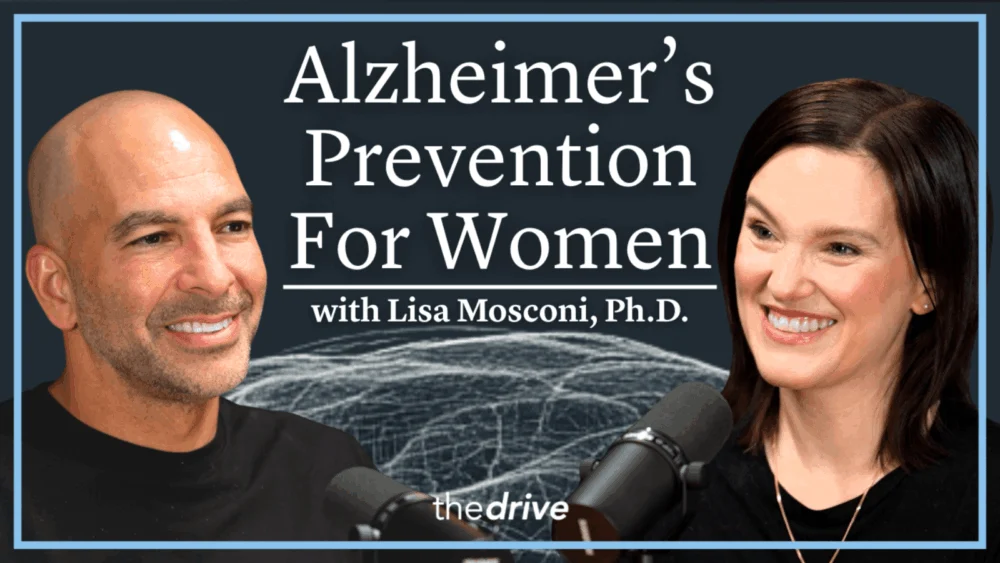
The understanding of Alzheimer’s disease is undergoing a radical shift as researchers move away from viewing the condition solely as a disease of the elderly and toward a model that identifies it as a midlife transition, particularly for women. In a comprehensive technical discussion on The Peter Attia Drive, Dr. Lisa Mosconi, Director of the Women’s Brain Initiative at Weill Cornell Medicine, detailed how the female brain undergoes a fundamental "remodeling" during the menopausal transition. This process, she argues, creates a unique window of vulnerability that explains why women represent nearly two-thirds of all Alzheimer’s cases globally.
Dr. Mosconi’s research challenges the long-held assumption that women suffer more from Alzheimer’s simply because they live longer than men. By utilizing advanced neuroimaging and longitudinal studies, her work demonstrates that the pathological seeds of the disease are often planted decades before the first sign of memory loss, coinciding with the hormonal shifts of perimenopause and menopause. This paradigm shift has profound implications for preventative medicine, hormone therapy, and the development of sex-specific clinical trials.
The Personal and Professional Origins of the Women’s Brain Initiative
The impetus for Dr. Mosconi’s specialized focus on the female brain is rooted in both rigorous clinical observation and personal tragedy. During her discussion with Dr. Peter Attia, she recounted the history of her grandmother and her grandmother’s two sisters, all of whom succumbed to Alzheimer’s disease. This family cluster—where three sisters shared a similar trajectory of cognitive decline in their late 70s and 80s—prompted Mosconi to investigate whether there was a biological vulnerability inherent to the female sex that exceeded simple longevity.
Her professional journey took her from the University of Florence, where she earned a PhD in neuroscience and nuclear medicine, to New York University and eventually Weill Cornell Medicine. Throughout this tenure, she observed that while the medical community acknowledged the higher prevalence of Alzheimer’s in women, very little research was dedicated to understanding the specific physiological drivers behind this disparity. The establishment of the Women’s Brain Initiative was designed to fill this void, focusing on the intersection of endocrinology and neurology.
Menopause as a Neurological Event
A central pillar of Dr. Mosconi’s research is the reframing of menopause. While traditionally viewed through the lens of reproductive health and the ovaries, Mosconi asserts that menopause is equally, if not primarily, a "brain event." The brain and the ovaries are part of the neuroendocrine system, linked by the hypothalamus-pituitary-gonadal axis. When the ovaries begin to fluctuate and eventually cease production of estrogen and progesterone, the brain must adapt to the loss of these neuroprotective hormones.
Estrogen, specifically estradiol, plays a critical role in brain bioenergetics. It acts as a master regulator of glucose metabolism, the brain’s primary fuel source. As estrogen levels decline during perimenopause, the brain’s ability to utilize glucose effectively can drop by 20% to 30%. This "bioenergetic crisis" triggers a cascade of changes, including a reduction in synaptic plasticity and an increase in neuroinflammation.
Advanced PET (Positron Emission Tomography) scans conducted by Mosconi’s team have revealed that women in perimenopause and early menopause often show a marked increase in amyloid-beta plaques—the hallmark protein of Alzheimer’s—compared to men of the same age. This suggests that for many women, the "preclinical" phase of Alzheimer’s begins in their 40s and 50s, not their 70s.
The APOE4 Genetic Risk Factor and Sexual Dimorphism
The discussion also delved into the complexities of the APOE4 genotype, the most significant common genetic risk factor for late-onset Alzheimer’s. Data indicates that the presence of the APOE4 allele confers a higher risk of developing the disease for women than it does for men.
Dr. Mosconi explained that while a man with one copy of APOE4 may see a modest increase in risk, a woman with the same genetic profile faces a significantly steeper trajectory toward cognitive impairment. The reasons for this sexual dimorphism are still being elucidated, but current evidence suggests that APOE4 may interact with estrogen deficiency to accelerate the breakdown of the blood-brain barrier and exacerbate the accumulation of tau tangles, another key pathology in Alzheimer’s.
The Legacy of the Women’s Health Initiative (WHI)
The conversation addressed the controversial history of Menopause Hormone Therapy (MHT). In 2002, the Women’s Health Initiative (WHI) study was halted early due to findings that linked hormone therapy to increased risks of breast cancer and cardiovascular events. This led to a generation of women and physicians avoiding hormones entirely.
However, Dr. Mosconi and Dr. Attia analyzed how a "re-interpretation" of the WHI data, along with subsequent studies like the KEEPS (Kronos Early Estrogen Prevention Study), has provided a more nuanced view. The timing of hormone initiation—the "timing hypothesis"—is crucial. When MHT is started early, near the onset of menopause, it may offer significant neuroprotective benefits and reduce the risk of cognitive decline. Conversely, starting hormones decades after menopause may indeed be detrimental.
Mosconi emphasized that MHT should not be viewed as a "one-size-fits-all" solution but as a personalized medical tool. She also highlighted emerging therapies, such as Selective Estrogen Receptor Modulators (SERMs) and GLP-1 agonists, which are currently being investigated for their potential to support brain metabolism and reduce Alzheimer’s risk.
Chronology of Women’s Brain Health Research
To understand the current state of the field, it is necessary to look at the timeline of how sex differences in neurology have been handled:

- Pre-1990s: Most clinical trials for neurological drugs were conducted primarily on men, with the assumption that results would translate equally to women.
- 1993: The NIH Revitalization Act required the inclusion of women in clinical research, but sex-disaggregated data analysis remained rare.
- 2002: The WHI findings caused a massive shift away from hormone therapy, leaving many women without options for managing menopausal symptoms that affect brain health.
- 2010s: Dr. Mosconi and other neuroscientists began using advanced imaging to track the female brain through the menopausal transition, identifying the midlife "window of opportunity."
- 2024: The launch of the CARE (Cellular and Alzheimer’s Risk Evaluation) Initiative, which aims to leverage precision medicine to cut the risk of Alzheimer’s in women by 50% by the year 2050.
Supporting Data: The Scale of the Crisis
The urgency of Dr. Mosconi’s work is supported by startling statistics from the Alzheimer’s Association and the National Institutes of Health (NIH):
- Prevalence: Nearly 4 million of the 6.7 million Americans living with Alzheimer’s are women.
- Lifetime Risk: At age 65, a woman has an estimated 1 in 5 chance of developing Alzheimer’s, compared to a 1 in 11 chance for a man.
- Caregiving Burden: Women are also disproportionately affected as caregivers, making up approximately 60% of unpaid caregivers for people with dementia, which further impacts their own long-term health and stress levels.
- Economic Impact: The total cost of care for Alzheimer’s and other dementias in the U.S. reached $345 billion in 2023, a figure projected to rise to $1 trillion by 2050 without significant intervention.
The CARE Initiative and Practical Strategies for Prevention
Looking forward, Dr. Mosconi discussed her CARE Initiative at Weill Cornell, which seeks to implement evidence-based strategies to mitigate risk during the critical midlife period. The initiative focuses on a multi-pronged approach:
- Metabolic Health: Stabilizing blood sugar and improving insulin sensitivity to ensure the brain has adequate energy during the estrogen transition.
- Sleep Hygiene: Addressing the insomnia and night sweats common in perimenopause, which can hinder the brain’s "glymphatic" system—the waste-clearance mechanism that removes amyloid plaques.
- Stress Management: High levels of cortisol (the stress hormone) can inhibit estrogen production and exacerbate brain fog.
- Nutritional Interventions: Emphasizing diets rich in antioxidants and phytoestrogens that support hormonal balance.
Analysis of Implications
The work of Dr. Lisa Mosconi represents a fundamental shift in the landscape of preventative neurology. By identifying the menopausal transition as a period of significant structural and functional change in the brain, her research provides a biological explanation for a long-observed epidemiological trend.
The implications for public health are vast. If Alzheimer’s is indeed a "midlife disease" for women, then screening and intervention must begin much earlier than currently practiced. This would require a reorganization of how primary care physicians, gynecologists, and neurologists collaborate. Furthermore, the push for sex-specific medicine ensures that future treatments are tailored to the unique hormonal and genetic architecture of the female body, rather than relying on a male-centric "standard" that has historically underserved half the population.
As the CARE Initiative moves toward its 2050 goal, the focus remains on empowering women with the knowledge and clinical tools to protect their cognitive longevity. The integration of lifestyle modifications with emerging pharmaceutical options like SERMs and GLP-1s suggests a future where the "twofold risk" for women is no longer an inevitability, but a manageable and preventable medical challenge.