admin
admin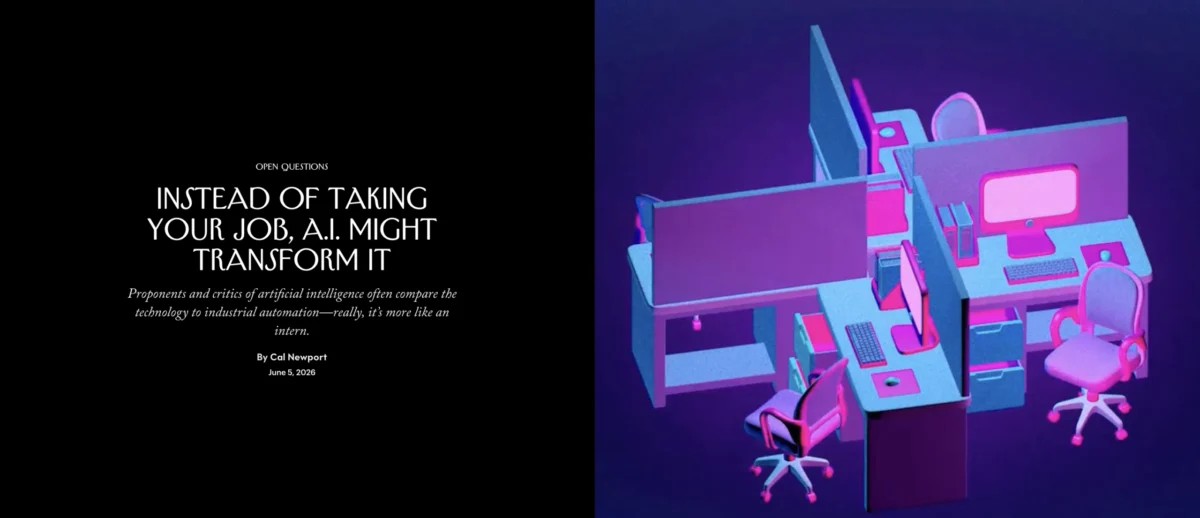
The narrative surrounding generative artificial intelligence has undergone a significant transformation over the past twenty-four months. In the immediate wake of the release of Large Language Models (LLMs) like ChatGPT and Claude, the prevailing sentiment among Silicon Valley executives and economic forecasters was one of imminent disruption. The central thesis was straightforward: just as the Industrial Revolution deployed mechanical power to replace human brawn, the AI revolution would deploy computational power to replace human brains. However, as the technology moves from the laboratory into the integrated workflows of the global economy, a more nuanced reality is emerging. Rather than a wholesale "jobs apocalypse," the current trend suggests a shift toward task transformation, internal tool-building, and a phenomenon increasingly referred to as "freestyle work."
The Evolution of Executive Rhetoric
The initial projections provided by the leaders of the world’s most prominent AI laboratories were stark. Dario Amodei, CEO of Anthropic, has previously suggested that AI-based tools possessed the potential to automate approximately 50% of entry-level white-collar positions. Similarly, Mustafa Suleyman, the CEO of Microsoft AI and co-founder of DeepMind, predicted in early 2024 that AI would achieve "human-level performance" on the vast majority of professional tasks within an eighteen-month window. These forecasts contributed to a climate of anxiety within the knowledge work sector, where employees feared that the "power loom" of the 21st century had finally arrived for the creative and analytical classes.
By mid-2024, however, this rhetoric began to soften. During a recent speaking engagement in Australia, OpenAI CEO Sam Altman expressed what he described as "delight" at being proven wrong regarding the immediate threat of a "jobs apocalypse." Simultaneously, Amodei has adjusted his public stance, moving away from the language of total job replacement toward a model of partial task automation. His current analysis suggests that AI will not necessarily eliminate roles but will instead absorb specific components of existing jobs, fundamentally altering the daily responsibilities of the modern employee. This shift reflects a growing recognition that professional roles are often composed of a complex web of social, creative, and administrative tasks that are difficult to automate in their entirety.
A Chronology of AI Labor Projections
To understand the current state of the AI labor market, it is necessary to examine the timeline of expectations versus reality:
- Late 2022 – Early 2023 (The Shock Phase): The public release of GPT-3.5 and GPT-4 triggered immediate warnings from financial institutions. A widely cited March 2023 report from Goldman Sachs estimated that generative AI could automate the equivalent of 300 million full-time jobs globally, with administrative and legal professions identified as the most vulnerable.
- Late 2023 (The Integration Phase): As companies began piloting AI tools, they encountered significant "last-mile" problems. Issues such as factual hallucinations, data privacy concerns, and the high cost of specialized compute resources slowed the pace of displacement.
- 2024 (The Reframing Phase): Economists began to observe that while AI adoption was rising, unemployment in the white-collar sector remained historically low in many developed economies. This led to the "transformation" narrative currently championed by industry leaders.
- 2025 (The Implementation Reality): The focus has shifted from replacing workers to "vibe coding"—the use of AI to build small, bespoke internal tools that streamline specific bottlenecks without eliminating the need for human oversight.
Economic Data and the Productivity Paradox
The disconnect between the power of AI and the lack of mass unemployment can be partly explained by the Jevons Paradox, an economic theory cited by Dario Amodei and others. The paradox suggests that as a resource becomes more efficient to use, the total consumption of that resource may actually increase rather than decrease. In the context of labor, if AI makes it 50% faster to produce a legal brief or a marketing plan, the result may not be the firing of half the staff, but rather a doubling of the volume and depth of work produced.
Current data from the Bureau of Labor Statistics and various private sector surveys support the idea that AI is currently acting as a "productivity multiplier" rather than a "labor subtractor." According to a 2024 survey of small business owners, the primary use of AI is not the replacement of staff but the automation of "annoying problems"—tasks like inventory tracking, time-sheet management, and the generation of internal reports. These are often tasks that were previously neglected or performed inefficiently, rather than core functions that defined a job’s value.
The Rise of Freestyle Work and Internal Tooling
The emerging strategy for AI implementation in the workplace is being characterized as "freestyle work." This approach moves away from the idea of AI as a monolithic "robot boss" and toward AI as a highly capable assistant that allows non-technical employees to act as amateur software developers.
Cal Newport, a prominent computer science professor and author, has compared this trend to the custom programming of the 1990s. In the early days of the internet, companies often hired students or junior staff to "hack together" simple web-based applications for internal use—tools that weren’t polished enough for the consumer market but were highly effective at solving specific corporate inefficiencies.
In the modern context, "vibe coding" allows a marketing manager or an HR specialist to describe a tool they need, which the AI then builds. For example, a small business owner might use an LLM to write a script that automatically categorizes customer feedback or synchronizes disparate databases. These tools do not eliminate the role of the manager; rather, they eliminate the "friction" of their role, allowing them to focus on higher-level strategy. This suggests that the value of a human worker is increasingly being shifted toward their ability to direct these tools and interpret their outputs, rather than the manual execution of the tasks themselves.
Official Responses and Institutional Analysis
Institutional reactions to these developments have been cautiously optimistic. The International Monetary Fund (IMF) has noted that while advanced economies face a higher risk of disruption (with up to 60% of jobs potentially impacted), they also have the greatest opportunity to leverage AI for productivity gains.
In its 2024 "Artificial Intelligence and the Future of Work" report, the IMF highlighted that "the net effect on labor income will depend on the extent to which AI complements high-income workers." If AI primarily assists workers in performing complex tasks, it could lead to a "hollowing out" of the middle class if not managed correctly. However, the current trend of "freestyle work" suggests a democratization of technical capability, potentially allowing a broader range of workers to enhance their value.
Governmental bodies have also begun to shift their focus from unemployment benefits to "upskilling" initiatives. The European Union’s AI Act and various U.S. Executive Orders emphasize the need for transparency and human-in-the-loop systems. These regulations are designed to ensure that AI remains a tool for human empowerment rather than an autonomous replacement for human judgment.
Broader Implications and the Future of the Knowledge Sector
The transition from "automation" to "transformation" has profound implications for the future of the white-collar workforce. If the "jobs apocalypse" remains at bay, the primary challenge for the next decade will not be a lack of work, but a change in the nature of work.
Several key implications are becoming clear:
- The Devaluation of "Rote" Skills: Skills that involve the simple synthesis of information or the generation of standard text are declining in value. Conversely, the ability to define problems, provide "prompts," and verify AI outputs is becoming a core competency.
- The Depth of Effort: As AI handles the "breadth" of work—the initial drafts, the data sorting, the scheduling—human workers are expected to provide "depth." This means more time spent on original thought, complex negotiation, and ethical oversight.
- Organizational Decentralization: As AI allows small teams to build their own tools and manage complex operations without large administrative overhead, we may see a shift toward smaller, more agile companies that can compete with traditional corporate giants.
The shift in perspective from AI as a replacement to AI as a transformer suggests a more stable, albeit different, future for the global workforce. While the technology is undeniably impacting the knowledge sector, it is doing so by automating parts of roles rather than the roles themselves. The "freestyle work" era suggests that the future of the office is not one where humans are absent, but one where they are equipped with an unprecedented array of custom-built digital tools.
Ultimately, the reason AI is not taking our jobs in the way many predicted is that professional work is more than just a collection of automatable tasks; it is a series of relationships, judgments, and context-dependent decisions. As long as the "last mile" of responsibility remains human, the workforce will likely continue to adapt, utilizing AI to deepen their efforts rather than replace them. The "weirder and less dire" reality of AI integration suggests that while the tools of the trade are changing, the necessity of human agency remains the central pillar of the global economy.