admin
admin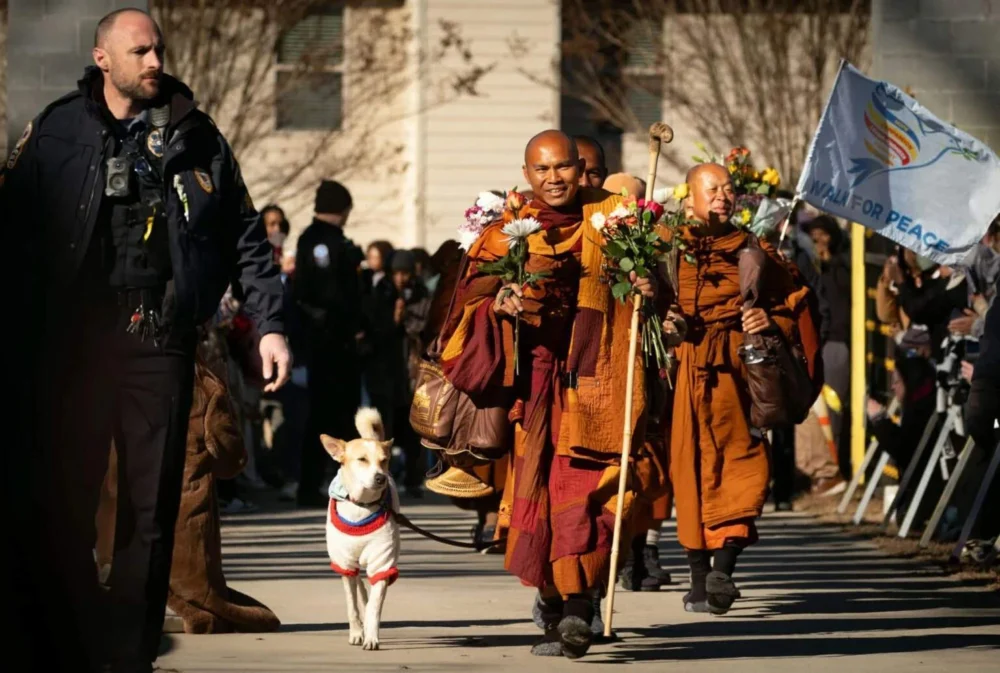
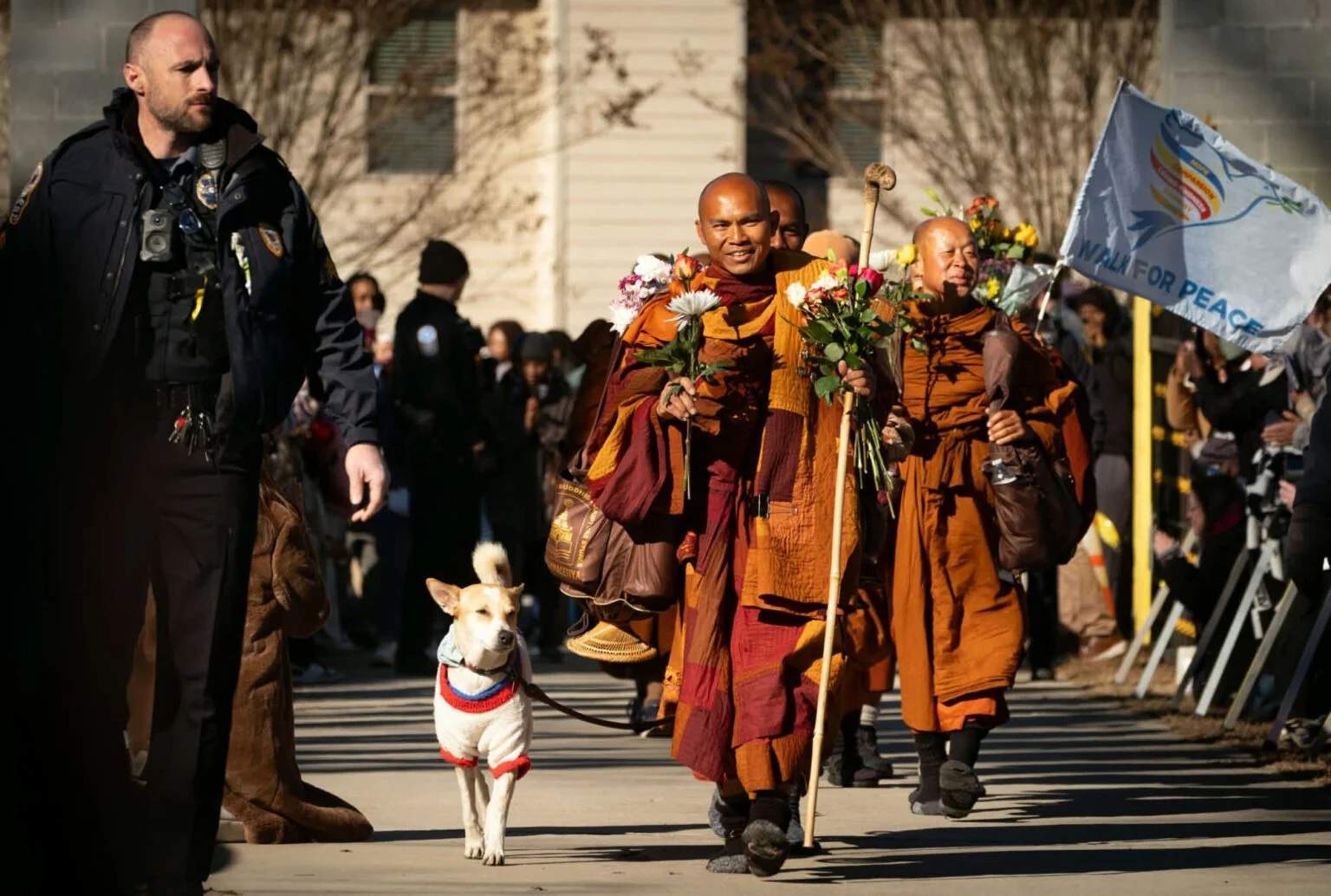
The Walk for Peace, an unassuming yet profoundly impactful pilgrimage across the United States, has culminated its 108-day, over 2,300-mile journey, arriving in Washington, D.C. Led by a small group of Buddhist monks and their beloved companion, Aloka the peace dog, the endeavor has distinguished itself not through overt protest or loud calls to action, but through the deliberate, quiet rhythm of walking—one step after another, breath in and breath out. This monumental trek, which began in Fort Worth, Texas, traversed ten states, concluding its visible manifestation of mindful movement. The monks are now preparing to host a global loving-kindness meditation on February 11, 2026, at 4:30 PM EST, marking day 109 of their journey and inviting worldwide participation in their message of peace.
A Countercultural Movement in Motion
In an era often characterized by rapid information flow, urgent demands, and constant stimulation, the Walk for Peace has offered a starkly countercultural alternative. It eschewed the frantic pace of modern life, instead embodying stillness, steady progress, and attentive observation. The pilgrimage’s quietude and unassuming nature presented a compelling contrast to the "loud, frantic things" that typically shape contemporary culture, such as outrage and urgency. By simply moving through spaces designed for speed, the monks implicitly challenged conventional notions of activism and engagement, suggesting that profound impact can arise from gentle persistence.
The journey served as a living reminder that peace is not solely a future-oriented, externalized concept—a state to be achieved when all external horrors vanish. Instead, it proposed peace as an internal capacity, a "tiny kernel" within each individual, nurtured through mindful attention and intentionally shared. This perspective resonates deeply in communities grappling with daily realities of destabilization, uncertainty, and fear, where quiet webs of care often extend between neighbors and strangers, insisting on the fundamental interconnectedness of humanity.
The Genesis and Philosophy of the Walk
The Walk for Peace originated from a fundamental question: How can individuals respond to a world marked by division, stress, and suffering without inadvertently contributing more noise to the existing cacophony? Rather than issuing statements or organizing conventional events, the organizers, drawing from contemplative Buddhist traditions, chose the simple yet powerful act of walking. This decision grounded their response in a universally human experience, one that naturally regulates the nervous system, invites breath awareness, and brings attention from abstract thought into the present moment.
While deeply informed by Buddhist principles of mindfulness and compassion, the walk itself was not presented as a religious event. It was framed as a "lived experiment in mindfulness, compassion, and nonviolence," expressed through the elemental act of walking. Participants walked attentively, often in silence, allowing each step to serve as an anchor to the present. For those who encountered the walk, whether briefly joining or simply observing, the experience was often described as unexpectedly grounding, devoid of arguments or demands, offering a revolutionary simplicity in its care-filled movement through public spaces.
The core message, implicit in each deliberate stride, seemed to be: "Notice your breath, notice your pace, notice the people around you." Unlike protest marches or rallies, which often seek to persuade or confront, the Walk for Peace invited reflection rather than reaction. This non-demanding approach fostered a sense of calm and curiosity among many observers, providing a notable pause in the relentless mental clutter of daily life. The walk aimed not at specific political outcomes but at a more foundational shift: how individuals relate to themselves and to one another in their everyday existence. It proposed that peace is not an ultimate destination but a capacity cultivated through consistent practice.
Chronology and Route Details
The Walk for Peace commenced its arduous journey in Fort Worth, Texas, on October 25, 2025. Over the course of 108 days, the monks, accompanied by volunteers and community members, systematically covered over 2,300 miles. Their route led them across a diverse geographical and cultural landscape, spanning ten states before reaching the nation’s capital, Washington, D.C., on February 10, 2026.
Key milestones along the route included passage through historically significant locations such as Selma and Montgomery, Alabama. In these cities, the monks symbolically traced steps taken by leaders of the American Civil Rights Movement, bearing witness to past struggles and offering a quiet presence of healing and compassion over ground marked by profound historical pain. This deliberate choice highlighted the enduring legacy of unresolved societal wounds and emphasized the walk’s subtle yet potent contribution to collective healing.
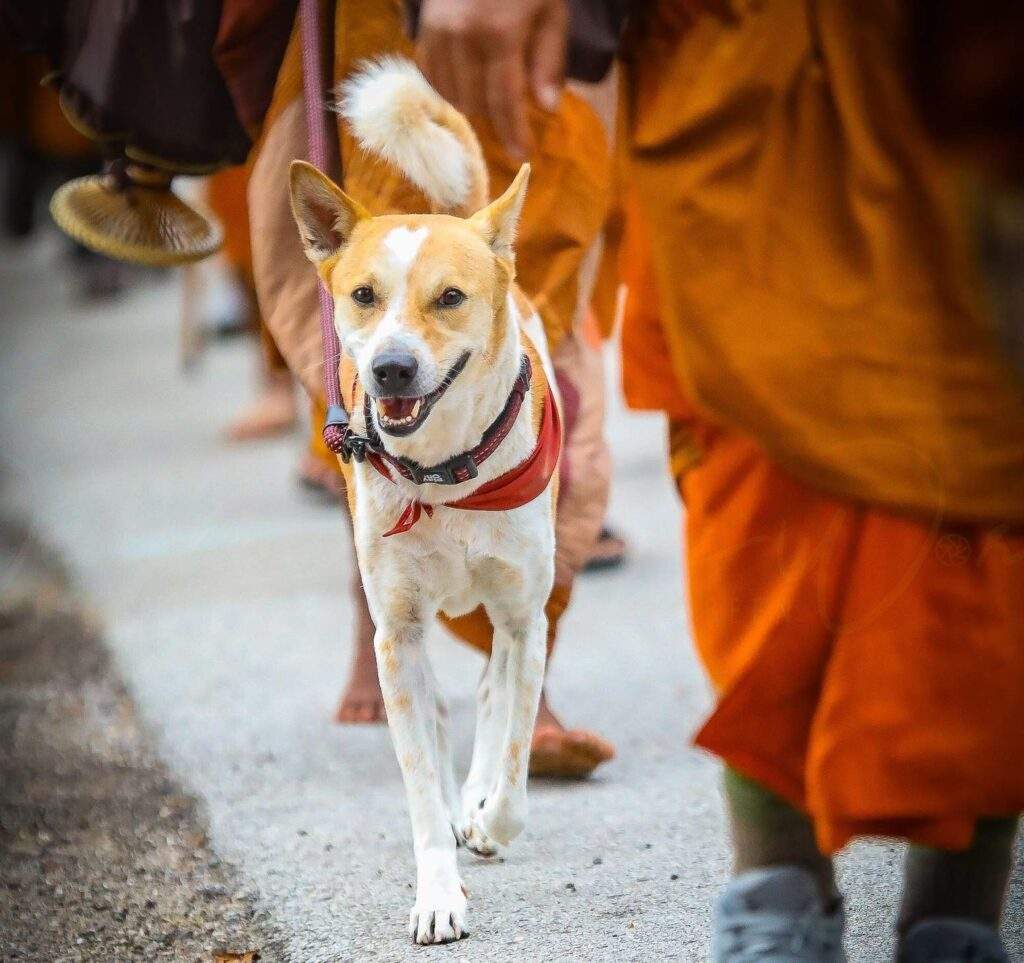
The daily rhythm involved continuous walking, often through varied weather conditions—rain, heat, and cold—and diverse environments, from quiet rural roads to busy urban thoroughfares. The consistency of their visible presence, moving slowly and steadily, became a defining characteristic of the pilgrimage. Accompanying the monks was Aloka, a dog who joined a previous peace pilgrimage in India and has since become an integral and recognizable figure of the Walk for Peace, further endearing the group to those they encountered.
Public Reception and Community Engagement
Despite its lack of aggressive promotion, the Walk for Peace attracted significant attention and engagement. Along its route, communities responded in various ways. In some towns, hundreds, and occasionally thousands, of people gathered, drawn by word of mouth and genuine curiosity. These encounters often took the form of quiet support: some offered food, water, or simple words of encouragement. Others chose to walk alongside the monks for a stretch, experiencing the meditative pace firsthand, while many simply stood and watched, absorbing the unique atmosphere.
The walk also garnered a substantial online following, with millions of followers engaging with its journey through social media platforms. Photos and short videos depicting the monks walking through various conditions circulated widely, often accompanied by comments expressing feelings of calm, inspiration, or profound connection. These digital interactions underscored a widespread hunger for messages of gentleness and compassion in a world often saturated with narratives of dominance and control.
However, not all reactions were uniformly positive. Some observers expressed skepticism, questioning the tangible impact of a walking pilgrimage in addressing complex, systemic global challenges. This skepticism, familiar within broader discussions of mindfulness and inner awareness practices, often arises from a perception that such approaches are passive or insufficient in the face of urgent crises. Yet, the organizers and many participants emphasized that the walk’s value lay not in dramatic, immediate transformations but in fostering "smaller, maybe more sustainable" shifts: softened interactions, moments of deep connection, and gentle reminders to slow down. Research in fields like psychology and neuroscience increasingly supports the notion that attention, emotional regulation, and compassion are not luxuries but foundational capacities necessary for wise and effective action in complex environments.
Broader Societal Context and Implications
The Walk for Peace offered a profound commentary on the nature of peace in contemporary society. It challenged the prevalent notion that peace is something to be waited for, dependent on the improvement of external conditions. Instead, it proposed that peace is a practice, a cultivated capacity that can be nurtured and expressed within the existing conditions, however challenging they may be. This approach shifts the locus of agency from external forces to individual and collective mindfulness.
In a world grappling with significant trauma, from racialized violence to pervasive societal anxieties, the walk served as a visible embodiment of bearing witness without judgment. The experience of seeing humble individuals radiate compassion and healing over "painful ground," including areas with deep historical resonance like the Civil Rights movement sites, invited observers to contend with unhealed wounds. The steady gaze, pace, and breath of the monks implicitly conveyed two critical messages. First, resisting attention to unhealed places perpetuates cycles of suffering; conscious, loving awareness of present realities, even when they evoke sorrow or anger, is a prerequisite for imagining and enacting different futures. Second, the burden of healing and societal transformation is not borne by a single "hero" but is a collective endeavor, emphasizing mutual support, witnessing, and shared journey.
The pilgrimage highlighted several key principles of intentional mindfulness practice: the profound connection to the elemental aspects of existence—breath, body, and the present moment. It underscored that while the mind naturally wanders to worries, anger, and the demands of the future, the practice of mindfulness serves as a constant, gentle call "home" to the present. This collective "return home" through the walk suggested a powerful model for societal engagement: one where peace is not a distant goal but a continuous, moment-by-moment, step-by-step practice.
The Path Forward: A Global Invitation
As the physical journey of the Walk for Peace concludes, its broader implications and invitations continue. The upcoming global loving-kindness meditation on February 11, 2026, at 4:30 PM EST, represents a culmination and an extension of the pilgrimage’s core message. This event invites individuals worldwide to participate in a collective act of compassion, fostering inner peace and extending it outward.
The Walk for Peace did not claim to offer immediate solutions to global problems, nor did it promise dramatic, overnight transformations. What it did offer, however, was a living question: "What changes when we choose to move through the world with awareness and care?" The experience demonstrated that even in its subtle manifestation, a spark of compassion can leap from one person to another, creating tangible shifts in individual and communal experience. In a world often searching for grand gestures, the Walk for Peace quietly asserted that the most revolutionary changes might emerge from a thousand quiet, unspectacular moments—a breath, a blink, a single, mindful step. The resonance of this journey suggests that even the simplest acts of conscious presence can contribute meaningfully to a more peaceful and connected world.