admin
admin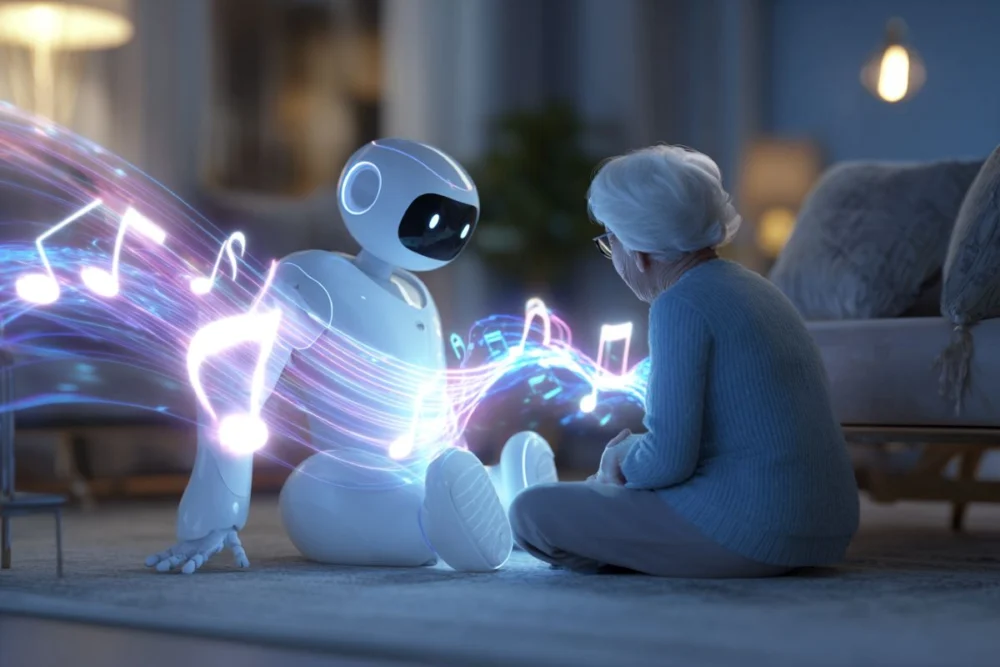
The escalating global crisis of loneliness, particularly among the elderly, has emerged as a significant public health challenge, prompting researchers worldwide to explore innovative solutions. In a groundbreaking development, a research team at The Hong Kong Polytechnic University (PolyU) has uncovered a novel approach to imbue robotic companions with a greater sense of "humanity" and emotional resonance: by integrating AI-powered empathetic speech with thoughtfully curated music. This pioneering study reveals that when social robots utilize music in conjunction with sensitive conversation, it significantly strengthens the emotional bond with users and markedly enhances the machine’s perceived empathy. However, the research also highlights a crucial challenge: the profound emotional effect of music can diminish over time as users become accustomed to its patterns, signaling a critical need for the next generation of social robots to be "quantum-inspired"—meaning they must be capable of adapting to the fluid, ambiguous, and ever-changing nature of human feelings to provide sustained, meaningful companionship.
The Silent Epidemic: Loneliness as a Public Health Imperative
Loneliness is far more than a fleeting emotion; it has been increasingly recognized by global health organizations as a critical determinant of mental and physical well-being. The World Health Organization (WHO) has highlighted loneliness as a "growing public health concern," underscoring its pervasive impact across all demographics, though it disproportionately affects older adults. Data from the U.S. Centers for Disease Control and Prevention (CDC) indicates that social isolation in older adults significantly increases their risk of premature death from all causes, a risk comparable to that of smoking, obesity, and physical inactivity. Studies have linked chronic loneliness to a heightened risk of developing cardiovascular disease, stroke, dementia, depression, and anxiety. In the United Kingdom, the government appointed a Minister for Loneliness in 2018, acknowledging the widespread nature of the issue and its societal costs. The emotional toll of social isolation can manifest as deep psychological distress, impairing cognitive function and overall quality of life. As global populations age, with projections indicating a substantial increase in the proportion of individuals over 65, the demand for effective interventions to mitigate loneliness is set to skyrocket, placing immense pressure on traditional healthcare and social support systems. This demographic shift provides a compelling impetus for exploring technological solutions, such as advanced social robotics, as a complementary form of support.
PolyU’s Breakthrough: The Symbiotic Power of Music and Empathy
Against this backdrop of a looming global health crisis, the PolyU research team, led by Prof. Johan Hoorn, Interfaculty Full Professor of Social Robotics of the School of Design and the Department of Computing at PolyU, in collaboration with Dr. Ivy Huang at The Chinese University of Hong Kong, embarked on a mission to enhance the emotional capabilities of robotic companions. Their project, titled "A Talking Musical Robot over Multiple Interactions," sought to investigate how the integration of music and empathetic speech could elevate the emotional resonance of on-screen robots, transforming them from mere functional machines into heartwarming companions.
The study’s methodology involved Cantonese-speaking participants interacting with empathetic robots across three distinct interactive sessions. During these interactions, the robots were programmed to provide empathic feedback and/or play music as a token of empathy. The research meticulously examined user experience evolution, analyzing how perceptions of bonding, empathy, and robot realism changed over time.
The findings were significant: the combined power of music and empathetic speech profoundly enhanced participants’ perceived empathy of the machines. When the robot played music while simultaneously engaging in empathic conversation, a mutual reinforcement effect was observed, leading to a flourishing of bonding and perceived empathy. Prof. Hoorn explained, "Our data indicate that the presence of music continued to enhance the robot’s resemblance to humans in later sessions. One interpretation is that music made the interaction feel more like a real conversation with a personality, something human counsellors might do by playing music to comfort their clients, which in turn made the robot seem more lifelike or socially present."
This phenomenon can be attributed to the deep-seated human connection to music. Music is a universal language, capable of transcending cultural and linguistic barriers to evoke powerful emotions, memories, and associations. Neuroscientific research has consistently shown that music can activate reward pathways in the brain, release neurotransmitters like dopamine and oxytocin, and influence mood and emotional states. When a robot pairs this potent emotional catalyst with carefully crafted empathetic speech, it creates a multimodal experience that signals a deeper level of "understanding" to the human brain, fostering a stronger, more profound emotional bond than either speech or music could achieve in isolation. The robot appears to not only comprehend the user’s verbal expressions but also to resonate with their underlying emotional state, a quality highly valued in human interaction.
The Ephemeral Charm: The Challenge of Empathy Fade
Despite the initial success in forging stronger human-robot bonds, the PolyU study also brought to light a critical challenge: the impact of music could diminish over time. As participants became accustomed to the music and interaction patterns after repeated sessions, the initial surge of perceived empathy and bonding tended to fade. This "empathy fade" underscores a fundamental aspect of human psychology: novelty and variability are crucial for sustaining engagement and emotional connection. If a robot’s responses become predictable or repetitive, users may quickly lose interest, and the perceived emotional depth may wane.
This finding highlights the imperative for designing future empathetic robots that are not static in their interaction strategies but are dynamically adaptive. The study suggested that robots must be capable of tailoring their responses to individual user feedback and context. This could involve adjusting various musical elements – tempo, genre, intensity – or gradually personalizing dialogue content to maintain sustained relevance and efficacy of empathy. The challenge, therefore, lies in developing sophisticated AI that can sense when a user is becoming accustomed to a particular interaction style or musical piece and intelligently switch to something new and relevant, much like a human companion would instinctively adjust their approach based on social cues.
The Quantum Leap: Towards Truly Adaptive and Ambiguity-Aware Companions
To address the challenge of empathy fade and elevate social robots to a new level of sophistication, Prof. Hoorn’s ongoing research is charting an ambitious course towards "quantum-inspired" models of human affect. This next phase, supported by over HK$40 million in funding from the Research Grants Council Theme-based Research Scheme for his project "Social Robots with Embedded Large Language Models Releasing Stress among the Hong Kong Population," aims to better capture and respond to the inherent vagueness and ambiguity of emotional experience.
Traditional computational systems often struggle with the fluid, context-dependent, and sometimes contradictory nature of human emotions. They tend to categorize emotions into discrete, binary states (e.g., happy or sad, yes or no). However, human feelings are rarely so clear-cut; they exist in complex superpositions, influenced by myriad factors, and can shift rapidly. A person might feel both happy and melancholic, or anxious yet hopeful, simultaneously.
"Quantum-inspired" models offer a promising alternative. Drawing conceptual parallels from quantum mechanics, where particles can exist in multiple states simultaneously until observed, these models enable robots to process emotional states not as fixed categories but as probabilistic superpositions. This means the robot can represent and interpret emotional data in a way that reflects the genuine uncertainty and complexity of human feelings, rather than forcing them into predefined, rigid classifications. By embracing this inherent ambiguity, quantum-inspired AI can develop a more nuanced understanding of a user’s emotional landscape.
Prof. Hoorn articulated his vision for this advanced robotics: "What excites me the most is the possibility of developing social robots that not only recognise the complexity of human affect but also embrace it. These robots could offer support that is adaptable, open-ended and compassionate, similar to the individuals they are designed to help." Such robots would be capable of truly personalized interactions, learning from past exchanges, anticipating needs, and responding with a sensitivity that mirrors human intuition, thereby overcoming the limitations of repetitive or predictable engagement. This represents a significant leap from merely playing music to genuinely understanding when and how to play it, and what kind of music, in response to a complex emotional state.
Broader Implications and Applications Across Society
The implications of PolyU’s research extend far beyond addressing loneliness in the elderly. A multimodal approach to empathetic robot design, integrating music and speech, holds considerable promise for a wide array of real-world applications:
- Elder Care: Beyond simple companionship, these robots could assist with medication reminders, facilitate communication with family, provide cognitive stimulation through games and stories, and monitor well-being, all while offering emotional comfort. Their ability to adapt to declining cognitive functions or changing emotional states would be invaluable.
- Mental Health Support: For individuals struggling with depression, anxiety, or social phobias, empathetic robots could provide a non-judgmental, accessible source of support. They could facilitate therapeutic conversations, guide mindfulness exercises, or simply offer a calming presence, potentially bridging gaps in mental healthcare access.
- Education: Empathetic robots could serve as personalized tutors, understanding a student’s frustration with a difficult subject and responding with encouraging words and perhaps a calming piece of music. They could adapt teaching styles to individual learning paces and emotional states, making learning more engaging and less stressful.
- Therapeutic Settings: In hospitals or rehabilitation centers, robots could assist patients in managing pain or anxiety, offering distractions through music and empathetic dialogue. For children with developmental disorders, a consistent and predictable yet emotionally responsive robot could aid in social skill development.
- Customer Service and Hospitality: Imagine hotel concierges or retail assistants that can sense a customer’s mood and respond with appropriate empathy, enhancing the overall experience.
However, the proliferation of such advanced social robots also raises profound ethical considerations that demand careful scrutiny. The potential for human dependence on robotic companions is a significant concern; while robots can offer support, they should not replace genuine human-to-human interaction, which remains fundamental to psychological well-being. Questions of data privacy are paramount, as these robots would collect highly personal emotional and behavioral data. The "uncanny valley" phenomenon, where robots that too closely resemble humans can evoke feelings of discomfort or revulsion, must also be navigated in design. Furthermore, issues of accessibility and cost need to be addressed to ensure that these beneficial technologies are not exclusive to affluent segments of society. A balanced approach that integrates technology with human care, rather than replacing it, will be essential for successful societal integration.
The Evolving Landscape of Human-Robot Interaction
The research from PolyU marks a pivotal moment in the evolution of social robotics. By scientifically validating the power of music combined with empathetic speech, and by envisioning the next generation of quantum-inspired adaptive AI, Prof. Hoorn and his team are paving the way for machines that can genuinely connect with humans on an emotional level. This is not merely about creating clever algorithms but about designing technology that understands and responds to the nuanced tapestry of human feelings.
The journey towards truly empathetic and adaptive machine companions is ongoing, fraught with technical challenges and ethical dilemmas. Yet, the potential rewards—alleviating widespread loneliness, enhancing mental health support, and transforming caregiving—are immense. As technology continues to advance, the distinction between human and machine interaction will blur, necessitating a thoughtful and interdisciplinary approach to ensure that these innovations serve humanity’s best interests, fostering connection and well-being in an increasingly complex world. The future of companionship may well be a harmonious blend of human warmth and artificial intelligence, orchestrated to the tune of empathy.