 admin
admin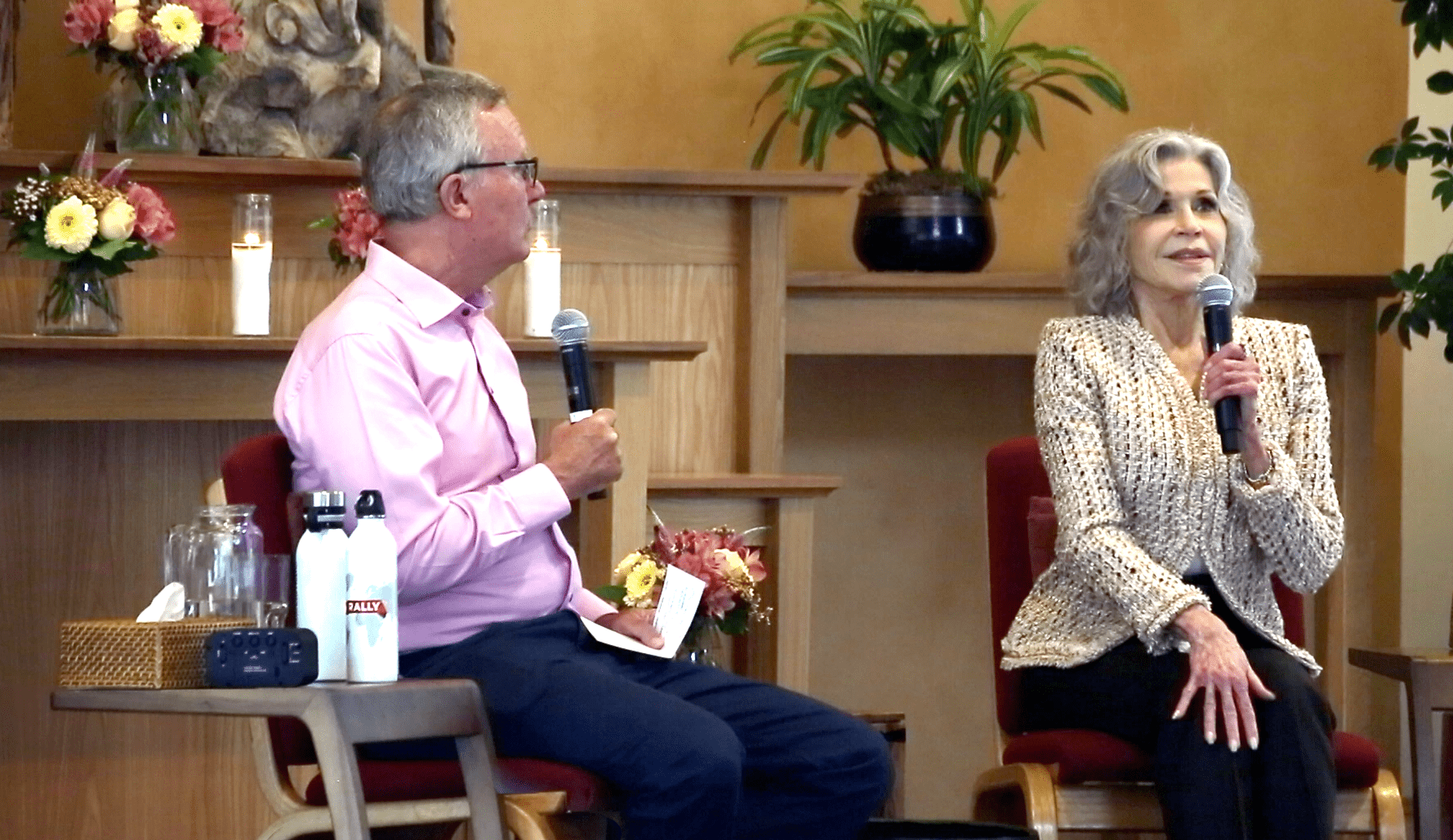
Veteran activist and actress Jane Fonda recently addressed participants at Spirit Rock’s EcoDharma & Transformational Culture Program (ETCP), delivering a potent message that repositioned mindfulness not as an escape from global crises but as an essential training ground for urgent climate action. Her appearance was not to offer comfort but to compel attention toward the planet’s perilous state, what is being lost, and the profound responsibilities that remain to protect it. Fonda, a figure who has consistently redefined herself and the movements she embraces across decades, underscored the imperative of leveraging inner work for outer change, particularly in the face of the escalating climate crisis.
A Legacy of Engagement and Transformation
For generations, Jane Fonda has been a dynamic force, evolving through various public personas, each marked by a distinct engagement with cultural and political landscapes. To some, she is an acclaimed, Oscar-winning actress, whose roles in films like Klute (1971) and Coming Home (1978) boldly challenged societal norms and explored complex human conditions, earning her critical recognition and two Academy Awards for Best Actress. Others recall her as the iconic fitness guru of the early 1980s, whose groundbreaking workout videos democratized exercise and positioned fitness as accessible self-care for women, a movement that sold over 17 million copies worldwide and revolutionized the home workout industry. More recently, her role on the beloved Netflix series Grace and Frankie has redefined vitality and friendship for older generations, showcasing her enduring relevance and capacity for reinvention.
Yet, beyond these public transformations lies a consistent thread of unwavering activism and a profound commitment to collective change. Fonda’s involvement in the Committee for the First Amendment in the 1940s (re-launched in later years to defend free speech), her vocal opposition to the Vietnam War, and her ongoing advocacy for women’s rights and environmental justice highlight a career deeply intertwined with social movements. She has consistently leveraged her considerable platform to found media outlets, fund grassroots organizing, lend her physical presence to protests, and engage in often uncomfortable conversations, all in service of a larger collective good. Her journey from Hollywood star to fitness mogul to steadfast political advocate demonstrates a unique form of mindful leadership—one rooted not in the preservation of a legacy, but in an active invitation to participation, demonstrating how presence, curiosity, and authentic connection can ignite action across all age demographics.
Spirit Rock’s EcoDharma Initiative: Bridging Inner and Outer Worlds
Fonda’s address was a pivotal moment for Spirit Rock’s EcoDharma & Transformational Culture Program (ETCP), a comprehensive three-year initiative launched in January 2025. This program represents a significant endeavor to explore the critical intersection of mindfulness, contemplative practices, and urgent climate action. While drawing deeply from Buddhist teachings, the ETCP is intentionally inclusive, inviting participants from diverse faith traditions and backgrounds to engage with its curriculum.
Within the ETCP’s framework, "spiritual" practices are defined not by dogma, but by their capacity to cultivate essential human qualities: awareness, compassion, and resilience. These are presented as crucial tools for comprehending and responding to the multifaceted stresses induced by climate change, including eco-anxiety, grief, and the profound sense of loss. The program’s core mission is twofold: to equip interfaith leaders and climate activists with the resilience and even joy necessary to confront climate trauma, and to empower a new generation of global citizens to engage meaningfully with ecological issues. It posits a radical yet foundational idea: that joy, mindfulness, and a deep love for the Earth are not diversions from climate action, but rather indispensable elements for sustaining it over the long term.
The ETCP curriculum includes a blend of online lectures, class series, in-person retreats, and specialized training programs. These offerings are meticulously designed to support communities grappling with climate change not merely as a scientific or political challenge, but as a deeply emotional and spiritual crisis. The program benefits from the guidance of a distinguished core planning team, including respected teachers and leaders such as Ayya Santacitta, Bonnie Duran, Carol Cano, James Baraz, Kirsten Rudestam, Kristin Barker, Mark Coleman, and Yong Oh. This team collaborates with prominent partners like One Earth Sangha, Braided Wisdom, Aloka Earth Room, and Awake in the Wild, creating a robust network dedicated to fostering holistic climate engagement.
Mindfulness as Training: A Call to Wakefulness
For many who engage with mindfulness and meditation, these practices often serve as a sanctuary—a quiet refuge from the incessant barrage of news cycles, political turmoil, and the pervasive ecological grief. However, Fonda’s message, amplified by the ethos of the ETCP, emphatically reframes this perception. The gathering at Spirit Rock made it unequivocally clear: mindfulness was never intended to be an escape hatch from the world’s problems, but rather a rigorous training for engaging with them more effectively and compassionately.

Fonda’s presence resonated with the weight of her lived experience—decades of relentless activism, periods of profound moral reckoning, and an unshakeable conviction that inner transformation is inextricably linked to outer action. Her conversation with climate journalist Greg Dalton served as a deeply reflective inquiry into the profound meaning of remaining awake, empathetic, and actively engaged even as scientific consensus warns of rapidly dwindling time. This perspective is particularly pertinent in an era where the climate crisis feels simultaneously overwhelming in its scale and dangerously normalized in public discourse. The Intergovernmental Panel on Climate Change (IPCC) has repeatedly warned that global emissions must be drastically cut by nearly half by 2030 to limit global warming to 1.5 degrees Celsius above pre-industrial levels, a target essential to avert the most catastrophic impacts. Such stark realities necessitate a paradigm shift in how individuals and communities approach environmental stewardship, moving beyond mere awareness to sustained, intentional action.
The Urgency of Empathy and Collective Action
Fonda approached the subject of urgency with profound respect, yet without succumbing to hopelessness. Instead, she characterized the current moment as one that demands both unvarnished honesty and immense courage. "This is a moment when we have to bring our empathy to the fore," she declared, speaking to the deep societal divisions that plague public life and often impede collective progress. For Fonda, empathy is far from a passive feeling; it is an active, cultivated discipline, one she directly traces to her extensive career in the arts.
"Acting is a profession of empathy," she explained. "We have to enter the skin of another human being and understand them… You can’t do that without empathy. And you have to have empathy even for somebody that you don’t like." This unique capacity—to remain open and receptive rather than retreating into defensiveness—has shaped her activism as much as her performances. Fonda candidly shared her personal journey, detailing how long it took her to soften what she termed an "armored heart," and how the profound sense of belonging within collective movements, rather than acting in isolation, finally made vulnerability possible. "There can come a moment in life when you enter a situation and, you know, this is where I’m supposed to be," she reflected. "If you’re not alone, if you’re part of a movement, that sense allows you to become vulnerable and to open your heart." This insistence on collective action, anchored in genuine relationship and shared purpose rather than self-righteousness, was a recurring and powerful theme throughout her entire conversation.
Reconnecting with Indigenous Wisdom and Actionable Steps
For many meditators, the intuitive link between contemplative practice and the complex realities of climate change may not be immediately apparent. The serene act of sitting quietly with one’s breath often feels worlds away from the grim realities of melting ice caps, severely polluted water systems, or the sprawling energy demands of data centers. Yet, Fonda’s reflections sought to bridge this perceived chasm, highlighting the interconnectedness of all life and the urgent need for a renewed sense of attention.
She expressed deep concern regarding the rapid pace of technological advancement, particularly in artificial intelligence. "I’m horrified by it," she admitted, acknowledging her own complicated relationship with technology, confessing to having ChatGPT on her phone and feeling "guilty." Her candidness showcased a willingness to stay with "not-knowing" without disengaging—a powerful model for approaching complex, rapidly evolving issues like AI and climate change. Climate action, she suggested, does not demand immediate mastery but begins with intentional attention.
Fonda’s insights into Indigenous knowledge further underscored what has been irrevocably lost through humanity’s disconnection from the natural world. Recalling time spent learning in the Ecuadorian rainforest, she spoke movingly of communities that live in profound conjunction with the land. "They showed us which plants heal which diseases," she recounted. "We once knew how to listen to plants. We’ve forgotten how." This perspective aligns with growing calls from environmental scientists and conservationists to integrate traditional ecological knowledge (TEK) into modern conservation strategies, recognizing its invaluable role in sustainable resource management and biodiversity protection.
EcoDharma, as conceptualized by Spirit Rock, is precisely this "remembering"—not as a nostalgic yearning for the past, but as a vital, active practice for the present. The core tenet, when holding both the Dharma (Buddhist teachings) and the environment at the forefront of one’s consciousness, is the understanding that everyone has a unique role to play, no matter how seemingly small the task or initial step. As ETCP leaders consistently emphasize, mindful engagement does not equate to the daunting expectation of doing everything; rather, it means doing something with clear intention, in solidarity with others.
Identifying Our Unique Role: The Jane Fonda Climate PAC
A pervasive and often paralyzing question that reverberated throughout the retreat, and one many individuals quietly carry, is: "What can I do?" Fonda’s answer to this fundamental query was pragmatic, unsentimental, and rooted in years of direct experience. Following her highly visible "Fire Drill Fridays" protests in Washington D.C., she and a small group of collaborators identified a critical gap between public pressure and concrete policy change. "We haven’t got the legislation that’s commensurate with what science is saying we have to have," she observed, attributing this legislative inertia largely to the pervasive influence of money from the fossil fuel and petrochemical industries in political campaigns.
This critical realization led to the establishment of the Jane Fonda Climate PAC, a political action committee strategically focused on down-ballot races and state and local positions. These often-overlooked offices—public utilities commissions, school boards, city councils, state legislatures, and attorneys general—wield immense, yet frequently unacknowledged, influence over climate outcomes. "All these people have huge power," Fonda emphasized, detailing how decisions made at these local levels can significantly impact renewable energy development, environmental regulations, and infrastructure projects. The PAC’s efforts have yielded striking results, contributing to the election of hundreds of climate champions, many of whom are women and women of color, who are prepared to publicly advocate for environmental rights. "It’s working," she affirmed, highlighting the tangible impact of targeted political engagement. This approach contrasts sharply with the often-abstract nature of national climate debates, demonstrating how localized political action can translate directly into meaningful environmental policy changes.
Alternate Entry Points and the Practice of Hope
For those who feel a deep aversion to the often-contentious realm of politics, Spirit Rock’s EcoDharma program offers a spectrum of additional entry points and ways to engage. These pathways prioritize joy-based action, fostering interconnection, and building resilience—programming specifically designed for individuals who feel overwhelmed, polarized, or utterly exhausted by the dominant climate discourse.
Perhaps one of the most resonant moments during Fonda’s address came when she was asked about the source of her remarkable courage—how she continues to speak so openly, without becoming defensive, after decades spent under the intense scrutiny of the public eye. "It has been a process," she said, reflecting. "It took me a long, long time to open my heart." What ultimately catalyzed this transformation, she explained, was not an internal surge of confidence, but the profound sense of belonging. "Being part of a movement… allows you to become vulnerable."
She also spoke candidly about the essential nature of self-care—prioritizing adequate sleep, nurturing community connections, and collaborating with individuals she genuinely admires—framing these not as indulgent luxuries but as fundamental necessities for sustained activism. "I’m a late bloomer," she quipped with a smile, "But being a late bloomer is okay as long as you don’t miss the flower show. And I’m in the midst of a flower show." In this vivid metaphor of flowers blooming against challenging odds, Fonda offered a quiet yet profound invitation. EcoDharma, she articulated, does not demand that practitioners abandon their moments of stillness or inner contemplation. Instead, it asks them to allow that stillness to inform their response to the world. It encourages mindfulness to expand into a deeper sense of care, and that care to translate inexorably into concrete action. As Fonda powerfully reminded the room, hope is not a passive state to be awaited; it is an active discipline that must be cultivated and practiced—together.
Broader Implications: A New Paradigm for Environmentalism
Jane Fonda’s appearance at Spirit Rock marks a significant moment in the evolving discourse around climate action, signaling a powerful convergence of spiritual practice, political engagement, and intergenerational wisdom. Her enduring presence and adaptive leadership provide a compelling model for how individuals can remain engaged and effective throughout their lives, continually finding new avenues for impact. The Jane Fonda Climate PAC exemplifies a pragmatic and highly effective strategy for influencing policy at critical local levels, demonstrating that political action, when strategically focused, can yield measurable environmental gains.
Furthermore, Spirit Rock’s EcoDharma & Transformational Culture Program is poised to play a crucial role in broadening the base of the climate movement. By integrating contemplative practices with ecological awareness, it offers a holistic approach that addresses not only the external challenges of climate change but also the internal psychological and spiritual impacts on individuals and communities. This initiative underscores the growing recognition that sustained climate action requires resilience, emotional intelligence, and a deep sense of interconnectedness, qualities that mindfulness practices are uniquely suited to cultivate.
The call to view mindfulness as training for action, rather than an escape, has profound implications for how environmentalism is conceived and practiced. It challenges meditators to move beyond personal solace to collective responsibility, transforming inner peace into outward-facing compassion and advocacy. As the world confronts unprecedented environmental crises, the synthesis of ancient wisdom traditions with modern activism, championed by figures like Jane Fonda and programs like ETCP, offers a potent pathway forward—a practice of hope, cultivated together, to ensure a flourishing future for all.