
 admin
admin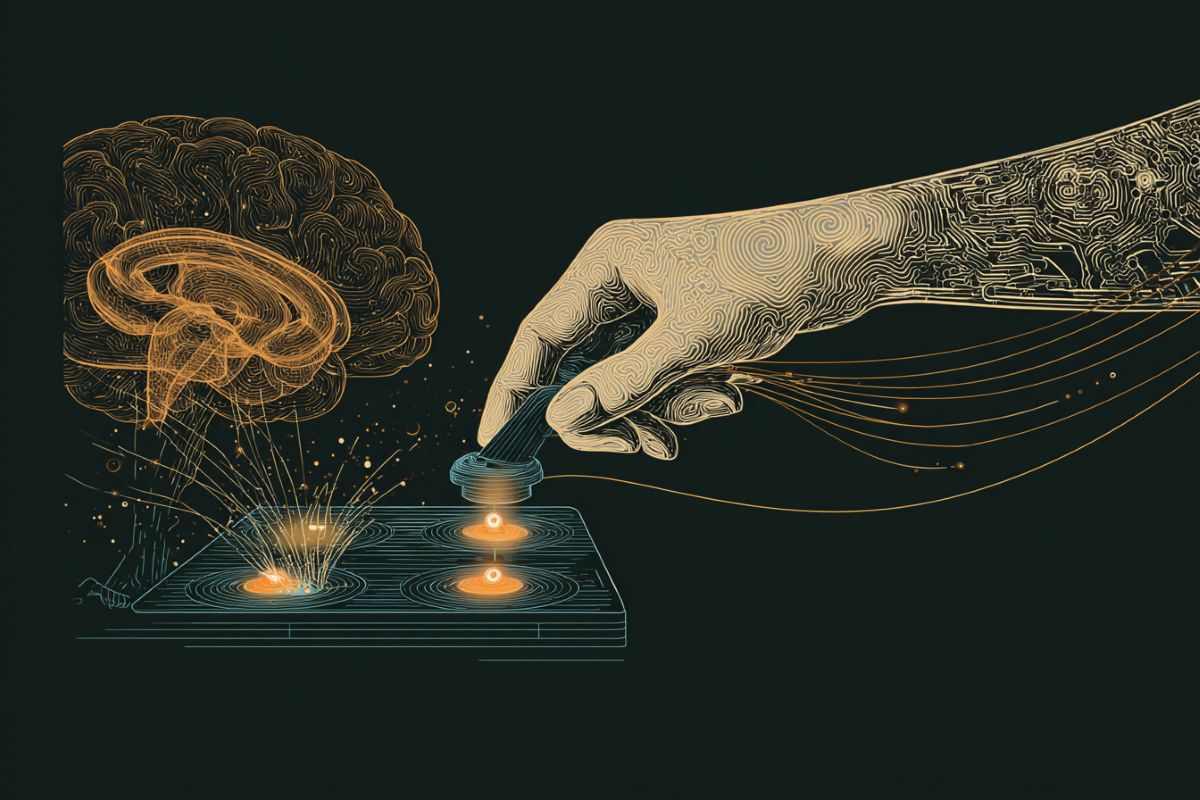
New research conducted by engineers at the University of Colorado Boulder has unveiled a profound and dynamic link between motivation, the brain’s reward system, and the subtle nuances of human movement. The study demonstrates that unexpected rewards can compel individuals to accelerate their movements within a mere fraction of a second, suggesting that the vigor with which we act is a direct reflection of the brain’s internal value computations, heavily influenced by the neurotransmitter dopamine. These groundbreaking findings, published on February 27 in the journal Science Advances, hold significant promise for developing noninvasive diagnostic and monitoring tools for neurological and psychiatric conditions such as Parkinson’s disease and depression, where dopamine dysfunction and altered movement patterns are hallmark symptoms.
Main Facts and Research Summary
The core of the research revolves around a joystick-based reaching task designed to observe human motor responses to varying reward probabilities and outcomes. Participants in the study consistently exhibited faster movements toward targets that offered a higher probability of reward, aligning with intuitive expectations of motivated behavior. However, the most compelling discovery emerged when a low-probability reward materialized unexpectedly. In these instances, participants’ movements gained an immediate, measurable burst of speed, occurring within approximately 220 milliseconds of the surprising reward signal. This rapid acceleration in movement vigor precisely mirrored the timing and characteristics of classic dopamine reward-prediction signals observed in previous neuroscience research.
This swift behavioral adjustment indicates that movement vigor is not merely a static reflection of overall motivation but rather a dynamic, moment-to-moment readout of the brain’s internal assessment of value and its deviations from expectation. The study further revealed that sustained sequences of positive or negative outcomes could recalibrate an individual’s overall movement speed, demonstrating how recent experiences continuously shape the energetic output of our actions. This continuous recalibration underscores the adaptive nature of the dopaminergic system in guiding behavior based on learned expectations. The researchers propose that these subtle, yet quantifiable, changes in movement could serve as a unique, noninvasive marker for tracking the function of dopamine pathways, offering a novel avenue for understanding and potentially diagnosing conditions where these pathways are compromised.
Background Context: The "Skip in Your Step" Phenomenon
The inspiration for this sophisticated scientific inquiry stems from a universally recognized anecdotal observation: the ‘skip in your step’ that accompanies moments of joy or anticipation. "Anecdotally, we just feel that this is true," stated senior author Alaa Ahmed, a professor in the Paul M. Rady Department of Mechanical Engineering at CU Boulder. She elaborated with a relatable example: "When you go to the airport to pick up your parents, you may run to greet them. But if you’re picking up a colleague, you’re probably just going to walk." This intuitive connection between emotional state, motivation, and physical energy forms the qualitative basis that Ahmed and her former graduate student, Colin Korbisch, sought to quantify and dissect at a neurological level.
Their aim was to move beyond mere observation and unravel the intricate neural pathways responsible for modulating such everyday behaviors. The study highlights the central role of dopamine, a critical brain chemical famously associated with pleasure, reward, motivation, and motor control. By meticulously designing an experiment that could isolate and measure subtle changes in movement vigor in response to reward cues, the CU Boulder team aimed to illuminate how this powerful neurotransmitter dictates not just what we do, but how energetically we do it. Their success in publishing these findings in a prestigious journal like Science Advances underscores the significance and rigor of their methodology and conclusions.
Dopamine: The Brain’s Architect of Motivation and Learning
To fully appreciate the implications of the CU Boulder study, it’s essential to understand the foundational role of dopamine in the brain. For decades, neuroscientists have recognized dopamine as a pivotal player in learning and motivation, particularly in how animals and humans learn to associate specific actions or cues with rewards. The concept of "reward prediction error" is central to this understanding.
A significant portion of this understanding originates from seminal studies conducted in the 1990s by neuroscientist Wolfram Schultz. Working with primates, Schultz and his colleagues meticulously documented the activity of dopaminergic neurons in response to reward cues. In one classic experiment, monkeys were trained to expect a reward, such as a drop of apple juice, upon hearing a distinct bell ring. Initially, the dopamine neurons would spike only when the juice was delivered. However, as the monkeys learned the association, these neurons began to fire vigorously at the sound of the bell itself, before the juice even appeared. This anticipatory spike indicated that dopamine was encoding the prediction of a reward.
Crucially, Schultz’s work also revealed what happened when expectations were violated. If the monkeys heard the bell but did not receive the anticipated juice, their dopamine neurons would still show an initial spike at the sound of the bell, but this activity would then dip significantly below baseline when the expected reward failed to materialize. This dip represented a "negative reward prediction error"—the outcome was worse than predicted. Conversely, if an unexpected, larger-than-normal reward was delivered, the dopamine neurons would exhibit an even larger spike than usual, signaling a "positive reward prediction error"—the outcome was better than predicted. In essence, the brain uses these dopamine signals to continuously update its understanding of which actions and cues are worth pursuing, forming the basis of reinforcement learning. The CU Boulder researchers hypothesized that these same patterns of reward prediction error might not only influence learning but also directly modulate the vigor of physical movement.
Methodology: Unraveling Vigor Through a Joystick Task
To test their hypothesis, Ahmed and Korbisch devised a straightforward yet powerful experiment. Human participants were instructed to perform a "reaching" task using a joystick-like device, targeting one of four distinct points displayed on a computer screen. The "rewards" in this study were kept simple and consistent: a brief flash of light accompanied by a beeping sound. This ensured that the reward itself was not inherently complex or varied, allowing the researchers to focus purely on the motivational impact of its probability and unexpectedness.
The targets were strategically assigned different probabilities of delivering this simple reward: one target guaranteed a reward every single time (100% probability), another never provided a reward (0% probability), and the remaining two offered intermediate probabilities (33% and 66%). This setup allowed the researchers to systematically manipulate both the expected value of reaching for a particular target and the potential for reward prediction errors.
The critical measurement in this experiment was the "reach vigor," quantified as the peak velocity of the joystick movement. By precisely tracking the kinematics of each reach, the team could detect even subtle, sub-second changes in the speed and force with which participants executed their movements. This objective, quantitative measure of movement provided the "window to the mind" that Korbisch emphasized, allowing them to infer internal neural computations without direct access to the brain itself.
Key Findings and Their Dopaminergic Signature
The results of the CU Boulder study provided compelling evidence for the dynamic interplay between reward, dopamine, and movement vigor. As anticipated, participants exhibited a clear scaling of movement speed with expected value: they tended to reach faster toward targets that were more likely to offer a reward. This initial finding validated the premise that motivational signals influence motor control.
However, the truly intriguing discovery came from observing responses to unexpected outcomes. When participants reached for a target with a low probability of reward (e.g., 33%) and unexpectedly received one, their reaching motion exhibited a sudden and distinct surge in speed. This increase in vigor occurred remarkably quickly, just 220 milliseconds after the reward signal (the beep and flash of light). This sub-second acceleration, while subtle and not readily observable with the naked eye, was a robust and statistically significant effect.
The timing of this burst of energy is crucial. It aligns almost perfectly with the known latency of dopaminergic phasic responses to positive reward prediction errors. The researchers hypothesize that this rapid invigoration reflects a "second jolt of dopamine" triggered by the pleasant surprise—the outcome being better than predicted. This interpretation is further supported by the observation that when participants were certain of receiving a reward (e.g., the 100% probability target), they did not exhibit this secondary surge in vigor after the reward signal. As Korbisch noted, "Importantly, this effect wasn’t tied to reward reception alone. If the outcome was certain and known to the individual, we saw no further increase in vigor." This distinction underscores that it is the unexpectedness of the positive outcome, the positive reward prediction error, that drives the rapid increase in movement vigor, rather than the reward itself.
Beyond these immediate, sub-second responses, the study also demonstrated the impact of cumulative experience. Participants’ overall movement speed adapted over time based on recent outcomes. If they experienced a string of consecutive rewards, their general movement speed across trials tended to increase. Conversely, a series of unrewarded attempts led to a noticeable slowing down of movements. This long-term recalibration highlights how the brain continuously updates its motivational state and adjusts motor output based on a running average of positive and negative reinforcement, consistent with the learning functions of the dopaminergic system.
Broader Implications and Medical Relevance
The findings from the University of Colorado Boulder research carry profound implications for our understanding of brain function and the development of new clinical tools. The most significant potential lies in using movement vigor as a "noninvasive marker for tracking dopamine function" in various medical conditions.
Parkinson’s Disease: This neurodegenerative disorder is characterized by the progressive loss of dopaminergic neurons in the substantia nigra, a region of the brain critical for motor control. Patients with Parkinson’s experience a range of motor symptoms, including bradykinesia (slowness of movement), rigidity, and tremor. Current diagnosis relies heavily on clinical observation of these motor symptoms, which can be subjective and often manifest only after significant neuronal loss has already occurred. By demonstrating that movement vigor directly reflects dopamine-linked reward prediction signals, this research offers a mechanistic explanation for the reduced movement speed observed in Parkinson’s patients. A quantifiable measure of movement vigor could potentially provide an objective, early indicator of dopaminergic dysfunction, aiding in earlier diagnosis and more precise monitoring of disease progression or response to dopamine-replacement therapies. With Parkinson’s disease affecting over 10 million people worldwide, the need for objective, early diagnostic markers is substantial.
Depression: Beyond motor disorders, the study’s insights extend to psychiatric conditions. Depression, a leading cause of disability globally, is often associated with psychomotor retardation—a noticeable slowing of thought and physical movement. While the neurochemical basis of depression is complex, dopamine dysfunction, particularly in reward pathways, is increasingly recognized as a contributing factor. The anhedonia (inability to experience pleasure) common in depression may be linked to impaired dopamine signaling. The observation that strings of negative outcomes lead to a generalized slowing of movement directly resonates with the experience of individuals with depression. Tracking changes in movement vigor over time could offer an objective measure of depressive severity, treatment efficacy, or even early signs of relapse, providing a much-needed complement to subjective patient self-reports and clinical assessments.
Future Research and Clinical Potential:
This study lays crucial groundwork, but it also opens numerous avenues for future research. One critical next step will be to conduct longitudinal studies in patient populations, directly comparing the observed movement vigor changes with clinical measures of dopamine function and disease progression in individuals with Parkinson’s disease or depression. Brain imaging techniques, such as fMRI or PET scans, could be used in conjunction with movement tasks to directly correlate behavioral vigor changes with real-time dopamine release or receptor activity in relevant brain regions.
Furthermore, the simplicity of the joystick task suggests that similar paradigms could be developed into user-friendly applications or wearable sensor technologies for continuous, real-world monitoring. Imagine a future where a smartphone app or a smart device could track subtle changes in an individual’s movement patterns over months or years, providing invaluable data to medical professionals. "If you’ve had a good day, you’ll go faster. If you’ve had a bad day, you’ll move slower," Ahmed summarized, encapsulating the potential for movement as a continuous, intuitive barometer of internal state and neurological health. This could pave the way for personalized medicine, allowing for interventions to be tailored and adjusted based on objective, real-time data, ultimately improving outcomes for millions affected by dopamine-related conditions.
In conclusion, the University of Colorado Boulder research provides compelling evidence that the vigor of human movement is not merely a physical act but a sophisticated, rapid, and continuous reflection of the brain’s internal motivational and value computations, primarily mediated by dopamine. By establishing this dynamic link, the study offers a powerful new framework for understanding how we act and react to our environment, while simultaneously opening a promising "window to the mind" for diagnosing and monitoring neurological and psychiatric disorders with greater precision and objectivity.