 admin
admin
The quest for an optimal diet has long been a central focus of public health research and individual well-being. While numerous dietary guidelines and assessment tools exist, a recent emphasis on whole plant foods and their rich phytochemical content has spurred interest in more nuanced measures of dietary quality. Among these, the "phytochemical index" has emerged as a compelling metric, offering a straightforward yet powerful way to evaluate the healthfulness of one’s diet and its correlation with a wide array of positive health outcomes. This index, defined as the percentage of dietary calories derived from phytochemical-rich foods, provides a quantifiable benchmark that transcends simplistic calorie counting or broad food group classifications.
Understanding the Phytochemical Index
At its core, the phytochemical index is designed to capture the health-promoting potential of a diet by focusing on the abundance of bioactive compounds found naturally in plants. Phytochemicals, distinct from essential vitamins and minerals, are responsible for many of the observed health benefits associated with diets rich in fruits, vegetables, whole grains, legumes, nuts, and seeds. These compounds are believed to exert their effects through various mechanisms, including antioxidant activity, anti-inflammatory properties, and modulation of cellular processes.
The simplicity of the phytochemical index lies in its direct correlation with calorie intake. Instead of simply tallying the volume of plant-based foods consumed, it measures the proportion of calories that originate from these nutrient-dense sources. This approach acknowledges that while a diet may be abundant in plant foods, the inclusion of high-calorie, low-nutrient items like refined grains, added sugars, and unhealthy fats can dilute its overall healthfulness. Theoretically, a diet consisting solely of whole, unprocessed plant foods, devoid of refined grains, added oils, added sugars, and hard liquors, could achieve a perfect phytochemical index score of 100. In stark contrast, the average American diet, heavily reliant on processed foods and animal products, typically scores significantly lower, often in the range of 20 or less, reflecting a substantial deficit in phytochemical-rich food consumption.
The Evolution of Dietary Assessment and the Rise of Plant-Based Metrics
For decades, dietary assessment has relied on various methodologies, from food frequency questionnaires to 24-hour dietary recalls, aiming to provide insights into eating patterns. However, these methods often struggle to capture the full spectrum of dietary quality, particularly the nuanced benefits of phytochemicals. Early nutritional science primarily focused on macronutrients (carbohydrates, proteins, fats) and essential micronutrients (vitamins, minerals). While crucial, this perspective often overlooked the synergistic effects of complex plant compounds.
The recognition of vegetarian and vegan diets as potentially healthier options marked a turning point. Numerous studies have consistently demonstrated that individuals adhering to plant-based eating patterns tend to exhibit lower body mass indices, reduced risk of cardiovascular disease, and improved metabolic markers. However, a critical observation emerged: not all vegetarian diets are created equal. The consumption of refined grains, such as white rice and white bread, or highly processed vegetarian foods, can compromise the nutritional quality even within a plant-centric framework. This realization underscored the need for an assessment tool that could differentiate between truly nutrient-dense plant-based eating and less healthful variations.
The development and application of the phytochemical index can be traced back to researchers seeking a more precise measure of dietary quality that aligned with observed health benefits. While direct quantification of individual phytochemicals in food or biological samples is complex and resource-intensive, the phytochemical index offers a practical proxy. By estimating the caloric contribution of phytochemical-rich foods, it provides a standardized score that can be readily applied in research settings and potentially in clinical practice.

Research Unveiling the Power of Phytochemicals
The scientific literature abounding with studies investigating the phytochemical index reveals a consistent and compelling narrative of positive health associations. Researchers have utilized this index to explore its correlation with a wide range of health outcomes, from weight management and metabolic health to the risk of chronic diseases and even mental well-being.
Weight Management and Body Composition:
One of the earliest and most consistently observed benefits linked to higher phytochemical index scores is improved weight management. Meta-analyses involving numerous studies have shown that vegetarian diets are associated with significantly lower body weight and body mass index (BMI) compared to non-vegetarian diets. Furthermore, research employing the phytochemical index has demonstrated that even when individuals do not strictly adhere to a 100% plant-based diet, increasing the proportion of whole plant foods in their diet, as reflected by a higher index score, can contribute to preventing weight gain and reducing body fat. Studies have shown that individuals in the healthiest-eating tier, averaging a phytochemical index score of around 40, still experienced benefits in weight management, suggesting that a substantial intake of whole plant foods, even when not exclusive, can be protective. This indicates that the focus on increasing consumption of nutrient-dense, lower-calorie plant foods, rather than solely on calorie restriction, can be an effective strategy for weight loss and maintenance.
Metabolic Health and Disease Prevention:
The impact of a high phytochemical index on metabolic health is equally profound. Studies have indicated that higher intakes of fruits, vegetables, whole grains, and legumes are protective against various metabolic disorders, irrespective of meat consumption. Specifically, research has linked a higher phytochemical index with a reduced risk of abdominal obesity and significantly lower levels of triglycerides, a type of fat in the blood that is a risk factor for heart disease.
Furthermore, the index has shown promise in addressing insulin resistance and related conditions. Even at the same body weight and with similar amounts of abdominal fat, individuals consuming plant-based diets tend to exhibit higher insulin sensitivity. This is potentially due to the anti-inflammatory and free-radical quenching properties of plant compounds. The odds of hyperinsulinemia, a marker of insulin resistance, have been observed to progressively decrease with greater plant consumption. This aligns with findings that show significantly lower odds of prediabetes among individuals who derive more than half of their calories from healthy plant foods.
The benefits extend to broader metabolic syndrome components. Studies have reported significantly lower odds of metabolic syndrome and high blood pressure among individuals with higher phytochemical index scores. Over a three-year period, those consuming more healthy plants exhibited approximately half the odds of being diagnosed with hypertension.
Cancer Risk and Benign Breast Conditions:
The protective role of a high phytochemical index against certain cancers is a significant area of research. Studies have explored the link between dietary phytochemical intake and the risk of breast cancer, with findings consistently pointing towards a lower risk associated with higher consumption of healthy plant foods. Notably, when individuals doubled the proportion of plants in their diet compared to the standard American diet, they experienced more than a 90% reduction in the odds of developing breast cancer.
Beyond malignant conditions, the phytochemical index has also been associated with a reduced incidence of benign breast diseases. Individuals with the highest phytochemical index scores demonstrated a 70% lower likelihood of developing conditions such as fibrocystic diseases, fatty necrosis, and ductal ectasia.
Mental Health and Well-being:
Emerging research suggests that dietary quality, as measured by the phytochemical index, can also have a tangible impact on mental health. Studies have indicated a significant association between higher intakes of healthy plant foods and reduced rates of depression, anxiety, and psychological distress. Specifically, individuals with higher phytochemical index scores have reported approximately 80% less depression, two-thirds less anxiety, and 70% less psychological distress. This suggests that the anti-inflammatory and neuroprotective effects of plant compounds may play a crucial role in supporting mental well-being.
The Current State of Dietary Phytochemical Intake
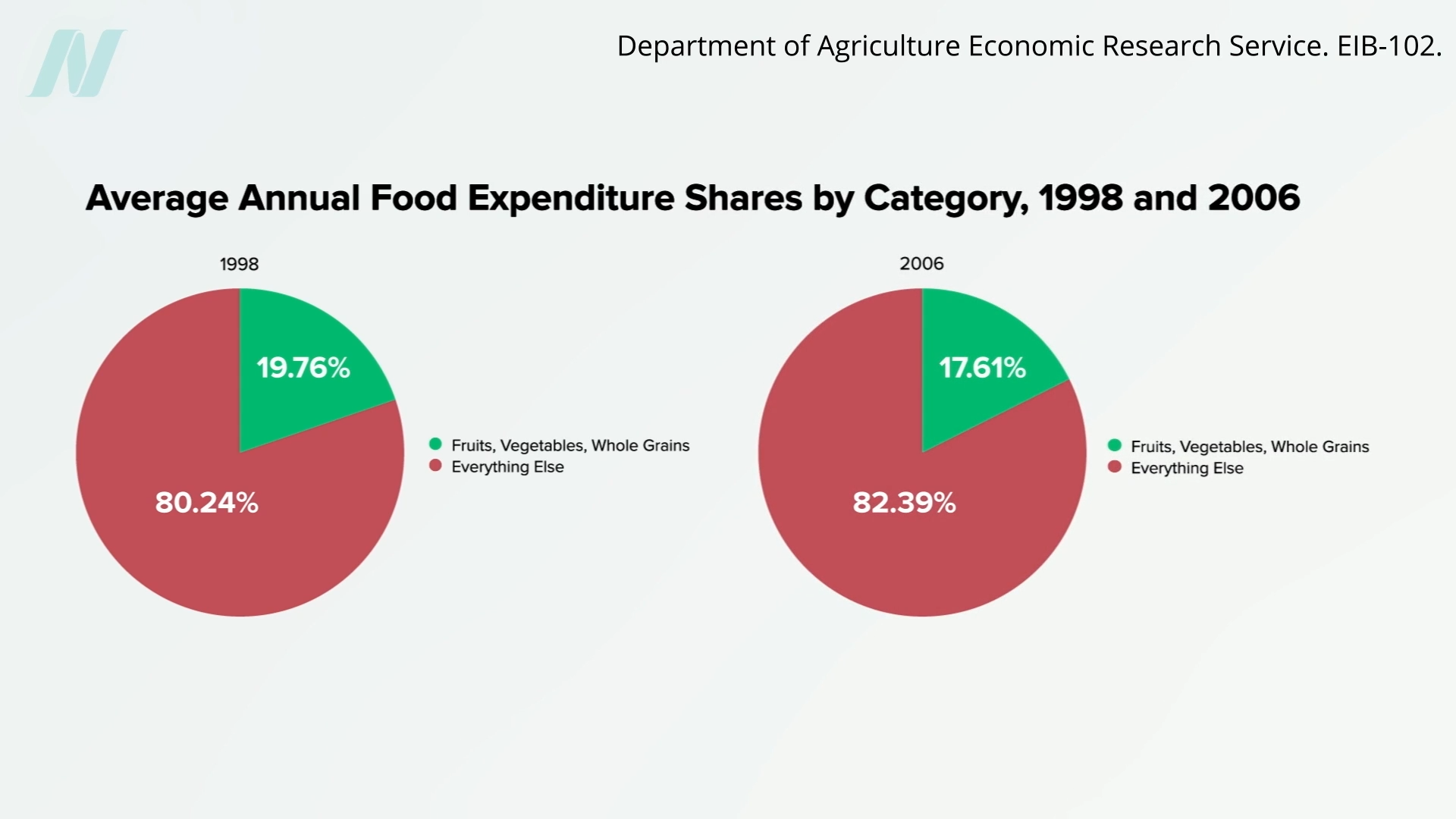
Despite the compelling evidence supporting the benefits of a high phytochemical index, current dietary patterns in many Western populations fall considerably short of optimal levels. The decline in the consumption of whole plant foods and the corresponding increase in processed foods, refined grains, and added sugars have contributed to a low average phytochemical index score. Data from the late 1990s indicated that approximately 20% of food purchases were whole plant foods. More recent trends suggest a further reduction in this proportion, highlighting a growing disconnect between recommended dietary practices and actual consumption patterns. This trend has significant implications for public health, contributing to the rising prevalence of chronic diseases and associated healthcare costs.
Implications and Future Directions
The phytochemical index offers a valuable tool for both public health initiatives and individual dietary guidance. Its simplicity and direct link to observable health outcomes make it an attractive metric for researchers and clinicians alike.
Public Health Strategies:
For public health organizations, the phytochemical index can inform the development of more targeted dietary recommendations and public awareness campaigns. Shifting the focus from simply advising on calorie reduction or the avoidance of specific "unhealthy" foods to promoting the increased consumption of phytochemical-rich foods can empower individuals with a positive and actionable dietary goal. Understanding that a higher phytochemical index is associated with a reduced risk of a wide spectrum of chronic diseases can galvanize efforts to promote access to and consumption of fruits, vegetables, whole grains, legumes, nuts, and seeds.
Clinical Applications:
In clinical settings, the phytochemical index could serve as a practical tool for dietary counseling. Healthcare providers could use it to assess a patient’s current dietary quality and to set personalized goals for improvement. The index’s ability to correlate with diverse health outcomes, from weight management and metabolic health to disease prevention, makes it a versatile metric for addressing a broad range of patient concerns. While direct quantification of phytochemicals remains challenging, the index provides a readily understandable and actionable proxy that can motivate patients to make healthier food choices.
Further Research:
While the existing research on the phytochemical index is robust, further investigation is warranted. Longitudinal studies are crucial to solidify the causal relationships between higher phytochemical index scores and long-term health outcomes. Exploring the specific phytochemicals or combinations of phytochemicals that contribute most significantly to these benefits could lead to even more refined dietary recommendations. Additionally, research into the development of user-friendly tools for individuals to estimate their phytochemical index score could enhance its practical application in everyday life. The potential for integrating this index into large-scale dietary surveillance programs could provide invaluable data for monitoring population-level dietary trends and the effectiveness of public health interventions.
The journey towards optimal health is multifaceted, and the phytochemical index represents a significant step forward in understanding the profound impact of whole plant foods on our well-being. By shifting our focus towards the power of these nutrient-dense sources, we can pave the way for a healthier future, one phytochemical-rich meal at a time.