admin
admin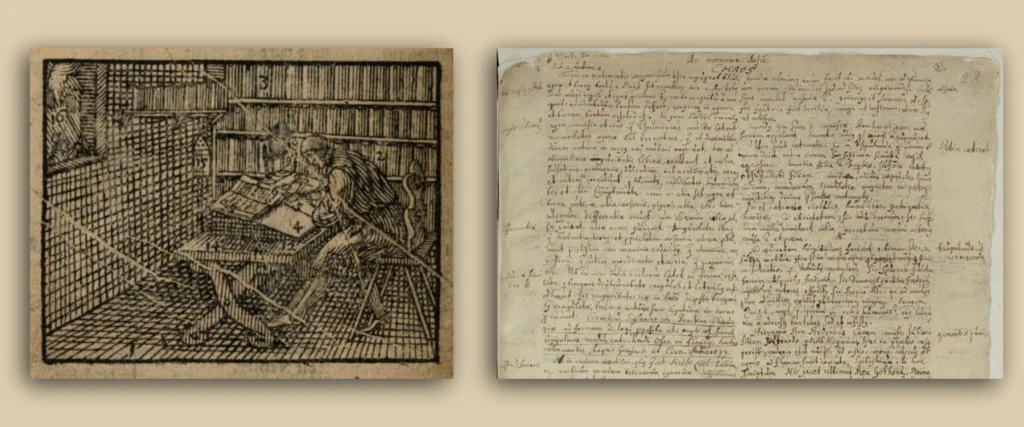
The challenge of navigating an environment saturated with information is often characterized as a uniquely modern phenomenon, yet historical records suggest that the struggle for cognitive focus dates back to the dawn of the printing press. Recent scholarship from All Souls College, Oxford, highlighting the 17th-century methodologies of Nicolaus Steno, has drawn a direct parallel between the information management strategies of the early modern period and the current discourse surrounding artificial intelligence and its projected impact on the global economy. As modern markets react to viral forecasts of AI-driven labor displacement, the techniques developed by Steno—ranging from "time blocking" to "deep work"—are being re-examined not merely as productivity tools, but as essential survival mechanisms for the intellectual class.
The 17th-Century Information Crisis: Nicolaus Steno and the Rise of the Printing Press
Nicolaus Steno, born in 1638, is recognized today as a pioneer in both anatomy and geology. His contributions to the "law of superposition" remain foundational to the study of stratigraphy. However, his academic journey was shaped by a burgeoning crisis of the 1650s: the overwhelming availability of printed material. Following the 15th-century invention of the Gutenberg press and the subsequent humanist revival, the volume of accessible knowledge expanded at a rate that exceeded the human capacity for consumption.
Historians of science note that by the mid-17th century, scholars were grappling with "information overload," a term frequently used today but equally applicable to the post-Renaissance era. The proliferation of books presented a novel distraction, forcing thinkers to question how to prioritize reading, how to internalize vast amounts of data, and whether every chapter of a text required rigorous excerpting.
To combat this, Steno and his contemporaries refined the "commonplace book" system. This technique involved maintaining a master notebook where scholars transcribed significant passages, categorized by theme, to create a personalized repository of knowledge. This method allowed for the synthesis of disparate ideas, yet even this was insufficient as the sheer volume of "good books" continued to grow. Steno’s innovation was not just in how he recorded information, but in how he managed his attention.
Chronology of Focus: From Steno’s Notebooks to Modern Productivity
The evolution of attention management can be traced through specific historical milestones that mirror today’s digital distractions:
- 1450s: The invention of the movable-type printing press begins the democratization of information.
- 1500s–1600s: The "Information Explosion" occurs as ancient philosophies and new scientific discoveries are published widely.
- 1650s: Nicolaus Steno, while studying at the University of Copenhagen and later in Florence, develops a protocol of "single-topic focus." He famously decreed in his journals that "before noon nothing must be done except medical things," reserving the morning hours for high-density tasks such as analyzing Church Father manuscripts and biblical texts at the Medici library.
- 2010: Author William Powers publishes Hamlet’s BlackBerry, a "techno-history" arguing that past societies faced similar digital-analog tensions and found relief through structured "disconnects."
- 2016–2024: Modern productivity theorists, including Cal Newport, formalize concepts such as "Deep Work" and "Slow Productivity," which mirror Steno’s 17th-century strategies of time-blocking and avoiding "harmful hastening."
- 2026 (Recent Events): A surge in generative AI capabilities triggers a new wave of information overload and economic anxiety, leading to a volatile intersection of technology and market speculation.
The Citrini Research Controversy and Market Volatility
In February 2026, the intersection of information overload and technological speculation reached a flashpoint. Citrini Research, a boutique financial services firm, published a widely circulated essay predicting a near-term "white-collar apocalypse." The report suggested that autonomous AI agents would soon be capable of replacing the majority of cognitive-labor roles, potentially dismantling the traditional job market for analysts, lawyers, and administrative professionals.
The impact of the essay was immediate. Despite its publication on a subscription-based platform rather than a peer-reviewed economic journal, the piece went viral across social media and financial news aggregators. On the day following its release, the S&P 500 experienced a modest but notable decline, which Bloomberg and other financial outlets attributed in part to the "Citrini effect." This event underscored a growing trend in "vibe-based" economic reporting, where speculative narratives about AI-driven disruption carry enough weight to influence institutional investor behavior.
Institutional Pushback: Substance vs. Sentiment
The market reaction to the Citrini essay prompted a series of sharp rebuttals from established economic analysts. The central critique focused on the "vibes-to-substance ratio" of the AI-apocalypse narrative. A Deutsche Bank analyst, speaking to The New York Times, suggested that while the sentiment was high, the empirical evidence for immediate, wholesale labor destruction was lacking.
A more technical analysis was provided by the Global Macro Strategies group at Citadel Securities. Their response criticized the growing tendency of the "macroeconomic community" to derive certainties about labor destruction from hypothetical Substack scenarios. The Citadel report highlighted several flaws in the AI-disruption narrative:
- Forecasting Limitations: Economists historically struggle to predict payroll growth even two months in advance; therefore, long-term forecasts of total labor replacement are statistically unreliable.
- Task vs. Job Distinction: Analysts argue that while AI can automate specific tasks, it does not necessarily eliminate jobs. Historical precedents show that automation often increases the demand for human oversight and higher-level strategic thinking.
- Economic Inertia: The integration of new technology into complex corporate infrastructures takes significantly longer than the development of the technology itself.
Supporting Data: The Reality of AI Integration
While the viral essays focused on "apocalyptic" scenarios, data from the first quarter of 2026 suggests a more nuanced reality. According to labor statistics and corporate earnings reports:
- Productivity Gains: Firms utilizing AI agents reported a 12% increase in output per worker in administrative sectors, but total headcount remained stable or saw slight increases in "oversight" roles.
- Market Sentiment: A survey of Fortune 500 CEOs indicated that while 70% plan to increase AI investment, only 5% anticipate significant layoffs related to AI in the next 24 months.
- The "Jevons Paradox": Economists point to the Jevons Paradox, where an increase in the efficiency of a resource (in this case, cognitive labor) leads to an increase in its total consumption rather than a decrease. As AI makes "thinking" cheaper, organizations are simply demanding more complex intellectual output.
Broader Impact and Implications
The parallel between Nicolaus Steno’s 17th-century focus and the 21st-century AI debate reveals a fundamental truth about the human condition: as information becomes more abundant and technology more capable, the value of disciplined, concentrated thought increases. Steno’s rejection of "harmful hastening" in favor of "sticking to one topic" is no longer just a scholar’s preference; it is a competitive advantage in an era where "vibe-based" reporting can move markets.
The current economic anxiety regarding AI appears to be a modern iteration of the "information overload" that followed the printing press. Just as Steno had to develop new note-taking and time-management techniques to survive the 1650s, modern professionals are being forced to adopt "slow productivity" to remain relevant in a market saturated with AI-generated content and speculative noise.
Ultimately, the "AI Reality Check" provided by firms like Citadel and analysts at Deutsche Bank suggests that the economy is more resilient than viral essays might indicate. The transition to an AI-augmented workforce is likely to be a gradual evolution rather than an overnight collapse. In this environment, the best practices remain those established four centuries ago: avoiding cognitive overload, focusing on one high-value task at a time, and protecting the morning hours for the most mentally demanding efforts. The lessons of Nicolaus Steno suggest that while the tools of distraction change, the architecture of deep thought remains constant.