
 admin
admin
Recent scientific inquiries are shedding new light on the multifaceted potential of onions, a common culinary staple, in addressing complex health concerns such as weight loss, Polycystic Ovary Syndrome (PCOS), and cholesterol levels. While preliminary findings have sparked interest, a closer examination of the research reveals a nuanced picture, emphasizing the critical importance of rigorous scientific methodology and the limitations of extrapolating broad health claims from initial studies. This evolving understanding suggests that while onions possess promising bioactive compounds, their precise impact on human health requires further investigation.
Investigating Onion Powder’s Impact on Body Fat Reduction
Initial research exploring the impact of onion consumption on body fat reduction presented intriguing, albeit statistically inconclusive, results. A study, identified as the "Effect of Steamed Onion (ONIRO) Consumption on Body Fat and Metabolic Profiles in Overweight Subjects," delved into whether even minimal daily intake of onion powder could influence body composition. Researchers administered a remarkably small dose – approximately one-eighth of a teaspoon (300 mg) of dried, steamed onion powder daily – to participants. Steamed onions were chosen for their reduced pungency and odor, facilitating their incorporation into a placebo-controlled design.
The abstract of this study reported significant reductions in body fat mass as measured by DEXA scans, and a decrease in visceral and subcutaneous fat areas as assessed by CT scans. These findings, if taken at face value, would suggest a potent effect of even trace amounts of onion powder on fat reduction.
However, a deeper analysis of the data reveals critical limitations that temper these initial impressions. When comparing the onion powder group to the placebo group, the differences in fat loss did not achieve statistical significance. The group receiving the onion powder did exhibit a greater loss of body fat (approximately 1.5 pounds or 0.64 kg) compared to their baseline, but this difference was not statistically distinguishable from the modest fat loss observed in the placebo group (around 7 grams). This outcome indicates that the observed fat reduction in the onion powder group could be attributed to chance rather than a direct pharmacological effect of the onion. Similarly, while the onion powder group showed a greater reduction in overall fat and visceral fat compared to placebo, these differences did not meet the threshold for statistical significance.
A subsequent study further investigated the effects of onion powder on body fat, this time with a considerably higher daily dose of four teaspoons (9 g). This research also failed to demonstrate a significant acceleration of visceral, total, or subcutaneous fat loss when compared to a placebo. Intriguingly, in this particular study, the placebo itself consisted of four teaspoons of onion powder, introducing a complex variable. The study compared yellow and white onions, both of which appeared to contribute to abdominal body fat loss, but without a statistically significant difference between the two types.
While the minimal side effects associated with these small daily doses of onion powder might lead some to consider it a low-risk intervention, the current body of evidence is insufficient to confidently assert its efficacy in promoting weight loss. The scientific community generally requires robust, statistically significant data replicated across multiple studies before endorsing such claims.
Exploring Onions’ Potential in Managing Polycystic Ovary Syndrome (PCOS)
Polycystic Ovary Syndrome (PCOS) is a prevalent endocrine disorder affecting an estimated 5% to 10% of women of reproductive age. Characterized by a spectrum of symptoms including irregular menstrual cycles, PCOS is also strongly associated with a pre-diabetic state, marked by reduced insulin sensitivity. The challenges in managing PCOS are often compounded by the potential side effects of pharmaceutical treatments, making the exploration of dietary interventions a significant area of interest.

The rationale for investigating onions in the context of PCOS stems from findings related to their impact on blood sugar and insulin sensitivity. Pre-clinical studies in rats with diabetes have demonstrated that onion extracts can improve blood sugar control and insulin sensitivity. More directly relevant to human health, studies have shown that onion extracts can lower blood sugar levels in individuals with diabetes. While initial research suggested these benefits might not extend to individuals without diabetes, the unique metabolic profile of women with PCOS, often described as a "pre-diabetic state," necessitates further examination.
A study examining the "Metabolic Effects of Onion and Green Beans" provided some context. In this research, participants with diabetes consumed either a small onion (60 g) daily or a diet supplemented with green beans (600 g) for a week. Both interventions showed positive metabolic effects. The onion consumption led to an approximate 10% reduction in blood sugar levels compared to a control diet, while green beans resulted in roughly a 15% reduction.
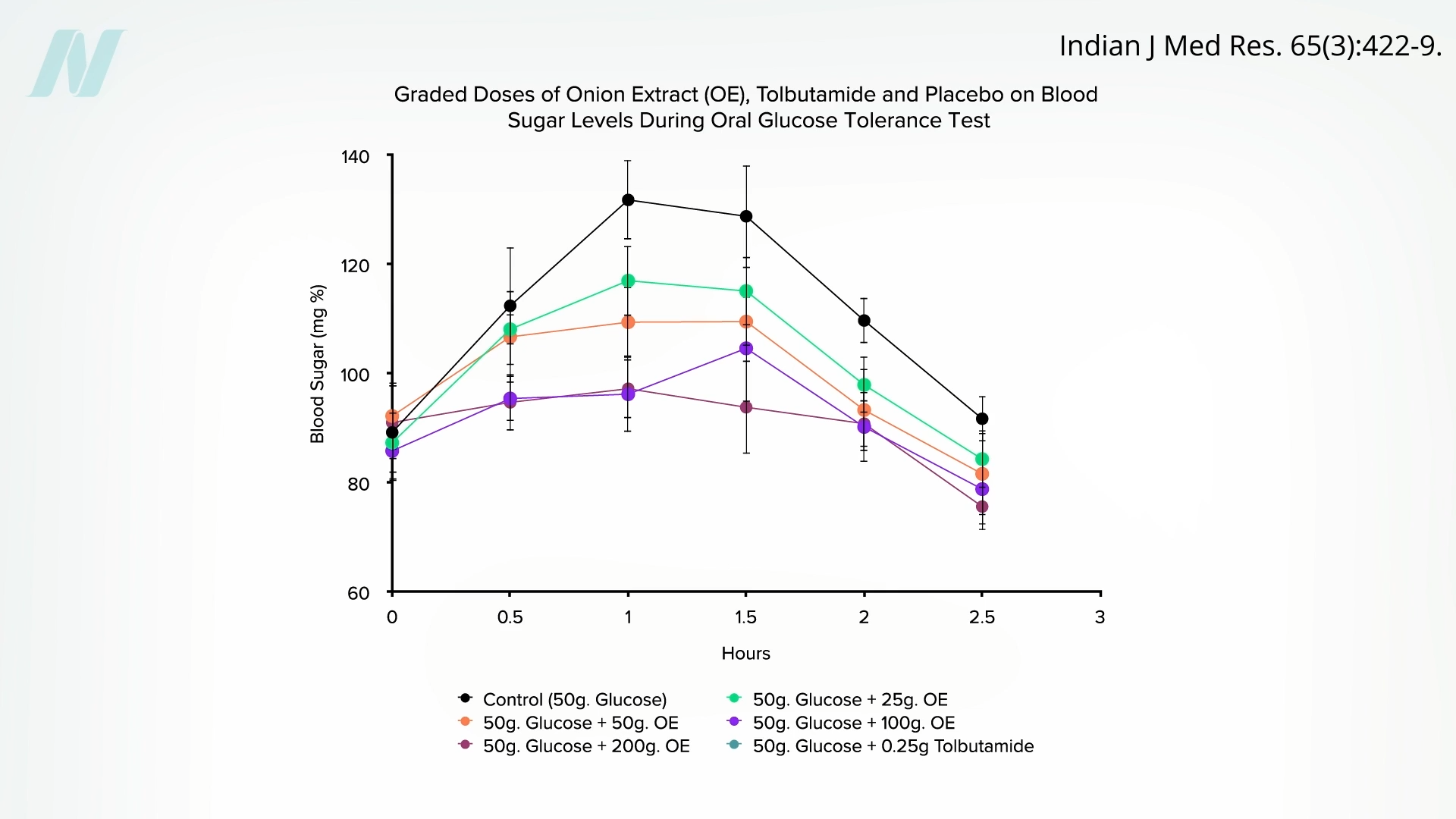
Further research has investigated the impact of onions on blood sugar spikes. Studies have shown that while onions do not appear to lower already normal blood sugar levels – a desirable outcome – they can significantly mitigate the blood sugar surge following the consumption of a sugar load, such as corn syrup. In one experiment, when participants consumed approximately 50 grams of corn syrup, their blood sugar levels rose sharply. However, when the same amount of sugar was administered alongside increasing amounts of onion extract, the resulting blood sugar spike was substantially dampened, approaching the effect observed with certain antidiabetic medications. Similar blunting effects on blood sugar have been observed when onion extract is administered alongside adrenaline, suggesting a mechanism that counteracts rapid glucose mobilization.
Despite these promising observations regarding blood sugar regulation in broader populations, the direct application of these findings to PCOS remains a subject requiring more definitive evidence. A comprehensive review of the literature, including a Cochrane Library analysis, found no significant differences in blood sugar levels or markers of insulin resistance between PCOS patients consuming high-onion versus low-onion diets. Furthermore, no significant differences in inflammation markers were observed between these groups.
However, the health risks associated with PCOS extend beyond diabetes and inflammation. Women with PCOS face a significantly elevated risk of high cholesterol, a critical factor in cardiovascular health. Cardiovascular disease remains the leading cause of mortality among women. This heightened risk profile underscores the importance of exploring dietary strategies that can positively impact lipid profiles in women with PCOS.
Raw Red Onion and Cholesterol Regulation
The impact of raw red onion consumption on cholesterol levels has emerged as another area of scientific interest. While women with PCOS are at a substantially increased risk for heart disease, with some studies indicating they are over seven times more likely to experience a heart attack, understanding dietary interventions that can mitigate these risks is paramount.
Preliminary findings suggest that consuming raw red onion may be effective in lowering cholesterol. However, as with other areas of onion research, the magnitude of these effects and their statistical significance require careful consideration. In one study, participants who consumed more onions experienced a reduction in LDL cholesterol of approximately 5 mg/dL. While this represents a decrease, it was not statistically significant when compared to a control group that consumed fewer onions. This highlights the challenge of demonstrating clinically meaningful differences with modest dietary interventions in controlled study settings.
Historical research also offers some context for onion’s potential role in lipid management. A study conducted approximately 50 years ago investigated the effects of consuming large quantities of butter on cholesterol levels. When participants consumed nearly 100 grams of butter, their cholesterol levels increased by about 30 points. However, when the same amount of butter was consumed in conjunction with approximately 50 grams of raw or boiled onion, the cholesterol increase was substantially attenuated, rising by only 9 points or 3 points, respectively. The primary takeaway from this older study, beyond the specific findings on onions, is a stark reminder of the profound impact of dietary fat, particularly saturated fat, on cholesterol levels.
The collective evidence on onions’ impact on cholesterol suggests a potential moderating effect, particularly in the context of high-fat meals. However, the current data does not provide a strong basis for recommending specific quantities of raw red onion solely for the purpose of cholesterol reduction without further robust clinical trials. The observed effects, while directionally positive, often fall short of statistical significance, indicating that more substantial dietary changes or a greater volume of research may be needed to confirm these benefits.
Broader Implications and Future Directions
The ongoing research into the health benefits of onions, while yielding some intriguing preliminary findings, underscores a critical aspect of scientific inquiry: the journey from promising lab results or observational data to established dietary recommendations is long and requires rigorous, well-designed human trials. The complexity of human physiology, coupled with the influence of numerous confounding dietary and lifestyle factors, means that simple extrapolations can be misleading.
For instance, the initial excitement surrounding onion powder’s purported weight loss effects was tempered by a more detailed statistical analysis that revealed the observed differences were not statistically significant when compared to a placebo. This highlights the importance of not just looking at reported outcomes but also at the statistical robustness of those findings. Similarly, while onions show promise in modulating blood sugar responses, their direct impact on the clinical management of PCOS-related insulin resistance remains an area where more definitive evidence is needed.
The findings regarding cholesterol regulation, particularly with raw red onion, suggest a potential benefit, but the modest magnitude of the observed changes in studies necessitates further investigation to determine if these effects are clinically relevant and sustainable. The historical data point to a significant buffering effect of onions against a high-fat challenge, which could be relevant for individuals seeking to moderate the impact of occasional dietary indiscretions.
Moving forward, the scientific community will likely focus on larger, randomized controlled trials with clearly defined populations and outcome measures. Investigating the specific bioactive compounds within onions, such as quercetin and sulfur-containing compounds, and their precise mechanisms of action in the human body will be crucial. Furthermore, understanding how different forms of onion consumption – raw, cooked, powdered, or as extracts – influence bioavailability and efficacy will be essential in developing targeted dietary recommendations.
In conclusion, while onions are a valuable and healthy addition to a balanced diet, the current scientific evidence does not support their use as a standalone treatment for weight loss, PCOS, or significant cholesterol reduction. The research is promising and points towards potential benefits, but it is still in its early stages. As more robust data emerges, the role of onions in preventative health and as a complementary dietary strategy may become clearer, but for now, they remain a flavorful ingredient with intriguing, yet unproven, therapeutic potential.
Doctor’s Note
Further exploration of the scientific literature surrounding the broader health claims of onions, including their potential benefits for testosterone, bone health, allergies, and cancer, can be found in related research. Previous discussions have delved into these aspects, offering a comprehensive overview of the available evidence and its limitations. This ongoing scientific discourse is vital for a nuanced understanding of how common foods can contribute to overall well-being.






