admin
admin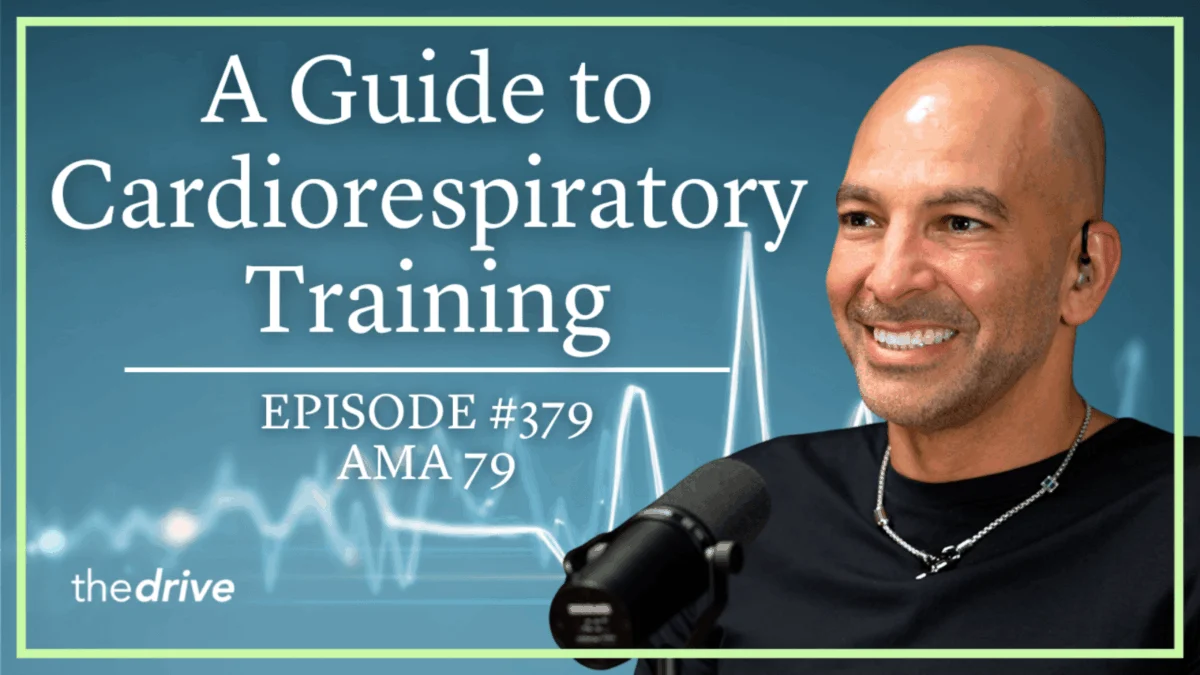
In a comprehensive release aimed at synthesizing years of clinical observation and physiological research, Dr. Peter Attia has published a foundational guide to cardiorespiratory fitness (CRF) through his latest "Ask Me Anything" (AMA) session, episode #79. The episode serves as a definitive consolidation of Attia’s current thinking on the mechanics of exercise as a primary intervention for extending both lifespan and healthspan. By addressing the persistent confusion surrounding exercise intensity, volume, and the specific physiological benefits of different training zones, the guide offers a roadmap for individuals seeking to maintain independence and physical vigor into their final decades of life.
The central thesis of the discussion rests on the assertion that cardiorespiratory fitness is not merely a component of health but is perhaps the single most potent modifiable predictor of all-cause mortality. Dr. Attia, a physician known for his focus on the applied science of longevity, argues that the metrics of VO2 max and Zone 2 aerobic efficiency provide more predictive value regarding a patient’s future health outcomes than traditional risk factors such as smoking, hypertension, or Type 2 diabetes.
The Physiological Foundation of Longevity
The rationale for this deep dive into cardiorespiratory fitness stems from a growing body of clinical evidence suggesting that the gap between the most fit and least fit individuals in the population represents a massive divergence in mortality risk. According to data cited by Attia and supported by large-scale longitudinal studies—such as the 2018 study published in JAMA Network Open involving over 120,000 patients—individuals with "elite" levels of cardiorespiratory fitness (top 2.5% for their age and sex) demonstrate a five-fold reduction in mortality risk compared to those in the lowest performing group.
This data suggests that the protective effect of high aerobic capacity is greater than the negative impact of smoking or end-stage renal disease. Consequently, the AMA episode focuses on the two primary pillars of aerobic development: Zone 2 training and VO2 max optimization. While often discussed in athletic circles, Attia frames these concepts through the lens of "preventative medicine," intended to stave off the functional decline that typically characterizes the "marginal decade"—the final ten years of an individual’s life.
Deciphering Zone 2: The Mitochondrial Engine
A significant portion of the guide is dedicated to clarifying the often-misunderstood concept of Zone 2 training. In technical terms, Zone 2 is defined as the highest level of metabolic output that can be maintained while keeping lactate levels below 2.0 millimoles per liter. Practically, it represents a steady-state aerobic intensity where the body primarily utilizes fat oxidation within the mitochondria.
Dr. Attia emphasizes that Zone 2 is foundational because it improves mitochondrial density and efficiency. Unlike higher-intensity "Zone 5" training, which relies more heavily on glucose and anaerobic pathways, Zone 2 builds the "aerobic base" necessary to clear lactate and support overall metabolic health. The guide addresses common training mistakes, such as "middle-intensity" training—often referred to as the "black hole" of fitness—where trainees work too hard to reap the mitochondrial benefits of Zone 2 but not hard enough to stimulate the peak aerobic gains of VO2 max training.
For tracking progress, Attia suggests that while laboratory testing for lactate is the gold standard, individuals can use "the talk test" as a reliable proxy. In Zone 2, a person should be able to maintain a conversation but find it slightly uncomfortable to do so. This level of exertion generally correlates with 60% to 70% of an individual’s maximum heart rate, though Attia warns that heart rate zones are highly individualized and can be influenced by external factors like hydration and sleep.
VO2 Max: The Ultimate Predictor of Survival
While Zone 2 builds the foundation, VO2 max represents the ceiling of an individual’s aerobic capacity. VO2 max is the maximum rate at which an individual can utilize oxygen during intense exercise. Attia identifies this metric as the primary measurement of cardiorespiratory fitness and a critical indicator of long-term survival.
The guide outlines age-adjusted goals for VO2 max, stressing that because aerobic capacity naturally declines by approximately 10% per decade after the age of 30, individuals must "over-train" in their younger years to ensure they have a sufficient buffer in old age. Attia introduces the concept of the "Centenarian Decathlon," a framework where individuals identify the physical tasks they wish to perform at age 90 or 100—such as lifting a suitcase into an overhead bin or getting up from the floor without assistance—and back-calculate the required VO2 max needed to perform those tasks.
To improve VO2 max, the episode recommends high-intensity interval training (HIIT), specifically "4×4" protocols: four minutes of maximal sustainable effort followed by four minutes of active recovery, repeated four times. This type of training, while demanding, is essential for pushing the upper limits of the cardiovascular system and improving the stroke volume of the heart.
Strategic Programming Across the Lifespan
A critical component of the consolidated guide is its focus on tailoring cardio training to different demographics. The requirements for a 25-year-old athlete differ significantly from those of a 70-year-old beginner.
Beginners and Early Adopters
For those starting from a sedentary baseline, Attia recommends a "volume-first" approach. The initial goal is to build a habit and establish a baseline of Zone 2 work. The guide suggests that even 150 minutes of moderate-intensity exercise per week can yield the most significant "jump" in longevity benefits for those moving from the bottom quartile of fitness to the second quartile.
Experienced Trainees
For those who already have a baseline of fitness, the focus shifts to optimization and "polarized training." This involves a split where approximately 80% of training time is spent in Zone 2 and 20% is spent on high-intensity VO2 max work. Attia notes that as volume increases, the risk of overtraining or injury also rises, making the balance between these two zones vital.
Older Adults and Special Considerations for Women
The guide pays particular attention to older adults, where the risk of frailty becomes a primary concern. For this group, cardiorespiratory training must be balanced with resistance training to prevent sarcopenia (muscle loss).
For women, Attia highlights the physiological shifts that occur during perimenopause and menopause. During these transitions, the decline in estrogen can affect metabolic flexibility and bone density. The guide suggests that women may need to be more intentional about incorporating high-intensity work and heavy resistance training to counteract these hormonal changes, alongside their aerobic base-building.
Chronology and Evolution of the Longevity Framework
The release of AMA #79 marks a significant point in the timeline of Dr. Attia’s work. Over the past decade, Attia has shifted his focus from nutritional biochemistry and ketosis toward a more holistic "Medicine 3.0" approach, which prioritizes exercise as the most effective tool for preventing chronic disease.
The evolution of this framework can be traced through several key milestones:
- Early 2010s: Focus on metabolic health and the role of insulin resistance in chronic disease.
- 2018: The publication of major epidemiological studies linking VO2 max directly to extreme longevity, prompting a shift toward aerobic testing in Attia’s clinical practice.
- 2023: The publication of Attia’s book, Outlive: The Science and Art of Longevity, which introduced the "Centenarian Decathlon" to a global audience.
- 2024: The release of AMA #79 as a response to listener feedback, seeking to simplify the complex data into a single, actionable protocol.
Broader Impact and Public Health Implications
The implications of Attia’s guide extend beyond individual fitness enthusiasts to the broader public health landscape. As modern medicine becomes increasingly adept at preventing "fast death" (e.g., from infections or acute trauma), it has been less successful at managing "slow death"—the lingering decline caused by cardiovascular disease, cancer, neurodegenerative disease, and Type 2 diabetes.
By emphasizing cardiorespiratory fitness, Attia is advocating for a shift in healthcare priorities. If CRF is indeed a stronger predictor of death than many clinical biomarkers, the argument follows that physicians should be prescribing and monitoring exercise with the same rigor they apply to pharmaceuticals.
However, the guide also acknowledges the practical barriers to achieving these goals. Time constraints remain the most cited reason for lack of exercise. Attia’s episode addresses this by providing "minimum effective dose" strategies, suggesting that while more volume is generally better, significant health gains can be achieved with as little as three hours of total training per week if the intensity is programmed correctly.
Analysis of Common Training Pitfalls
The AMA concludes by identifying the most common mistakes that hinder progress in cardiorespiratory development. These include:
- Inconsistency: Aerobic adaptations are slow to build but quick to disappear. Attia stresses that frequency is more important than occasional high-volume sessions.
- Ignoring Strength: Cardiorespiratory fitness cannot exist in a vacuum. Without a foundation of muscle mass and stability, the body cannot sustain the loads required to build a high VO2 max.
- Underestimating Recovery: Especially in older populations, the ability to recover from high-intensity bouts is the limiting factor for progress.
Dr. Attia’s latest guide serves as a reminder that while the science of longevity is complex, the practical application often returns to foundational principles. By mastering the nuances of Zone 2 and VO2 max, individuals can exert significant control over their biological aging process, aiming for a future characterized not just by more years, but by more life within those years.
Disclaimer: This report is for general informational purposes only and does not constitute the practice of medicine, nursing, or other professional health care services, including the giving of medical advice. No doctor/patient relationship is formed through the dissemination of this information. The use of information contained in this report is at the user’s own risk. The content is not intended to be a substitute for professional medical advice, diagnosis, or treatment. Users should seek the assistance of health care professionals for any medical conditions they may have.