 admin
admin
The intersection of behavioral psychology and preventative medicine has emerged as a cornerstone of modern longevity science, particularly through the application of systems-based habit formation. Since 2021, the collaboration between Dr. Peter Attia, a prominent longevity specialist, and James Clear, author of the multi-million-copy bestseller Atomic Habits, has served as a foundational framework for patients seeking to translate complex medical advice into sustainable daily routines. Central to this approach is the recognition that while health goals provide direction, it is the underlying systems—the collection of automatic behaviors—that determine long-term clinical outcomes. Research suggests that approximately 40% to 50% of daily human activity is dictated by habits rather than conscious decision-making, highlighting the necessity of mastering behavioral architecture to improve healthspan and lifespan.
A Chronology of Behavioral Integration in Longevity Medicine
The synthesis of Clear’s habit-forming laws with Attia’s clinical focus began in November 2021 with the initial release of Episode #183 of The Drive. The episode’s immediate resonance with a global audience led to its annual re-release as a New Year’s Day staple, serving as a seasonal recalibration for individuals focusing on health optimization. Over the subsequent four years, the framework has been enriched by a series of clinical discussions with specialists in diverse fields, ranging from dermatology to gynecology.
In early 2025, the framework was applied to skincare and facial aging through consultations with Drs. Tanuj Nakra and Suzan Obagi. By May 2025, the focus shifted to sports rehabilitation with Dr. Kyler Brown, followed by an exploration of AI-driven educational models with Joe Liemandt in September. The final quarter of 2025 saw a deep dive into nutritional biochemistry with Dr. Rhonda Patrick and sexual health with Dr. Sally Greenwald. This timeline demonstrates a systematic effort to map the "Four Laws of Behavior Change" across the entire spectrum of human health, moving from theoretical psychology to practical, evidence-based application.
The First Law Make It Obvious through Environmental Design
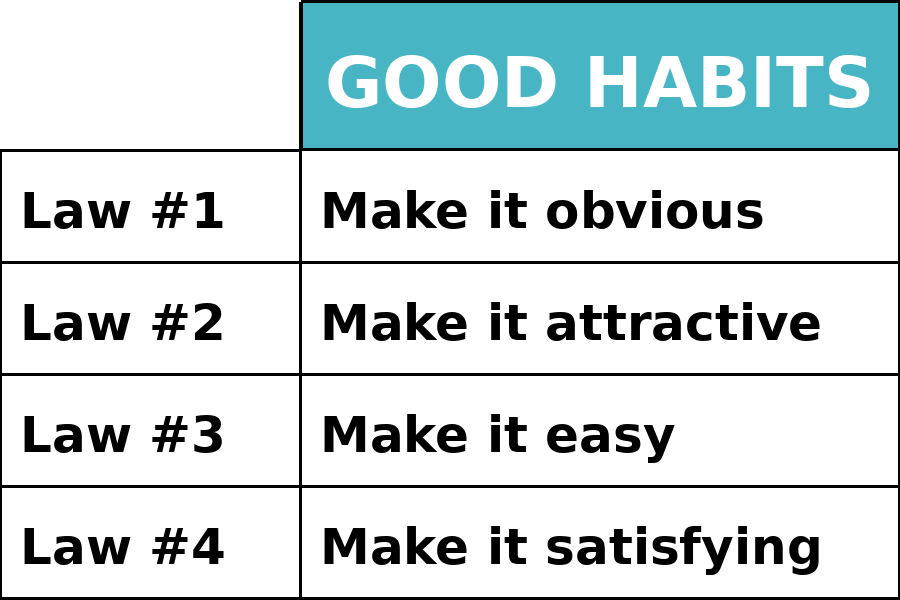
The first pillar of habit formation, making the desired behavior "obvious," relies on the psychological principle of cue-triggering. In a clinical context, the greatest barrier to adherence is often a lack of visual prompts. According to behavioral data, the human brain prioritizes visual information, making environmental design the most potent tool for habit initiation.
During their June 2025 appearance, Drs. Nakra and Obagi emphasized this law in the context of dermatological health. For many patients, the application of retinoids or mineral sunscreens is viewed as a chore easily forgotten. The experts suggested "habit stacking"—the practice of pairing a new habit with a current one. By placing a retinoid tube directly next to a toothbrush, the patient utilizes an established nightly ritual as a visual anchor for a new health intervention. This minimizes the cognitive load required to remember the task, effectively automating the first step of skin cancer prevention and anti-aging protocols.

The Second Law Making Health Interventions Attractive
Motivation is a fluctuating resource, often insufficient for long-term lifestyle changes. The second law focuses on the "craving" aspect of the habit loop, suggesting that behaviors are more likely to be repeated if they are associated with positive social or physical environments.
Dr. Kyler Brown, a specialist in injury prevention and performance optimization, utilizes this law to improve patient compliance in physical therapy. In his May 2025 interview, Brown noted that the primary reason for exercise cessation is a lack of enjoyment. By allowing patients to select their preferred training modality—such as substituting cycling for running if the latter is disliked—clinicians can make cardiorespiratory fitness more "attractive."
Furthermore, the social dimension of this law was highlighted in discussions regarding alcohol consumption and lifestyle changes. Behavioral scientists observe that individuals are highly influenced by the "tribe" they inhabit. Transitioning from social environments centered on alcohol to those focused on shared activities, such as game nights or group fitness, leverages social belonging to make healthy choices more appealing. This principle was even applied to education by Joe Liemandt, who demonstrated that AI-driven, interactive learning tools foster an attractive environment for students, turning the "habit" of learning from a passive requirement into an engaging pursuit.
The Third Law Reducing Friction and the Two-Minute Rule
The third law, "Make it Easy," addresses the "response" phase of the habit loop. In the realm of high-performance nutrition, this is often where patients struggle most. Dr. Rhonda Patrick’s October 2025 discussion on protein requirements highlighted a significant gap between clinical recommendations and actual intake. To support muscle protein synthesis and longevity, Patrick recommends a minimum of 1.6 grams of protein per kilogram of body weight daily.
To make this rigorous requirement "easy," the strategy involves reducing environmental friction. This includes stocking the pantry with high-protein, low-friction options like canned fish, turkey cold cuts, and protein-dense snacks to replace processed carbohydrates. The "Two-Minute Rule" also plays a critical role here; by breaking down a daunting goal—such as a 60-minute workout—into a two-minute entry point—such as merely arriving at the gym—the psychological barrier to entry is lowered, allowing the habit of "showing up" to solidify before the intensity of the behavior is increased.
The Fourth Law Immediate Satisfaction and Quantitative Feedback
The final law of behavior change is to "Make it Satisfying." While the benefits of health habits—such as reduced risk of cardiovascular disease or improved bone density—are often delayed by decades, the human brain is wired for immediate rewards.
Dr. Sally Greenwald’s insights into women’s sexual health in November 2025 provided a clear example of immediate reinforcement. By incorporating daily vaginal care and moisturization into a routine, patients experience immediate improvements in comfort and sexual satisfaction, which serves as a powerful motivator for continued adherence.
For habits where the reward is less immediate, such as Zone 2 cardiovascular training, the use of wearable technology and quantitative metrics (e.g., VO2 max tracking or resting heart rate monitoring) can provide the necessary dopamine hit of progress. Seeing a tangible decrease in resting heart rate provides the "satisfaction" required to bridge the gap between today’s effort and tomorrow’s longevity.
Strategies for Deconstructing Maladaptive Behaviors
The inverse of Clear’s laws provides a clinical roadmap for breaking "bad" habits, such as poor sleep hygiene or digital addiction. Dr. Ashley Mason, an expert in insomnia and cognitive behavioral therapy, addressed this in March 2025, focusing on the habit of using digital devices in bed.
To break this cycle, the laws are reversed:
- Make it Invisible: Store phones in a drawer or outside the bedroom to remove the visual cue.
- Make it Unattractive: Delete high-dopamine apps (social media, games) that trigger the urge to scroll.
- Make it Difficult: Power down devices entirely or place them across the room, increasing the physical effort required to access them.
- Make it Unsatisfying: Use sleep trackers to observe the negative impact of late-night screen time on sleep architecture, creating a negative association with the behavior.
Broader Impact and Implications for Medicine 3.0
The integration of James Clear’s principles into a clinical framework represents a shift from "Medicine 2.0"—which focuses on treating disease after it appears—to "Medicine 3.0," which prioritizes proactive prevention and the extension of healthspan. The economic and societal implications of this shift are profound. Chronic diseases, many of which are lifestyle-mediated, account for the vast majority of healthcare spending in developed nations. By equipping individuals with the tools to master their own behavioral architecture, the reliance on reactive pharmaceutical interventions may be reduced.
Furthermore, the data-driven nature of this approach allows for a more personalized medical experience. Rather than offering generic advice to "eat better" or "exercise more," clinicians can now provide a system for how to implement these changes based on the specific psychological and environmental triggers of the patient. As we move further into the decade, the marriage of behavioral science and longevity medicine is likely to become the standard of care for those seeking to optimize their biological potential through the power of atomic habits.