 admin
admin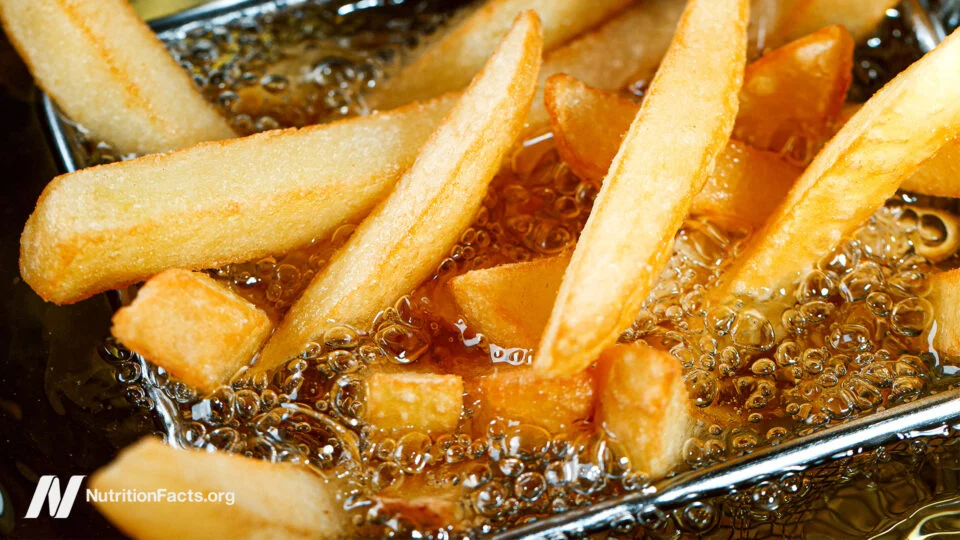
The allure of crispy, golden fried foods and the smooth texture of refined vegetable oils are deeply ingrained in modern culinary practices. However, emerging scientific understanding reveals a darker side to these popular food processing methods: the potential formation of glycidol, a potent genotoxic carcinogen capable of directly damaging DNA. This revelation, detailed in recent scientific discourse and highlighted by researchers like Dr. Michael Greger of NutritionFacts.org, raises significant public health concerns, particularly regarding the long-term risks associated with high consumption of fried foods and the widespread use of refined oils in processed foods and infant formulas.
The Silent Threat: Understanding Glycidol’s Mechanism
At its core, the issue lies in the chemical transformations that occur during high-temperature processing of fats and oils. While frying is primarily employed to enhance palatability and create desirable textures, it can inadvertently lead to the generation of harmful compounds. Among these, 3-monochloropropane-1,2-diol (3-MCPD) and glycidol have garnered significant attention. While 3-MCPD is classified as a non-genotoxic carcinogen with a tolerable daily intake established by regulatory bodies, glycidol presents a more immediate and concerning threat.
Glycidol is classified as a genotoxic carcinogen, meaning it possesses the inherent ability to directly interact with and damage cellular DNA. This mechanism is particularly insidious because, unlike non-genotoxic carcinogens that may operate through threshold-based effects (where a certain level of exposure is deemed safe), genotoxic substances are generally understood to act via a non-threshold mechanism. This implies that even minuscule levels of exposure could potentially initiate the cascade of DNA mutations that can ultimately lead to cancer. Consequently, regulatory frameworks typically prohibit the intentional addition of genotoxic substances to food. For unavoidable contaminants like glycidol, the principle of "As Low As Reasonably Achievable" (ALARA) or "As Low As Reasonably Practicable" is applied, aiming to minimize exposure to the lowest feasible levels.
Quantifying the Risk: Exposure Levels and Cancer Incidence
The potential health implications of glycidol exposure are stark when considering established risk assessment benchmarks. For a typical 150-pound individual, a lifetime cancer risk of 1 in 100,000, a commonly accepted figure for acceptable risk in the general population, might be exceeded with the consumption of less than a microgram of glycidol per day. This figure is derived from laboratory animal studies and serves as a crucial indicator of potential human risk.
However, the reality of modern diets presents a worrying contrast. Due to the pervasive use of refined oils in a vast array of food products, average glycidol exposure in the population may be substantially higher, potentially exceeding 50 micrograms per day. This represents a significant leap from the negligible levels associated with acceptable risk. The situation is even more alarming for vulnerable populations, such as infants. Studies indicate that glycidol intake levels in infants fed exclusively industrially prepared infant formula can exceed acceptable cancer risk levels by as much as 200-fold.
Fried Foods and Cancer: A Complex Correlation
The direct link between fried food consumption and increased cancer risk has been a subject of ongoing research and public health advisement. While a strong association between frequent consumption of fried foods and an increased risk of chronic diseases, particularly cardiovascular mortality, has been established, the relationship with cancer has been more nuanced.
For instance, a large-scale study involving over 100,000 women revealed that regular intake of fried foods, especially fried chicken and fried fish, was linked to a higher risk of all-cause mortality, implying shorter average lifespans. However, this increased mortality was largely attributed to cardiovascular causes, with no significant general association found between fried food consumption and cancer-related deaths.

In men, however, the evidence points towards a more direct link with specific cancers. Research has indicated that a higher intake of fried food in men is associated with a notable 35% increased risk of developing prostate cancer. This finding has led to precautionary recommendations for men with an elevated risk of prostate cancer to consider limiting their consumption of fried foods. While glycidol is a plausible contributing factor, it is important to acknowledge that fried foods can contain a complex mixture of potentially harmful compounds, making it challenging to isolate the precise impact of any single substance.
The Infant Formula Dilemma: A Critical Public Health Concern
The presence of glycidol in refined oils extends its reach into the critical domain of infant nutrition. Refined oils are a common ingredient in commercially produced infant formulas, presenting a significant challenge for infants who are not breastfed. Regulatory bodies, such as the German Federal Institute for Risk Assessment (BfR), have explicitly concluded that infants relying solely on industrially prepared infant milk formula may be exposed to harmful levels of glycidol.
Crucially, glycidol contamination levels found in U.S. infant formulas have been reported to be comparable to those found in European products. This underscores a global public health issue and reinforces the long-standing scientific consensus that breast milk remains the optimal source of nutrition for infants. The findings further bolster the recommendation for exclusive breastfeeding for the first six months of life and continued breastfeeding alongside complementary foods for up to two years or beyond. For adoptive families or those utilizing surrogacy, seeking out a nearby human milk bank emerges as a vital alternative to ensure infants receive this unparalleled nutritional and immunological protection.
Manufacturers of infant formulas are under increasing pressure to implement stringent measures to reduce glycidol levels to the lowest possible concentrations. However, the inherent challenges in refining vegetable oils without generating these problematic by-products, while simultaneously maintaining product quality, have complicated efforts to find simple solutions.
Industry Challenges and Consumer Agency
The food industry faces a significant hurdle in its efforts to produce refined vegetable oils that are free from glycidol and other undesirable processing contaminants. Reports suggest that the industry has yet to develop a consistently effective method for refining oils that eliminates these by-products without compromising the overall quality and desirable characteristics of the refined product. This complex interplay between processing, product quality, and safety presents a difficult challenge for manufacturers.
Despite these industry-wide challenges, consumers retain a degree of agency in mitigating their exposure to glycidol and other potentially harmful compounds. The most direct and effective strategy, as advocated by researchers, is to consciously reduce or eliminate the consumption of fried foods and the use of refined oils in home cooking. Opting for alternative cooking methods such as baking, steaming, boiling, or grilling, and prioritizing whole, unprocessed foods, can significantly lower dietary exposure to glycidol and other food processing contaminants.
A Look Back: Previous Warnings and Future Directions
This discussion on glycidol builds upon prior scientific scrutiny of related food processing contaminants. Dr. Greger, in previous communications, has highlighted concerns regarding 3-MCPD, specifically its presence in products like Bragg’s Liquid Aminos and other refined cooking oils. These earlier warnings underscore a sustained scientific focus on the unintended consequences of modern food processing techniques.
The ongoing research into glycidol and other food processing contaminants serves as a critical reminder for both consumers and the food industry. It emphasizes the need for continued scientific investigation, robust regulatory oversight, and proactive innovation in food production to ensure that the pursuit of convenience and palatability does not come at the expense of public health. The complex nature of these chemical transformations necessitates a multi-faceted approach, involving ongoing scientific discovery, industry accountability, and informed consumer choices to navigate the evolving landscape of food safety.