admin
admin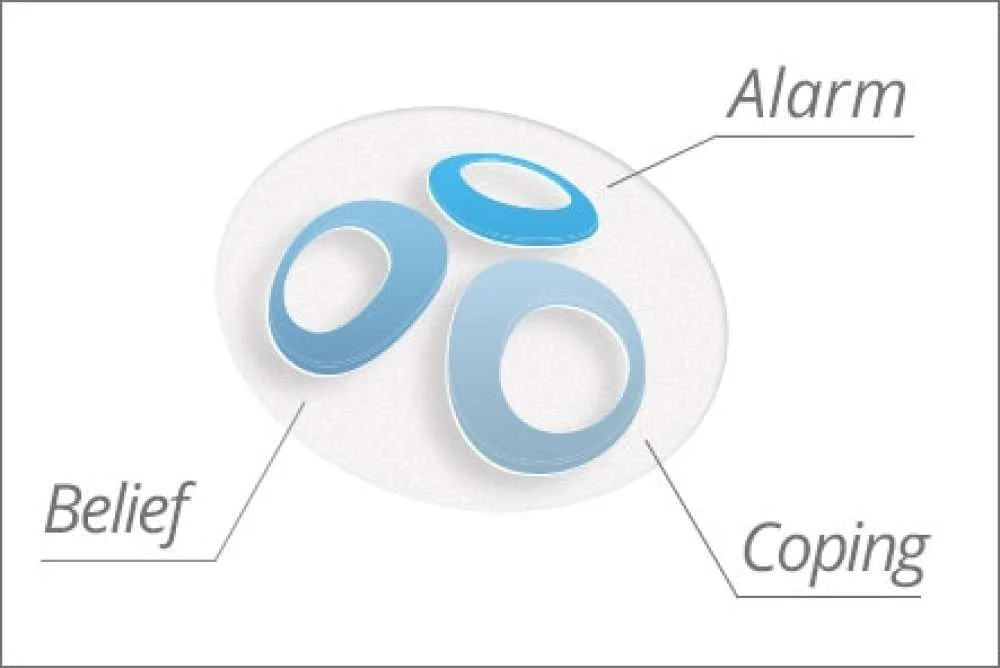
While fundamental literacy, such as learning the alphabet, is a universal cornerstone of early childhood education, health experts are increasingly pointing to a significant gap in "emotional literacy" regarding the management of anxiety. In response to a global rise in stress-related conditions, clinicians have introduced the ABCtracker framework—a systematic approach designed to help individuals decode the complex biological and psychological signals of anxiety. By categorizing the experience into three distinct phases—Alarm, Belief, and Coping—this methodology provides a clinical roadmap for patients and healthcare providers to transition from reactive distress to proactive management.
The prevalence of anxiety disorders has reached critical levels in the 21st century. According to the World Health Organization (WHO), an estimated 301 million people globally were living with an anxiety disorder in 2019, a figure that saw a sharp 25% increase following the onset of the COVID-19 pandemic. Despite its ubiquity, anxiety remains one of the most misunderstood human emotions. While it is evolutionarily designed to protect the individual from physical threats, in the modern context, these internal alarms often trigger in response to non-lethal psychological stressors, leading to chronic impairment.
The ABCtracker Methodology: A Structured Clinical Response
The ABCtracker serves as an acronymic tool intended to bridge the gap between feeling an emotion and understanding its origin. Unlike traditional therapy, which may take months to identify patterns, the ABC framework allows for real-time monitoring of triggers and responses. By documenting the "ABCs" of their experience, users can present objective data to physicians, psychologists, or licensed counselors, facilitating a more precise diagnostic and treatment process.
The framework operates on the premise that anxiety is not a monolithic event but a sequence of biological and cognitive steps. By breaking down the experience into Alarm (the physiological trigger), Belief (the cognitive interpretation), and Coping (the behavioral response), individuals can identify exactly where their emotional regulation system is malfunctioning.
A Stands for Alarm: The Biological Foundation of Stress
The "A" in the ABCtracker stands for Alarm, representing the body’s innate, instinctive reaction to perceived danger. This is the physiological "fight-or-flight" response, governed by the sympathetic nervous system and the amygdala. In a healthy biological state, this alarm is vital; it prepares the body to react to immediate physical threats, such as a fire or an oncoming vehicle, by releasing cortisol and adrenaline.
However, for individuals suffering from generalized anxiety disorder (GAD), panic disorder, or social anxiety, this alarm system becomes hypersensitive. Clinical data suggests that many patients possess a "low threshold" for activation, meaning their bodies signal a high-level emergency in response to low-stakes situations, such as a professional meeting or a social gathering.
Medical professionals categorize these as "false alarms." When the body signals a threat that does not exist in reality, the individual experiences the physical symptoms of anxiety—racing heart, shallow breathing, and perspiration—without an obvious external cause. The ABCtracker encourages users to log these physical sensations as they occur, helping them to differentiate between a legitimate survival signal and a dysregulated nervous system response.
B Stands for Belief: The Cognitive Architecture of Anxiety
Once the alarm sounds, the brain immediately seeks to justify the physical sensation. This is the "B" in the framework: Belief. In the split second following a physiological spike, the mind creates a narrative to explain why the body is reacting. For those without anxiety disorders, the brain may quickly dismiss the alarm as a caffeine-induced jitter or a momentary startle. For the anxious mind, however, the belief is often catastrophic.
Cognitive-behavioral research indicates that anxiety is fueled by "cognitive distortions." These are irrational thought patterns that reinforce negative emotions. Common distortions include "catastrophizing" (expecting the worst-case scenario) and "mind reading" (assuming others are judging you negatively).
The ABCtracker focuses on the "Belief" phase because it is the primary driver of chronic anxiety. If a person believes that a racing heart (Alarm) is a sign of an impending heart attack (Belief), the anxiety will escalate. By recognizing these beliefs as they happen, patients can work with therapists to evaluate the validity of their thoughts. This process, known as cognitive restructuring, is a cornerstone of modern psychotherapy. It involves moving from "automatic thoughts" to "evidenced-based assessments."
C Stands for Coping: Behavioral Responses and the Cycle of Avoidance
The final component of the framework is Coping. This represents the actions taken to mitigate the discomfort of the alarm and the belief. Coping mechanisms are categorized into two types: adaptive and maladaptive.
Adaptive coping strategies include techniques such as diaphragmatic breathing, mindfulness, or seeking social support. These methods address the anxiety without reinforcing the fear. Conversely, maladaptive coping strategies—such as avoidance, substance use, or "safety behaviors"—may provide temporary relief but actually strengthen the anxiety disorder over time.
For example, if an individual feels an "Alarm" in a crowded store and "Believes" they will faint, their "Coping" mechanism might be to leave the store immediately. While this reduces the immediate distress, it reinforces the brain’s belief that the store was dangerous. The ABCtracker allows users to see these patterns clearly, highlighting how their current coping mechanisms might be maintaining their anxiety rather than resolving it.
Historical Context: From Ellis and Beck to Digital Tracking
The ABCtracker framework is rooted in the history of Cognitive Behavioral Therapy (CBT), which revolutionized mental healthcare in the mid-20th century. In the 1950s, Dr. Albert Ellis developed Rational Emotive Behavior Therapy (REBT), which first introduced an ABC model (Activating Event, Belief, and Consequence). This was later expanded upon by Dr. Aaron Beck, the father of CBT, who emphasized the role of "automatic thoughts" in emotional distress.
The evolution of these models has moved from the therapist’s couch to digital and self-monitoring tools. In the 1990s and 2000s, clinical psychologists began using "thought records" to help patients track their symptoms between sessions. The modern ABCtracker represents the next step in this evolution, utilizing structured monitoring to provide a data-driven approach to mental health. This shift toward "patient-led data collection" allows for more personalized treatment plans and more efficient use of clinical time.
Statistical Analysis and the Economic Impact of Anxiety
The implementation of tools like the ABCtracker is not merely a matter of individual wellness; it is a public health necessity with significant economic implications. A study published in The Lancet estimated that anxiety and depression cost the global economy approximately $1 trillion per year in lost productivity. In the United States alone, anxiety disorders are estimated to cost more than $42 billion annually, nearly one-third of the country’s total mental health bill.
Furthermore, untreated anxiety is a leading predictor of secondary health issues. Data from the American Heart Association indicates a strong correlation between chronic anxiety and cardiovascular disease, as the constant state of "Alarm" places undue stress on the heart and arterial walls. By providing individuals with tools to manage their "ABCs" early, healthcare systems can potentially reduce the long-term burden of chronic physical ailments associated with stress.
Expert Perspectives and Clinical Implications
Mental health professionals have reacted positively to the structured nature of ABC-based tracking. Dr. Elena Rossi, a clinical psychologist specializing in anxiety disorders, notes that "the primary challenge for many patients is the feeling of being overwhelmed by a wave of emotion. Breaking it down into Alarm, Belief, and Coping gives the patient a sense of agency. It turns a frightening experience into a manageable data point."
From a clinical perspective, the ABCtracker serves as a diagnostic bridge. When a patient reports "I just feel anxious all the time," it is difficult for a physician to prescribe a specific intervention. However, if a patient can show a week of tracking that identifies specific "Beliefs" or "Maladaptive Coping" strategies, the physician can more accurately determine whether the patient requires medication, cognitive therapy, or lifestyle adjustments.
Future Outlook: The Role of Technology in Emotional Literacy
As digital health continues to expand, the integration of ABC-based tracking into wearable technology and mobile applications is expected to increase. Future iterations of these tools may use biometric data—such as heart rate variability (HRV) and skin conductance—to automatically detect the "Alarm" phase, prompting the user to identify their "Belief" and choose an "Adaptive Coping" strategy in real-time.
The broader implication of the ABCtracker is a shift toward preventative mental health. Just as individuals are taught to monitor their physical health through diet and exercise, there is a growing movement to teach "emotional hygiene" through the use of these structured frameworks. By mastering the ABCs of anxiety, society may move toward a future where emotional distress is caught and managed before it develops into a debilitating disorder.
In conclusion, the ABCtracker represents a synthesis of decades of psychological research and modern clinical practice. By demystifying the mechanics of anxiety, it empowers individuals to take control of their mental health. As global stress levels continue to fluctuate, the importance of emotional literacy—starting with the basic ABCs—cannot be overstated. Through recognition, monitoring, and structured response, the path from chronic anxiety to emotional resilience becomes a clear and navigable journey.