admin
admin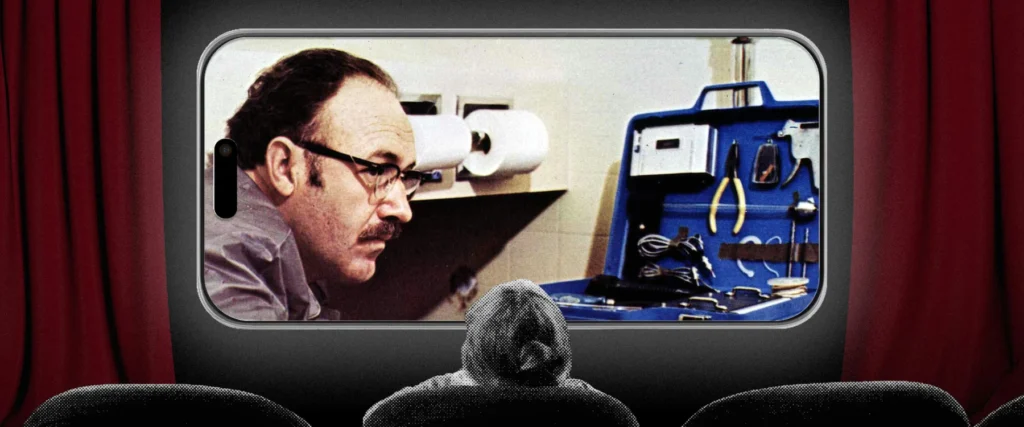
A growing body of evidence from academic institutions across the United States suggests that the fundamental ability to engage with long-form media is undergoing a profound decline. Educators in film and media studies departments—once considered sanctuaries for the deeply attentive—report that a significant portion of their students can no longer sustain focus for the duration of a standard feature-length motion picture. This phenomenon, often characterized as a crisis of "cognitive patience," is largely attributed to the ubiquitous presence of smartphones and the physiological changes they induce in the human brain’s reward systems.
The alarm was raised most prominently following a report by Rose Horowitch in The Atlantic, which detailed a troubling trend among the nation’s leading film programs. Professors who once viewed "watching a movie" as the ultimate low-friction homework assignment now find themselves met with resistance and an inability to comply. Craig Erpelding, a film professor at the University of Wisconsin at Madison, noted that while he previously believed watching a film was the "best homework ever," contemporary students frequently fail to complete the task. This sentiment is echoed by over 20 other film-studies faculty members who describe a decade-long erosion of attention, a trend that reportedly accelerated sharply following the COVID-19 pandemic.
The Chronology of Distraction: From Engagement to Withdrawal
The timeline of this attention deficit corresponds closely with the evolution of mobile technology and the normalization of the "second screen" experience. In the early 2010s, educators began noticing a slight uptick in classroom distractions. However, by the late 2010s and early 2020s, the behavior shifted from occasional checking to a compulsive necessity.
The founding director of Tufts University’s Film and Media Studies program has documented several failed attempts to enforce electronics bans during screenings. Despite institutional rules, faculty members observe that approximately half of any given class will eventually succumb to looking "furtively" at their devices. At the University of Southern California (USC), professors have likened the behavior to addiction. One Cinema and Media Studies professor observed that students exhibit signs of "nicotine addicts going through withdrawal," noting that the longer they are separated from their devices, the more physical fidgeting and psychological distress they manifest.
The pandemic years (2020–2022) appear to have been a critical inflection point. During this period, the boundary between professional/academic spaces and personal digital spaces dissolved. The reliance on streaming services and digital platforms for education reinforced a habit of fragmented consumption, where the "pause" button and the proximity of a smartphone became permanent fixtures of the viewing environment.
The Neurobiology of Cognitive Patience
To understand why a two-hour film has become a monumental challenge for the modern mind, researchers point to the concept of "cognitive patience." Coined by reading scholar Maryanne Wolf, cognitive patience is defined as the ability to maintain focused and sustained attention, delay gratification, and refrain from multitasking. It is a skill that must be cultivated through practice, much like physical endurance or linguistic fluency.
The degradation of this patience is rooted in the brain’s neurochemistry. Smartphones are designed to activate neuronal bundles in the short-term reward system. When a user anticipates a notification or a new piece of information from their device, the brain evaluates this as a "high expected value" event. These neuronal bundles essentially "vote" for the distracting behavior, triggering a cascade of neurochemicals, primarily dopamine, which the individual experiences as an intense motivation to check their phone.
Over time, this constant stimulation of the short-term reward system weakens the prefrontal cortex’s ability to regulate impulses. Because cognitive patience is a "use it or lose it" faculty, the lack of practice in sustained attention leads to a physiological discomfort with silence, slow pacing, and complex narratives. The result is a society that is increasingly ill-equipped to handle any medium that does not provide a rapid-fire succession of stimuli.
The "5K" Approach to Reclaiming Focus
While the situation is dire, some experts suggest that the very medium being abandoned—cinema—could serve as the primary tool for cognitive rehabilitation. The proposal is to treat the act of watching a film not as passive entertainment, but as a deliberate training goal, similar to an untrained individual working toward running a 5K marathon.
To reclaim "attention autonomy," several strategies have been proposed to rebuild the capacity for deep focus:
- Physical Decoupling: The most effective way to combat the neuronal urge to check a device is to remove the device from the immediate environment. This creates a "friction-filled" path to distraction, allowing the brain to settle into the primary task.
- Intentional Environment Selection: Returning to the cinema or a dedicated viewing space—where lighting is controlled and multitasking is socially discouraged—helps re-establish the psychological boundaries necessary for immersion.
- Incremental Duration Training: Just as a runner increases their mileage, individuals can begin with shorter 90-minute films before attempting three-hour epics, consciously practicing the "delay of gratification" each time the urge to check a phone arises.
There is a recognized irony in using a screen to cure the damage caused by another screen. However, advocates for this approach argue that the cinematic experience offers a unique middle ground: it provides visual and auditory stimulation but requires a linear, temporal commitment that the fragmented nature of social media does not.
AI and the Rise of "Vibe Reporting"
The crisis of attention and cognitive patience extends beyond the classroom and the theater; it is also reshaping how the public consumes news, particularly regarding complex subjects like Artificial Intelligence (AI). As cognitive patience wanes, there is an increasing demand for simplified, high-stakes narratives, leading to a phenomenon known as "vibe reporting."
Vibe reporting occurs when journalists prioritize the emotional resonance or "vibe" of a story over rigorous, data-driven analysis. A recent case study involves a high-profile article in The Atlantic titled "The Worst-Case Future for White-Collar Workers." The piece utilized alarmist language to suggest an imminent collapse of white-collar employment due to AI, despite a lack of immediate empirical evidence to support such a totalizing claim.
Critics of this reporting style argue that it exploits the public’s weakened attention spans. Complex, nuanced stories about technology require cognitive patience to parse; "vibe-based" stories, conversely, provide an immediate hit of fear or excitement that is easily consumed and shared.
Data and Industry Reality
Current data regarding AI and the job market suggests a more nuanced reality than vibe reporting often portrays. While Generative AI is undoubtedly a disruptive force, its immediate impact is localized and varied. For example, a recent reporting project involving over 300 computer programmers revealed that while AI tools like GitHub Copilot are changing the workflow of software development, they are not yet replacing the need for human logic and architectural oversight.
The "tl;dr" (too long; didn’t read) culture is a direct byproduct of the loss of cognitive patience. When individuals lose the ability to sit through a film or read a long-form investigative report, they become more susceptible to headlines that work backward to support a pre-existing trend or emotional state.
Broader Impact and Societal Implications
The implications of a society lacking cognitive patience extend into the realms of democracy, education, and professional expertise. If the future workforce—including those studying the arts and sciences—cannot sustain attention for more than a few minutes, the capacity for deep work and complex problem-solving is at risk.
The film industry itself may be forced to adapt, further exacerbating the problem. There is already evidence of "TikTok-ification" in modern editing styles, where shot lengths are becoming shorter and narrative structures more frenetic to cater to audience restlessness. This creates a feedback loop: the media becomes more fragmented to accommodate short attention spans, which in turn further erodes the audience’s ability to focus on anything else.
Ultimately, the fight for depth and attention autonomy is becoming a central challenge of the 21st century. Whether through the intentional "training" of watching films or a more critical approach to news consumption, the reclamation of cognitive patience is essential for navigating an increasingly complex technological landscape. As educators and researchers continue to document this trend, the focus shifts from merely identifying the problem to developing the "cognitive fitness" necessary to survive and thrive in a world designed for distraction.