admin
admin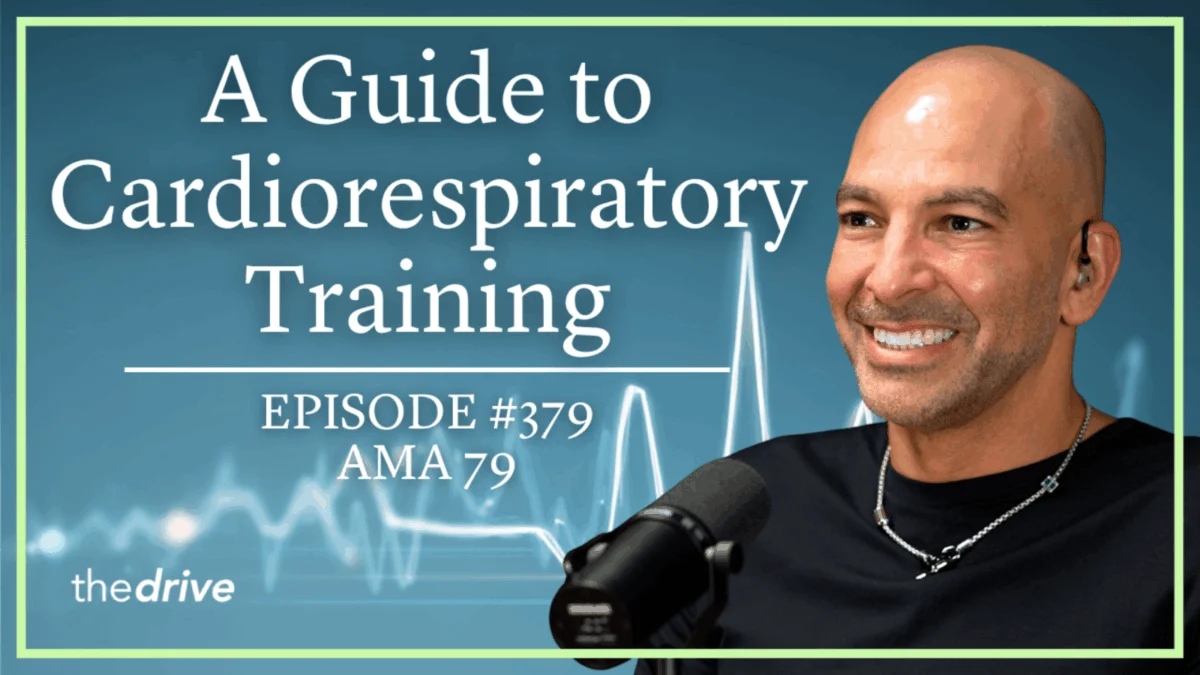
Cardiorespiratory fitness has emerged as one of the most significant and modifiable predictors of all-cause mortality, surpassing traditional risk factors such as smoking, hypertension, and end-stage renal disease. In a comprehensive synthesis of clinical data and exercise physiology, Dr. Peter Attia has released a foundational framework designed to guide individuals through the complexities of aerobic conditioning. This framework prioritizes the dual pillars of healthspan—the period of life spent in good health—and lifespan, with a specific focus on maintaining functional independence during the final decade of life, often referred to as the "marginal decade." By distinguishing between metabolic efficiency through Zone 2 training and peak aerobic capacity through VO2 max optimization, this guide provides a structured methodology for navigating exercise volume, intensity, and age-adjusted goals.
The Clinical Significance of Cardiorespiratory Fitness
The medical community has long recognized the benefits of physical activity, but recent longitudinal data have recalibrated the understanding of just how critical cardiorespiratory fitness (CRF) is for survival. According to data frequently cited in longevity medicine, including a landmark 2018 study published in JAMA Network Open, individuals with the highest levels of aerobic fitness (the top 2.5% for their age and sex) exhibit a nearly five-fold reduction in mortality risk compared to those in the lowest fitness quintile. This "hazard ratio" gap is larger than the risk associated with smoking, coronary artery disease, or type 2 diabetes.
Dr. Attia’s recent discourse emphasizes that unlike genetic predispositions, CRF is highly modifiable. The primary metric for measuring this fitness is VO2 max—the maximum rate of oxygen consumption measured during incremental exercise. As an individual ages, VO2 max naturally declines by roughly 10% per decade after the age of 30, with the rate of decline often accelerating after age 70. Consequently, the objective of mid-life training is to build a "fitness reserve" that ensures a high quality of life even after the inevitable age-related decline.
Defining the Training Modalities: Zone 2 and High-Intensity Work
A central point of confusion in fitness literature involves the distinction between various training intensities. Dr. Attia clarifies these by categorizing them into metabolic zones, specifically focusing on Zone 2 and VO2 max training.
Zone 2: The Aerobic Foundation
Zone 2 training is defined as the highest level of exertion where an individual can still maintain a purely aerobic metabolism. Physiologically, this is the point just below the first lactate threshold (LT1). In this state, the body primarily utilizes fat oxidation within the mitochondria to produce energy. Improving Zone 2 capacity increases mitochondrial density and efficiency, which is critical for metabolic health and the prevention of insulin resistance.
Practically, Zone 2 is often described as the "talk test" pace—a level of exertion where one can maintain a conversation but it is noticeably labored. For most individuals, this falls between 60% and 70% of their maximum heart rate, though Dr. Attia notes that heart rate is a secondary proxy to lactate levels or perceived exertion.
VO2 Max: Peak Capacity
In contrast, higher-intensity training targets the upper limits of the cardiorespiratory system. While Zone 2 builds the "floor" of aerobic capacity, VO2 max training raises the "ceiling." This type of training typically involves intervals that push the heart rate to 90% or more of its maximum. The goal is to improve the heart’s stroke volume—the amount of blood pumped per beat—and the muscles’ ability to extract oxygen from that blood.
Chronology of Exercise Science and Longevity Research
The evolution of exercise science has shifted from a general recommendation of "30 minutes of moderate activity" to a more nuanced, tiered approach.
- The 1970s–1990s: Early public health guidelines focused on basic activity to prevent sedentary-related diseases. The emphasis was on caloric expenditure rather than specific physiological adaptations.
- The 2000s: Researchers began identifying the "dose-response" relationship between exercise intensity and mortality. The concept of "Exercise as Medicine" gained traction.
- 2010–Present: High-quality cohort studies, such as the UK Biobank and various Veterans Affairs studies, provided the data necessary to rank CRF as a primary health metric. This era also saw the rise of wearable technology, allowing individuals to track heart rate variability (HRV) and estimated VO2 max in real-time.
- The Attia Synthesis (Current): The current framework integrates these historical findings into a personalized "Decathlon of Life," where training is reverse-engineered based on what an individual wants to be able to do in their 80s and 90s.
Supporting Data: The Impact of High Aerobic Capacity
The rationale for prioritizing high-intensity work alongside steady-state cardio is rooted in the "all-cause mortality" curves. Data indicates that moving from the "low" fitness category to the "below average" category yields the single greatest reduction in mortality risk. However, unlike many other health interventions, there is no "ceiling" effect for exercise; the benefits continue to accrue even into the "elite" levels of fitness.
For a 50-year-old male, a VO2 max of 35 ml/kg/min might be considered average, but to maintain independence into his 80s, that number needs to be significantly higher to account for the 10% per decade decline. If a person enters their 80s with a VO2 max of 18 ml/kg/min, they may struggle with basic tasks like climbing stairs or carrying groceries. Therefore, the "target" for a 50-year-old should be in the "elite" or "high" range (45-50+ ml/kg/min) to ensure they remain functional decades later.
Tailoring the Protocol: Demographics and Constraints
A significant portion of the recent AMA discussion focuses on the practical application of these scientific principles across different populations.
Beginners vs. Experienced Trainees
For beginners, the priority is the accumulation of volume. Dr. Attia suggests that even two hours of Zone 2 per week can trigger significant mitochondrial adaptations. For experienced trainees, the focus shifts to "polarized training"—a distribution where roughly 80% of the volume is Zone 2 and 20% is high-intensity intervals (HIIT).
Considerations for Women
Women face unique physiological considerations, particularly regarding the transition through menopause. The decline in estrogen can affect metabolic flexibility and muscle mass. Dr. Attia emphasizes that for women, cardiorespiratory training must be balanced with heavy resistance training to maintain bone mineral density and lean tissue, which are essential for longevity.
Older Adults
For those already in their 70s or 80s, the focus shifts toward safety and the prevention of injury. However, the need for intensity does not disappear. High-intensity work for older adults might look like brisk hill walking rather than sprinting, but the goal remains the same: pushing the heart rate to its peak capacity to maintain the aerobic ceiling.
Official Responses and Clinical Implications
While the medical establishment has been slow to adopt VO2 max testing as a standard of care—largely due to the cost and time required for metabolic cart testing—there is a growing consensus among preventive cardiologists that CRF should be treated as a "vital sign."
Organizations like the American Heart Association (AHA) have released scientific statements calling for the routine assessment of CRF in clinical practice. The implication is that if a physician knows a patient’s VO2 max, they have a more accurate predictor of that patient’s 10-year survival than they would from a standard cholesterol panel or blood pressure reading alone.
Broader Impact: The Shift Toward Preventive Health
The framework provided by Dr. Attia represents a broader shift in the "Health 3.0" movement, which moves away from reactive medicine (treating disease once it appears) toward proactive prevention. By focusing on cardiorespiratory fitness, individuals are not just avoiding death; they are actively investing in the quality of their future years.
The social and economic implications of this shift are profound. An aging population that remains functionally independent reduces the burden on healthcare systems and long-term care facilities. Furthermore, the cognitive benefits of high aerobic fitness—including a reduced risk of Alzheimer’s and vascular dementia—suggest that cardiorespiratory health is as much about the brain as it is about the heart.
In conclusion, the optimization of Zone 2 and VO2 max is not merely a pursuit for athletes but a critical requirement for anyone seeking to maximize their healthspan. The data is unequivocal: cardiorespiratory fitness is the foundation of longevity. Through structured training, regular measurement, and a long-term perspective on the "marginal decade," individuals can significantly alter their biological trajectory and ensure independence well into their later years. As the science continues to evolve, the message remains clear: the intensity and volume of one’s movement today are the primary determinants of one’s physical capability tomorrow.