admin
admin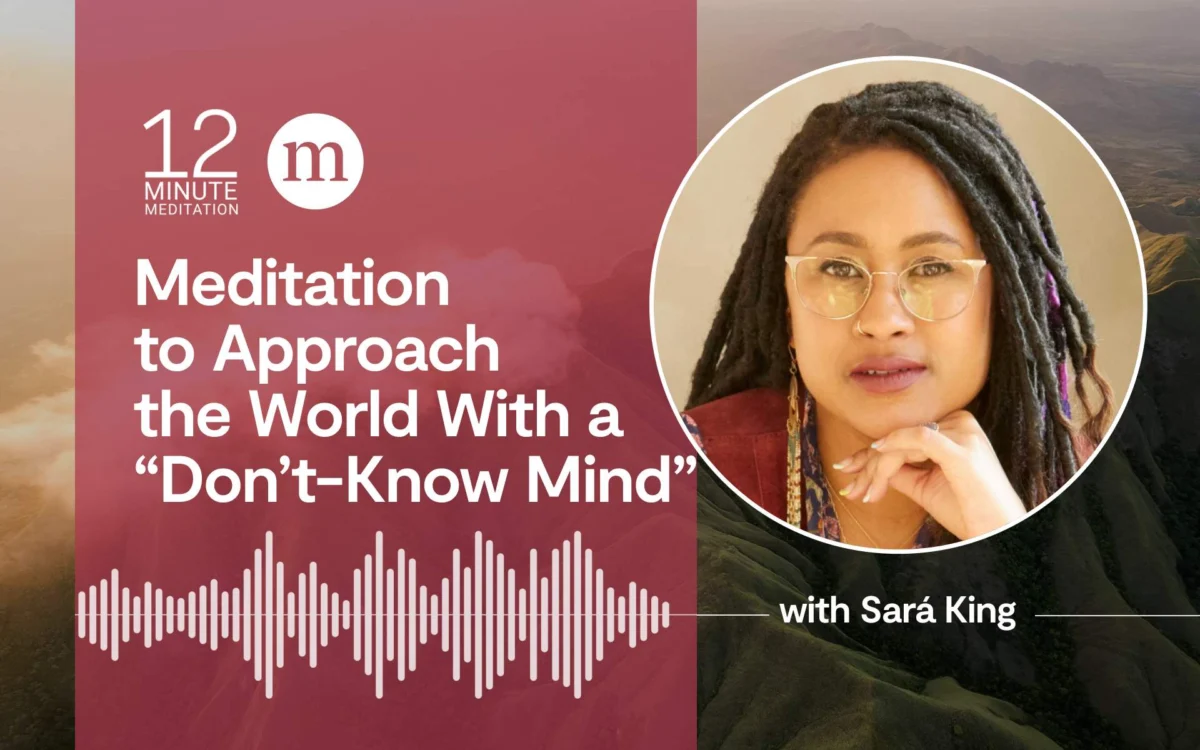
The Genesis of Openness: Understanding the ‘Don’t-Know Mind’
The concept of the "don’t-know mind" finds its philosophical roots in various contemplative traditions, most notably in Zen Buddhism, where it is often referred to as "shoshin" or "beginner’s mind." Pioneered in Western thought through the teachings of Zen master Shunryu Suzuki, who famously stated, "In the beginner’s mind there are many possibilities, but in the expert’s mind there are few," this principle champions an attitude of openness, eagerness, and lack of preconceptions. It is a deliberate cultivation of humility, recognizing the limits of one’s current understanding and approaching every experience, task, or interaction as if encountering it for the very first time. This contrasts sharply with the "expert’s mind," which, while possessing deep knowledge, can sometimes be rigid, prone to confirmation bias, and resistant to new information that challenges established paradigms.
In a modern, secular context, the "don’t-know mind" is not about ignorance but about a conscious decision to suspend judgment and intellectual certainty. It encourages individuals to observe without immediately categorizing, to listen without immediately formulating a response, and to engage with curiosity rather than critique. This mental posture is particularly relevant in an era characterized by rapid technological advancement, shifting social norms, and unprecedented global challenges, where static knowledge can quickly become obsolete and adaptability is paramount.
Neuroscientific Underpinnings of Mindful Openness
Contemporary neuroscience offers compelling insights into how a "don’t-know mind" might manifest in brain activity and promote cognitive benefits. Research into mindfulness, a practice closely aligned with cultivating this open state, has demonstrated its capacity to induce structural and functional changes in the brain. Studies using fMRI scans have shown that regular mindfulness meditation can lead to increased gray matter density in areas associated with learning, memory, emotion regulation, and self-awareness, such as the hippocampus and the prefrontal cortex. Conversely, it can decrease the volume of the amygdala, the brain’s fear center, suggesting a reduced reactivity to stress and a greater capacity for emotional balance.
The "don’t-know mind" specifically encourages a shift away from the Default Mode Network (DMN), a set of brain regions active during self-referential thought, rumination, and planning. While the DMN is essential, excessive engagement can lead to overthinking and a rigid attachment to past experiences or future anxieties. By fostering present-moment awareness and a non-judgmental stance, the "don’t-know mind" helps to disengage from the DMN’s automatic patterns, allowing for greater access to attentional networks that support focused observation and novel idea generation. This neuroplasticity, the brain’s ability to reorganize itself by forming new neural connections, is crucial for fostering creativity, problem-solving, and adaptability. For instance, a 2012 study published in the journal Emotion found that individuals with higher trait mindfulness exhibited more flexible emotional responses and less emotional reactivity. Furthermore, research by Dr. Jud Brewer on habit formation and mindfulness suggests that by observing thoughts and cravings without judgment, individuals can weaken maladaptive neural pathways and create new ones that support healthier behaviors.
The Practical Application: Meditation and Physical Grounding
The path to cultivating a "don’t-know mind" often begins with formal meditation practice, which typically emphasizes the importance of posture and physical grounding. As instructors like Dr. Sará King advocate, establishing a supportive and stable physical posture is foundational. This isn’t merely about comfort; it’s about creating a physiological anchor that helps stabilize the mind. A grounded posture—whether seated, standing, or lying down—allows the body to feel secure and present, minimizing physical distractions and fostering a sense of ease. This physical stability then serves as a springboard for mental exploration.
During meditation, individuals are guided to observe their breath, bodily sensations, thoughts, and emotions without attachment or judgment. This practice is inherently an exercise in the "don’t-know mind." Instead of trying to "figure out" or "fix" what arises, the meditator practices simply noticing it, acknowledging its presence, and allowing it to pass. This non-reactive observation gradually trains the mind to approach internal and external phenomena with a fresh perspective, reducing the tendency to filter experiences through pre-existing biases or emotional reactions. Over time, this disciplined practice builds the capacity to extend this open, curious, and non-judgmental awareness beyond the meditation cushion into daily life, enabling individuals to navigate complex situations with greater clarity and less emotional entanglement.
Dr. Sará King’s Interdisciplinary Perspective
The insights of experts like Dr. Sará King underscore the multifaceted nature and far-reaching implications of cultivating a "don’t-know mind." With her unique background as a neuroscientist, political and learning scientist, medical anthropologist, social entrepreneur, and certified yoga and meditation instructor, Dr. King brings an interdisciplinary lens to the study of mindfulness. Her work emphasizes the profound connection between individual awareness and collective well-being, highlighting how a mindful approach can bridge divides and foster social justice.
Dr. King’s research delves into the relationship between community alternative medicine and social justice, examining how mindfulness practices can serve as tools for empowerment and healing within marginalized communities. From a neuroscientific perspective, she explores how collective awareness impacts brain function and social cognition, suggesting that a shared "don’t-know mind" can enhance group problem-solving, empathy, and collective intelligence. Her anthropological viewpoint considers how cultural contexts shape our understanding of health, healing, and community, advocating for inclusive approaches to well-being that respect diverse epistemologies.
In the realm of political and learning science, Dr. King’s work implies that adopting a "don’t-know mind" is crucial for effective civic engagement and education. In an increasingly polarized world, the ability to approach differing viewpoints with curiosity rather than immediate rejection, to listen with an open mind, and to question one’s own assumptions is vital for constructive dialogue and democratic functioning. This framework can transform learning environments, encouraging students to become active explorers of knowledge rather than passive recipients, fostering critical thinking and intellectual humility.
Navigating Global Uncertainty with a Beginner’s Mind
The imperative to embrace a "don’t-know mind" has been starkly illuminated by recent global events, particularly the COVID-19 pandemic. This unprecedented crisis forced societies worldwide to confront profound uncertainty, challenging established norms, economic models, and healthcare systems. In such a volatile environment, clinging to outdated certainties proved counterproductive, while adaptability and an openness to new information became essential for survival and recovery.
The pandemic underscored the delicate balance between personal independence and natural interdependence. While individuals sought personal resilience, the crisis simultaneously highlighted the interconnectedness of global health, economies, and social structures. Approaching such a complex, interconnected challenge with a "don’t-know mind" meant that policymakers, scientists, and citizens had to continuously reassess, learn, and adapt. Initial assumptions about the virus, its transmission, and effective countermeasures were constantly updated as new data emerged. This required a collective capacity to suspend judgment, accept ambiguity, and be willing to change course—hallmarks of the beginner’s mind.
The experience of widespread uncertainty also reinforced the idea that finding strength in familiarity—routines, core values, community bonds—can provide a stable base from which to explore the unfamiliar landscape of a post-pandemic world. It’s not about rejecting all knowledge but about using foundational understanding as a launching pad for innovative solutions, rather than as an anchor to outdated paradigms. This dynamic interplay between grounding and exploration is central to the efficacy of the "don’t-know mind."
Broadening the Impact: Implications Across Sectors
The cultivation of a "don’t-know mind" extends its benefits far beyond individual meditation practice, impacting diverse sectors:
-
Education: In classrooms, fostering a beginner’s mind encourages lifelong learning, critical inquiry, and creative problem-solving. It moves away from rote memorization towards genuine understanding and intellectual curiosity, preparing students for a future where adaptability is more valuable than static knowledge. Educational institutions adopting mindfulness programs, such as those implemented in various K-12 schools and universities globally, report improvements in student attention, emotional regulation, and academic performance, all of which are enhanced by an open mindset.
-
Healthcare: For medical professionals, approaching each patient with a "don’t-know mind" can prevent diagnostic errors rooted in premature closure, reduce implicit biases, and promote more empathetic, patient-centered care. It encourages active listening and a holistic view, recognizing that each individual’s experience of illness is unique. For patients, it can empower them to engage more actively in their own healing process, fostering a sense of agency and resilience.
-
Business and Innovation: In the corporate world, the "don’t-know mind" is a powerful catalyst for innovation. Companies that cultivate a culture of psychological safety, where questioning assumptions and experimenting with new ideas are encouraged, tend to be more resilient and adaptive. Leaders who embody this mindset are more likely to solicit diverse perspectives, embrace constructive feedback, and navigate market disruptions with agility. Tech giants and startups alike increasingly integrate mindfulness training to enhance creativity and reduce stress among employees.
-
Social and Political Dialogue: In public discourse, the ability to approach opposing viewpoints with curiosity rather than immediate condemnation is crucial for overcoming polarization. A "don’t-know mind" facilitates genuine dialogue, allowing participants to explore the nuances of complex issues and identify common ground, rather than merely reinforcing existing echo chambers. This fosters greater understanding and the potential for collective action on societal challenges.
Challenges and Ethical Considerations
While the benefits are substantial, cultivating a "don’t-know mind" is not without its challenges. It requires sustained effort to consciously override deeply ingrained cognitive habits of judgment and categorization. There is also a critical distinction to be made: the "don’t-know mind" is not an endorsement of ignorance or a rejection of expertise. Instead, it is an approach that integrates expertise with humility, allowing for continuous learning and adaptation. It demands an ethical awareness, ensuring that openness does not lead to passivity in the face of injustice, but rather to a more informed and empathetic engagement with the world’s complexities. The goal is to be fully present and responsive, not merely disengaged.
In conclusion, the practice of approaching the world with a "don’t-know mind," as championed through meditative practices and reinforced by interdisciplinary scholarship, represents a potent strategy for enhancing individual and collective well-being. By providing a stable internal foundation and fostering an open, receptive stance, it equips individuals with the strength and resilience needed to navigate uncertainty, embrace complexity, and contribute meaningfully to a rapidly evolving global landscape. The journey begins with a simple, grounded posture, leading to a profound shift in perception that unlocks new possibilities for understanding, connection, and growth.