admin
admin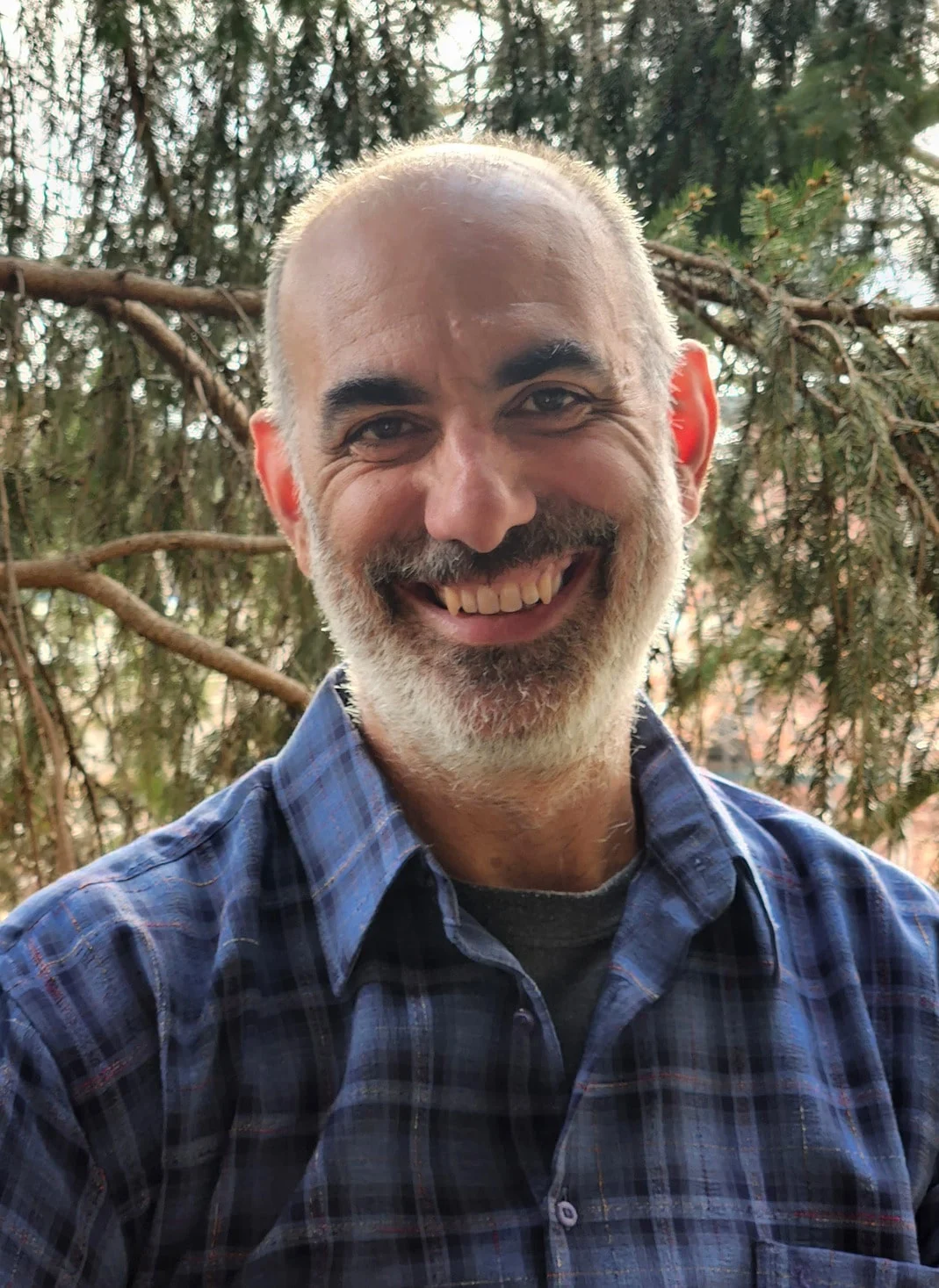
In 1987, Xavier Nuez, then a 22-year-old resident of Montreal, experienced a sudden and inexplicable physiological collapse during a routine job interview. Despite having been a socially confident and outgoing individual just days prior, Nuez found himself unable to articulate his own name when prompted by an interviewer. This incident marked the onset of a decades-long struggle with a condition that, at the time, lacked a formal clinical name or an established protocol for treatment. Nuez’s experience would eventually become a significant case study in the intersection of trauma, somatic regulation, and the role of creative rituals in psychological recovery.
The symptoms Nuez described—locking of the jaw, throat constriction, facial contortions, and an overwhelming sense of dread during social interactions—persisted for years. At the time of his initial collapse, the psychiatric community was largely ill-equipped to diagnose the specific nature of his ailment. While he was treated for generalized anxiety and depression, these diagnoses failed to address the root cause of his nervous system dysregulation. It was not until much later that Nuez would identify his condition as Complex Post-Traumatic Stress Disorder (C-PTSD), a diagnosis that did not exist in the clinical lexicon of the late 1980s.
The Evolution of C-PTSD and the Diagnostic Gap
The diagnostic history of C-PTSD provides essential context for Nuez’s isolated struggle. While Post-Traumatic Stress Disorder (PTSD) was added to the Diagnostic and Statistical Manual of Mental Disorders (DSM-III) in 1980, it was primarily designed to address "shock" trauma—single, discrete events such as a combat incident or a natural disaster. The term "Complex PTSD" was first proposed by Dr. Judith Herman of Harvard Medical School in 1992 to describe the results of prolonged, repeated trauma from which the victim has little or no chance of escape.
Despite Herman’s groundbreaking work, the medical establishment was slow to adopt the classification. The World Health Organization (WHO) did not officially recognize C-PTSD as a distinct diagnosis until the publication of the ICD-11 in 2018. This 31-year gap between Nuez’s initial collapse and the official global recognition of the disorder meant that for the majority of his adult life, he was navigating a profound neurological injury without a medical roadmap.
Clinical data suggests that C-PTSD differs from standard PTSD in its "disturbances in self-organization" (DSO). These include emotional dysregulation, interpersonal difficulties, and persistent negative self-concept. For Nuez, these manifested as a total loss of social agency, where the simple act of being seen or heard triggered a "fight-or-flight" response that his conscious mind could not override.
Chronology of a 25-Year Artistic Ritual
In the spring of 1993, six years after his initial breakdown, Nuez began an unplanned experiment in self-therapy. Armed with a camera and a tripod, he began venturing into the most desolate and dangerous sections of various cities at night. This marked the beginning of a project that would span 25 years, involve more than 1,200 nights of photography, and cover over 30 major metropolitan areas.
The ritual followed a precise and repetitive structure, which psychologists now recognize as a form of "graded exposure" and "somatic regulation." Nuez would enter unlit, often high-crime alleys or abandoned ruins—environments that most individuals would find inherently threatening. Paradoxically, Nuez reported a profound sense of calm in these settings. The external "danger" of the alley served as a container for his internal "danger," allowing his hypervigilance to function as a tool for survival rather than a debilitating symptom.
The technical process of his photography was equally significant. Nuez utilized long-exposure techniques, often spending 20 to 90 minutes on a single frame. During this time, he would manually "paint" the scene with colored lights, systematically illuminating the wreckage and decay. This process—entering a dark space, waiting for the eyes to adjust, framing the damage, and then introducing light—mirrored the therapeutic process of bringing awareness to traumatic "dark spots" in the psyche.
The Paradox of Safety and Hypervigilance
One of the most compelling aspects of Nuez’s case is the inversion of perceived safety. In a journalistic analysis of his behavior, the "paradox of the alley" reveals a key mechanic of trauma recovery. While social settings triggered a tailspin, Nuez remained perfectly calm in environments where gunshots were an active possibility.
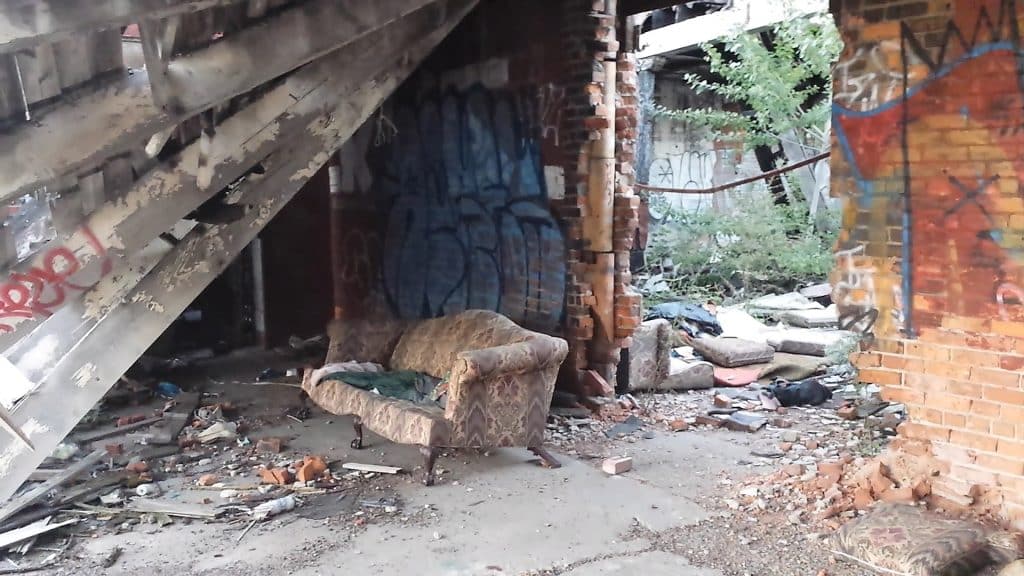
From a neurological perspective, this can be explained by the state of the autonomic nervous system. In social settings, Nuez’s system perceived a "social threat" that offered no physical outlet, leading to a "freeze" response. In the alleys, the threat was concrete and external. His body’s heightened state of arousal (hypervigilance) became synchronized with his environment. This alignment provided a rare moment of internal congruence, where his physiological state finally matched his external reality.
Research into somatic experiencing, a form of therapy developed by Peter Levine, suggests that trauma is stored in the body’s tissues and nervous system rather than just the mind. By physically placing himself in a high-stakes environment and successfully navigating it through the controlled act of photography, Nuez was arguably "re-negotiating" his trauma. He was proving to his nervous system that he could enter a "frightening" space and emerge with something of value—a tangible photograph.
Institutional Recognition and Artistic Impact
For over two decades, Nuez kept the psychological origins of his work private, fearing that the "stigma of the broken" would overshadow the artistic merit of his photography. Despite this secrecy, the "Alleys & Ruins" series gained significant national attention. His work has been featured in The New York Times, and covered by major networks including PBS, NPR, and ABC.
The aesthetic quality of the images—vibrant, surreal, and hauntingly beautiful depictions of urban decay—resonated with audiences who were unaware of the artist’s C-PTSD. Critics often noted the "redemptive" quality of the light in his photos, a sentiment that aligns with Nuez’s eventual realization that he was "rehearsing his own recovery" in physical space.
The transition from a private healing ritual to a public artistic legacy culminated in the publication of his book, Alleys & Ruins: From Breakdown to Beauty. The memoir provides a rare, first-hand account of the "strange wisdom of the body," documenting how the creative process can act as a bridge between a shattered nervous system and a functional life.
Fact-Based Analysis of Implications for Trauma Recovery
The case of Xavier Nuez offers several critical insights for the fields of mental health and occupational therapy. First, it highlights the limitations of purely "talk-based" therapies for complex trauma. When a patient’s injury is rooted in the "lower brain" (the brainstem and limbic system), cognitive understanding often fails to produce physiological relief. Nuez’s "accidental" practice succeeded because it was somatic—it involved movement, physical risk, sensory engagement, and a tangible output.
Second, the story underscores the importance of "meaning-making" in the wake of trauma. The 1,200 photographs Nuez produced served as "evidence" of his resilience. In the context of C-PTSD, where the individual often feels fundamentally "broken" or "forsaken," the ability to create beauty out of literal wreckage provides a powerful counter-narrative.
Finally, Nuez’s experience serves as a cautionary tale regarding the speed of medical recognition. The three-decade delay in the official classification of C-PTSD meant that an entire generation of survivors was forced to innovate their own paths to stability. Nuez’s advice to "pay attention" to what calms the body, even if it seems irrational to others, reflects a growing movement toward patient-led, body-centric recovery models.
While Nuez emphasizes that he is not a therapist and does not recommend the specific physical risks he took, his journey remains a landmark example of the human capacity for self-repair. His work suggests that when the medical "map" is outdated, the body may still possess an internal compass capable of navigating toward the light. The "Alleys & Ruins" project stands not only as a significant contribution to urban photography but as a 25-year record of a nervous system slowly finding its way back to the world.