admin
admin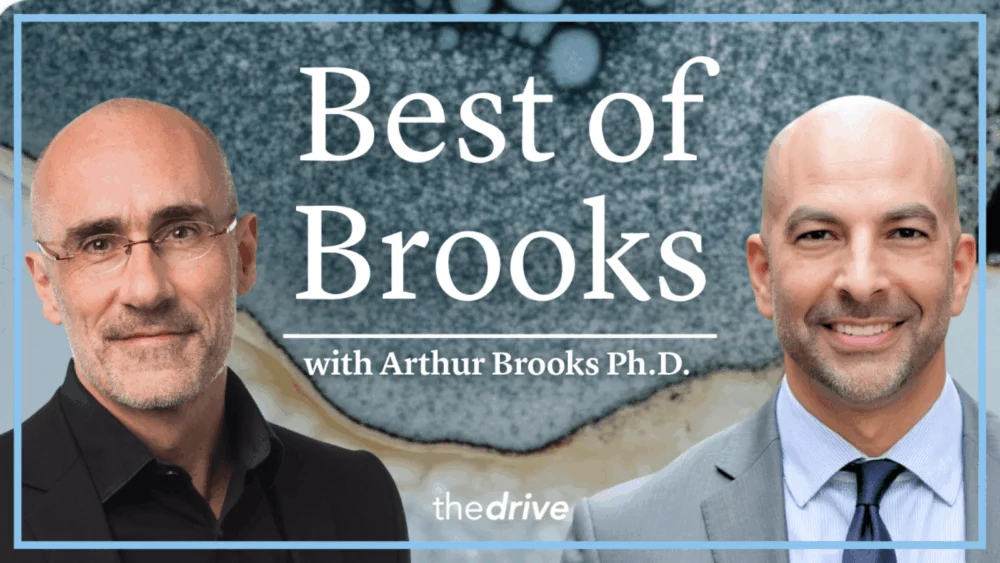
In a comprehensive synthesis of social science and longevity medicine, Dr. Peter Attia has released a specialized retrospective episode of his podcast, The Drive, featuring a curated "best of" dialogue with Harvard professor and bestselling author Arthur Brooks. This collaborative effort distills hundreds of hours of discourse into four foundational pillars: the definition of true happiness, the psychological forces that subvert well-being, the practical tools for emotional cultivation, and the existential courage required to pursue a life of meaning. The episode serves as a strategic roadmap for high-achieving individuals who, despite professional success, often find themselves navigating a vacuum of personal satisfaction.
The Conceptual Framework of Happiness vs. Hedonics
A primary objective of the discussion is the rigorous redefinition of happiness, moving away from the colloquial interpretation of the word as a transient emotional state. Arthur Brooks posits that the modern misunderstanding of happiness is one of the greatest barriers to achieving it. He argues that happiness is not a feeling, but rather a combination of three distinct components: macronutrients, much like the proteins, carbohydrates, and fats of a physical diet. These components are enjoyment, satisfaction, and purpose.
Brooks emphasizes that "happy feelings" are merely the "smell of the turkey," whereas happiness itself is the "Thanksgiving dinner." This distinction is critical for long-term emotional management. While feelings are neurochemical responses to external stimuli—often fleeting and volatile—happiness is a stable state of being that can be cultivated through deliberate practice and cognitive reframing. Dr. Attia, whose work focuses on the science of longevity (Medicine 3.0), bridges this with the physiological perspective, noting that the inability to differentiate between a momentary negative valence and one’s overall state of well-being often leads to chronic stress and poor health outcomes.
The Coexistence of Happiness and Unhappiness
A significant portion of the dialogue is dedicated to the counterintuitive reality that happiness and unhappiness are not mutually exclusive. Drawing on decades of psychological research, Brooks explains that these two states are processed in different parts of the brain—specifically the limbic system and the prefrontal cortex. It is entirely possible, and even healthy, to experience deep unhappiness in response to specific life events while maintaining a high baseline of overall happiness.
This "affective" science suggests that the pursuit of a life devoid of unhappiness is not only futile but detrimental. Negative emotions, such as grief or disappointment, provide the necessary contrast for growth and the development of resilience. Brooks notes that people who attempt to suppress all negative emotions often find their capacity for joy suppressed as well. The goal, therefore, is not to eliminate unhappiness but to manage it while fostering the "macronutrients" of purpose and meaning.
Evolutionary Origins and the Six Fundamental Emotions
To provide a factual basis for emotional responses, the discussion delves into the evolutionary biology of human feelings. Brooks identifies the six fundamental emotions recognized by psychologists: joy, sadness, fear, anger, surprise, and disgust. Of these, four are "negatively valenced," a ratio that highlights the evolutionary priority of survival over satisfaction.
Fear and anger, in particular, are explored as ancient threat-detection mechanisms. In the context of our ancestors, fear prompted a flight response from predators, while anger facilitated a fight response to protect resources or offspring. However, in the modern era, these mechanisms are often triggered by non-life-threatening stimuli, such as a critical email from a supervisor or a social media post. This "mismatch" between our evolutionary hardware and the modern environment creates a perpetual state of low-grade anxiety that undermines happiness. Brooks and Attia discuss the necessity of moving these emotional responses from the impulsive limbic system to the analytical prefrontal cortex—a process Brooks describes as "metacognition."
Chronology of a Career Transition: From Music to Social Science
The episode provides an in-depth look at Arthur Brooks’ unique professional trajectory, which informs his perspective on success and decline. Brooks began his career as a professional French hornist, leaving college at age 19 to tour with the Annapolis Brass Quintet and later the City Orchestra of Barcelona. This period of his life was defined by "fluid intelligence"—the ability to process new information and perform complex tasks at a high level, which typically peaks in one’s 20s or 30s.
Realizing the inevitable decline of these skills, Brooks transitioned into academia. In his late 20s, he pursued a BA via distance learning, followed by an MA in economics and a PhD in public policy analysis from the Rand Graduate School. This shift represents a move toward "crystallized intelligence"—the ability to use accumulated knowledge and wisdom, which tends to increase with age. This personal timeline serves as a case study for his broader theories on the "Strivers’ Curse," where high achievers struggle to find happiness as their primary skills evolve or diminish.
Supporting Data on Longevity and Mental Health
The intersection of Brooks’ social science and Attia’s medical expertise is backed by emerging data on the "Social Determinants of Health." Research indicates that social isolation and a lack of purpose are as detrimental to longevity as smoking or obesity. According to data cited in related discussions, individuals with a strong sense of purpose have a significantly lower risk of cardiovascular events and cognitive decline.
Furthermore, the discussion touches upon the "Hedonic Treadmill," a psychological phenomenon where individuals return to a baseline level of happiness despite significant positive or negative life changes. Data suggests that while external successes (money, fame, power) provide temporary spikes in "happy feelings," they do not contribute to long-term happiness unless they are tied to meaningful work or service to others.

Official Responses and the "Four Pillars" of Practice
While the episode is a curated conversation, it aligns with the broader "Brooksian" philosophy often taught at Harvard Business School. Brooks advocates for a "Happiness Portfolio" consisting of four pillars:
- Faith/Philosophy: A sense of connection to the transcendent.
- Family: Maintaining deep, non-transactional bonds.
- Community/Friendship: Cultivating social circles that do not depend on professional status.
- Meaningful Work: Labor that serves others and creates a sense of earned success.
Dr. Attia’s "premium" community, to which this episode is directed, often consists of individuals who have excelled in the fourth pillar but neglected the first three. The "official" takeaway from this curated episode is a call to rebalance this portfolio.
Broader Impact and Implications for High Achievers
The release of this episode comes at a time of rising "burnout" culture and a mental health crisis among professionals. By framing happiness as a science rather than a vague aspiration, Attia and Brooks provide a framework that appeals to the analytical mind. The implications are significant: if happiness is a skill set involving metacognition, emotional regulation, and strategic investment in social capital, then it is within the reach of anyone willing to apply the same rigor to their internal life as they do to their professional careers.
The analysis suggests that the future of "longevity" must include "emotional longevity." It is insufficient to extend the human lifespan through pharmacological or surgical interventions if the quality of those additional years is marred by loneliness or a lack of purpose. This "best of" conversation underscores the necessity of a holistic approach to health, where the biology of the body and the psychology of the mind are treated as an integrated system.
As Arthur Brooks concludes, the courage to live well involves the willingness to be "un-busy," to face the reality of one’s own decline, and to prioritize love over the transient rewards of the world. For the listeners of The Peter Attia Drive, the episode is not merely an interview but a technical manual for the second half of life—a period that Brooks argues can be the most fulfilling if approached with the right tools and mindset.