admin
admin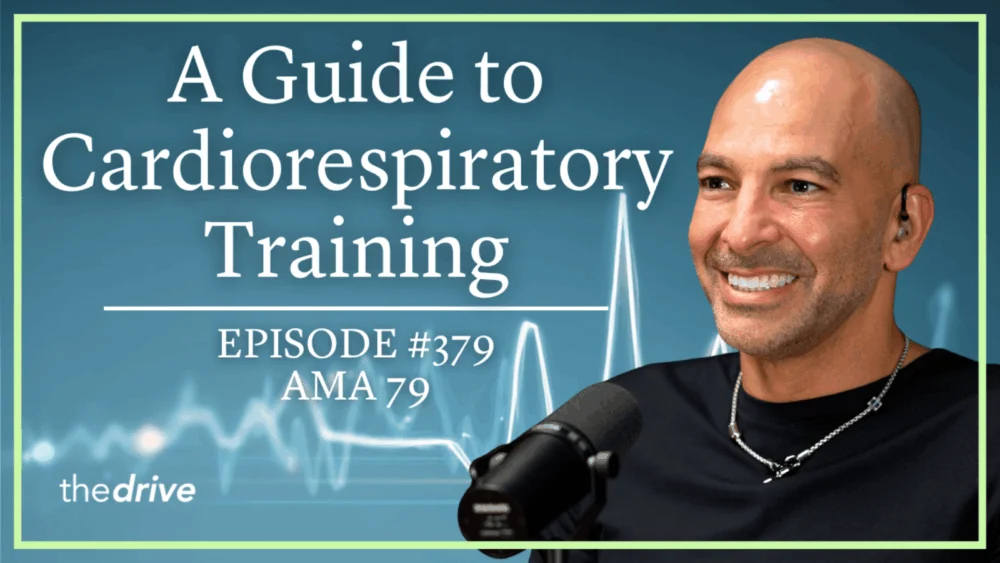
In a significant consolidation of current medical research and clinical practice, Dr. Peter Attia has released a comprehensive framework for cardiorespiratory fitness, positioning it as the single most important modifiable predictor of long-term health and survival. The release, presented through a specialized "Ask Me Anything" (AMA) session, serves as a definitive guide for individuals seeking to optimize their "healthspan"—the period of life spent in good health—and their "lifespan," while maintaining physical independence into their final years. By synthesizing years of data regarding aerobic base training and peak aerobic capacity, the guide addresses a growing public health need for clear, actionable protocols in an era of increasing sedentary behavior and metabolic dysfunction.
The central thesis of Attia’s latest work revolves around the overwhelming statistical correlation between cardiorespiratory fitness (CRF) and all-cause mortality. While traditional medicine often focuses on the management of chronic diseases such as Type 2 diabetes, hypertension, and hyperlipidemia, Attia argues that an individual’s VO2 max—the maximum rate of oxygen consumption during incremental exercise—is a more potent indicator of future health outcomes than almost any other clinical metric. This perspective shifts the focus of preventative medicine from the mere absence of disease to the active cultivation of physiological reserve.
The Physiological Foundation of Longevity: VO2 Max and All-Cause Mortality
To understand the weight of Attia’s recommendations, one must examine the clinical data supporting the prioritization of cardiorespiratory fitness. A landmark 2018 study published in JAMA Network Open, which analyzed over 122,000 patients, demonstrated that higher levels of cardiorespiratory fitness were associated with a dramatic reduction in mortality. The data revealed that the risk of death for those in the lowest fitness quintile was five times higher than those in the "elite" category. Notably, the study found that the health benefits of high fitness levels were greater than the risks associated with smoking, coronary artery disease, or even end-stage renal disease.
Attia emphasizes that VO2 max is not merely a metric for athletes but a vital sign for the general population. As humans age, their VO2 max naturally declines by approximately 10% per decade after the age of 30, with the rate of decline accelerating in later years. By establishing a high "peak" in one’s 30s, 40s, and 50s, an individual builds a "functional buffer" that ensures they remain above the threshold of frailty during their "marginal decade"—the final ten years of life. The guide provides specific age-adjusted targets, urging listeners to aim for fitness levels that place them in the top 2.5% to 5% of their age group to maximize the protective effects of aerobic capacity.
Decoding Zone 2 Training: The Aerobic Engine
A substantial portion of Attia’s new guidance is dedicated to clarifying the often-misunderstood concept of "Zone 2" training. In the context of metabolic health, Zone 2 is defined as the highest level of exertion an individual can maintain while keeping their blood lactate levels below 2 millimoles per liter. At this intensity, the body’s mitochondria are working at their maximal capacity to oxidize fat, thereby improving mitochondrial efficiency and metabolic flexibility.
The importance of Zone 2 lies in its ability to reverse mitochondrial dysfunction, which is a hallmark of insulin resistance and Type 2 diabetes. Unlike higher-intensity "Zone 5" training, which relies heavily on anaerobic glycolysis and the recruitment of Type II muscle fibers, Zone 2 focuses on Type I (slow-twitch) fibers. Attia addresses the persistent confusion regarding training volume, noting that for most individuals, a minimum of 150 to 200 minutes of Zone 2 work per week is required to see significant metabolic adaptations.
Furthermore, the guide offers practical methods for measuring Zone 2 without a laboratory. While blood lactate testing remains the gold standard, Attia explains how the "talk test"—the ability to carry on a conversation with some difficulty while exercising—serves as a reliable proxy for identifying the aerobic threshold. This democratization of high-level training principles allows individuals to self-regulate their exercise intensity without the need for expensive clinical equipment.
Chronology of Attia’s Fitness Philosophy
The release of this consolidated guide marks a pivotal moment in the evolution of Attia’s public health message. Over the past decade, Attia’s focus has shifted from high-performance athletic optimization to a broader "Medicine 3.0" approach, which emphasizes prevention and the extension of healthspan.
In the early 2010s, Attia’s work often centered on nutritional interventions, specifically ketogenic diets and fasting. However, as longitudinal data became more robust, his focus pivoted toward the transformative power of exercise. By 2018, Attia began popularizing the concept of the "Centenarian Decathlon"—a list of physical tasks one wishes to perform at age 100, such as picking up a grandchild or carrying groceries. This framework necessitates a high VO2 max and significant muscle mass, leading to the current emphasis on the dual pillars of Zone 2 training and high-intensity VO2 max intervals. AMA #79 represents the culmination of this journey, providing a unified theory of training that balances volume, intensity, and recovery.
Tailoring Protocols for Diverse Populations
Recognizing that a "one size fits all" approach is ineffective in clinical practice, Attia’s guide provides specific adjustments for different demographics. For beginners, the focus is on the gradual accumulation of volume to avoid orthopedic injury while building a foundational aerobic base. For experienced trainees, the challenge lies in balancing Zone 2 volume with the high-intensity work required to "push" the ceiling of their VO2 max.
The guide also addresses the unique needs of older adults and women. For older individuals, the preservation of lean muscle mass (sarcopenia prevention) must be balanced with cardiorespiratory demands. For women, Attia acknowledges the role of hormonal fluctuations in training capacity and recovery, particularly during the perimenopausal and postmenopausal transitions. He notes that while the fundamental principles of aerobic training remain the same, the timing and intensity of VO2 max work may need to be adjusted to align with individual recovery profiles and bone density considerations.
Addressing Common Pitfalls and the "Interference Effect"
One of the most valuable aspects of the new guide is its focus on avoiding common training mistakes. Attia identifies "the middle ground" as a primary pitfall—training too hard to be considered Zone 2, yet not hard enough to stimulate VO2 max improvements. This "gray zone" training often leads to overtraining and plateaus without providing the specific mitochondrial benefits of low-intensity work or the cardiovascular remodeling of high-intensity work.
Additionally, Attia discusses the "interference effect," a long-held belief in the fitness community that endurance training inhibits muscle hypertrophy (growth). He clarifies that for the vast majority of people, this effect is negligible. In fact, improved cardiorespiratory fitness enhances recovery between sets of resistance training and allows for higher overall training volumes, suggesting that the two modalities are synergistic rather than antagonistic.
Analysis of Implications for the Medical Community and Public Health
The publication of this guide comes at a time when the global medical community is increasingly recognizing exercise as a primary therapeutic intervention. Organizations such as the American Heart Association (AHA) have advocated for the inclusion of CRF as a clinical vital sign. However, implementation in standard primary care remains slow. Attia’s work bridges the gap between high-level research and patient-level application, providing a blueprint that physicians can use to counsel patients on more than just "getting 30 minutes of activity."
The broader implications of Attia’s framework suggest a necessary shift in healthcare spending. If cardiorespiratory fitness is indeed the strongest predictor of longevity, then investment in community fitness infrastructure, wearable technology for tracking VO2 max, and metabolic health education could yield higher returns than late-stage pharmaceutical interventions for age-related diseases.
Conclusion: Planning for the Marginal Decade
Ultimately, Peter Attia’s consolidated guide on cardiorespiratory fitness serves as a call to action for proactive health management. By focusing on Zone 2 training to build a metabolic foundation and VO2 max training to expand the physiological ceiling, individuals can fundamentally alter their aging trajectory.
The guide concludes with a focus on the "Marginal Decade," urging listeners to view their current training as an investment in their future independence. As Attia notes, the ability to maintain a high quality of life at age 80 or 90 is not a matter of chance, but the result of decades of intentional physical conditioning. Through this AMA, Attia provides the technical roadmap for that journey, ensuring that the pursuit of longevity is grounded in rigorous science and practical execution.