admin
admin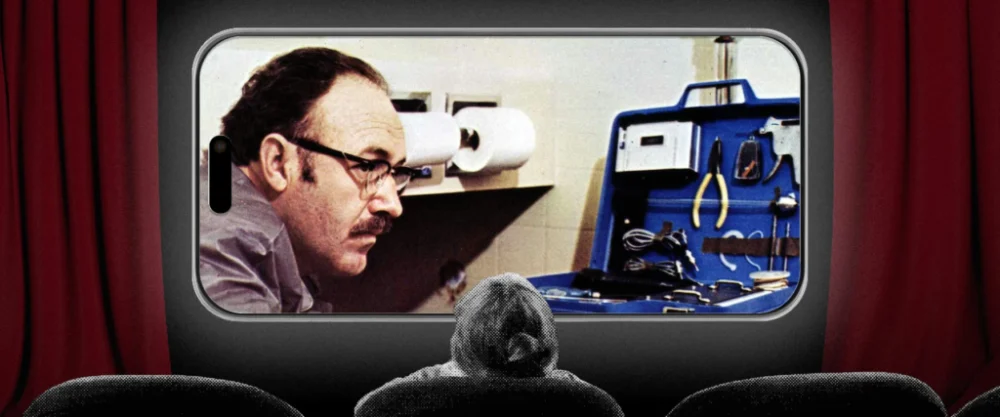
Recent academic observations and journalistic investigations have highlighted a growing crisis in the ability of high-level students to engage with long-form media, specifically feature-length films. This phenomenon, which has gained significant traction in educational discourse following a report by Rose Horowitch in The Atlantic, suggests that the traditional foundations of academic focus are being undermined by the physiological effects of smartphone integration. Educators across the United States are reporting that students, even those enrolled in specialized film programs, are increasingly unable to maintain the sustained attention required to view a two-hour motion picture without the intervention of digital distraction. This shift in cognitive behavior is not merely a matter of changing preferences but reflects a deeper neurological adaptation to the short-term reward systems fostered by modern mobile technology.
The Observational Shift in Cinematic Education
The crisis first gained national attention when professors from prestigious institutions began documenting a marked decline in student engagement during mandatory screenings. Craig Erpelding, a film professor at the University of Wisconsin at Madison, noted that while film viewing was once considered the most accessible form of academic labor, it has now become a point of resistance for students. This sentiment was echoed by approximately 20 film-studies professors nationwide, who reported that the decade-long trend of declining attention spans reached a critical inflection point following the COVID-19 pandemic.
At the University of Southern California (USC), faculty members have likened the behavior of students during screenings to that of individuals suffering from chemical dependencies. Observations indicate that as the duration of a film progresses, students exhibit physical symptoms of restlessness, frequently described as "fidgeting," which correlates with the time elapsed since their last interaction with a mobile device. This withdrawal-like state suggests that the compulsion to check notifications has superseded the ability to process complex, long-form narratives.
The Neurobiology of Cognitive Patience
To understand this shift, researchers point to the concept of "cognitive patience," a term popularized by reading scholar Maryanne Wolf. Cognitive patience is defined as the capacity to maintain focused, sustained attention and to delay gratification while resisting the urge to multitask. It is a foundational skill required for deep reading, complex problem-solving, and the appreciation of nuanced art forms.
The degradation of this ability is linked to the brain’s reward circuitry. Smartphones are designed to activate neuronal bundles in the short-term reward system, which anticipate a high expected value from every interaction. When a user checks a device, the brain receives a micro-dose of neurochemicals that reinforce the behavior. Over time, these neuronal pathways are strengthened at the expense of the circuits responsible for executive function and sustained focus. This creates a "voting" mechanism within the brain where the impulse for distraction consistently outvotes the intention for deep engagement. The result is a physiological discomfort with silence or slow-moving information, making a standard cinematic experience feel labor-intensive rather than immersive.
A Chronology of Declining Focus
The timeline of this attention crisis tracks closely with the evolution of mobile hardware and social media algorithms. Between 2010 and 2015, the mass adoption of LTE speeds and the "infinite scroll" feature on major platforms transformed the smartphone from a tool of utility into a constant stream of high-velocity stimuli.
By 2018, market research began showing that the average Gen Z consumer’s attention span for digital ads had dropped to approximately eight seconds. However, the academic impact remained partially obscured until the 2020-2022 period. The transition to remote learning during the pandemic exacerbated these trends, as the physical barriers between academic work and digital distraction were removed. Professors now report that the "post-pandemic" student enters the classroom with a baseline level of cognitive fragmentation that was previously unseen in higher education.
Supporting Data on Digital Consumption and Mental Health
Recent data from the Pew Research Center and various psychological studies support these anecdotal reports from academia. According to recent surveys, approximately 46% of teenagers report being online "almost constantly." Furthermore, the average daily screen time for individuals aged 18 to 24 has reached upwards of seven hours, excluding time spent on academic or professional work.
The impact of this saturation is reflected in literacy and comprehension metrics. National assessments have shown a gradual decline in the ability of college-aged students to synthesize information from lengthy texts. The struggle to watch a film is seen by experts as the "canary in the coal mine" for a broader loss of literacy. If the brain is conditioned to process information in 15-to-60-second bursts, as seen on platforms like TikTok or Instagram Reels, the structural integrity of a 120-minute narrative becomes cognitively "unreadable" to the user.
Cinematic Engagement as a Remedial Framework
In response to this crisis, some experts and cultural critics suggest that the act of watching a film should be reframed as a form of cognitive training rather than passive entertainment. Much like a physical fitness regimen, reclaiming attention autonomy requires structured practice.
The proposal involves setting specific milestones for "cinematic cognitive patience." For an individual whose focus has been compromised by digital devices, successfully watching a full-length film without checking a phone is equivalent to a novice runner completing a 5k race. It serves as a measurable indicator of neural recovery. Recommended strategies for this training include:
- Physical Separation: Placing the smartphone in a different room to eliminate the "proximal urge" to check it.
- Intentional Selection: Choosing films that demand high engagement to provide enough cognitive "work" to keep the brain occupied.
- Gradual Scaling: Starting with shorter 90-minute films and moving toward three-hour epics as cognitive stamina improves.
From Cognitive Decline to Information Mismanagement: The Rise of AI Vibe Reporting
The erosion of sustained attention has implications beyond the classroom; it affects how society processes complex news, particularly regarding emerging technologies like Artificial Intelligence (AI). There is a growing trend in media known as "vibe reporting," where news outlets prioritize the emotional or speculative "vibe" of a story over empirical data and technical reality.
This trend is particularly prevalent in coverage of the "worst-case future" for white-collar workers. Recent articles in major publications have suggested that AI is on the verge of causing a total collapse in professional employment. However, a critical analysis of these reports often reveals a lack of foundational evidence. For example, claims that AI is currently replacing vast swaths of middle management are often based on anecdotal "vibes" rather than labor department statistics.
Assessing the Realities of Generative AI in the Workforce
A fact-based analysis of the current AI landscape reveals a more nuanced reality than vibe reporting suggests. While Generative AI is undoubtedly a transformative technology, its immediate impact is concentrated in specific sectors, most notably software development.
Ongoing reporting and surveys of over 300 computer programmers indicate that while AI tools like GitHub Copilot are being integrated into workflows, they function more as sophisticated "autocompletes" rather than autonomous replacements for human logic. The integration of these tools is described as "complicated," with issues regarding code quality, security, and the necessity of human oversight remaining paramount.
Furthermore, economic data suggests that the "massive disruption" often cited in headlines has yet to materialize in employment figures. While certain entry-level tasks in copywriting or basic data entry have been automated, the broader white-collar job market remains stable. The danger of vibe reporting is that it induces a state of chronic anxiety in a population that already lacks the cognitive patience to investigate the underlying facts of the situation.
Broader Impact and Implications for the Future
The intersection of declining attention spans and sensationalist reporting creates a vulnerable information ecosystem. When individuals lose the ability to focus on long-form content, they become increasingly dependent on headlines and short-form summaries. This makes the public more susceptible to fear-based narratives and less capable of participating in the deep work required to solve the very problems—like AI integration—that they fear.
The solution to both the educational crisis in film studies and the societal crisis of information literacy lies in the intentional reclamation of cognitive patience. Whether through the disciplined viewing of cinema or the rigorous vetting of news sources, the goal is the same: to move away from the impulsive, short-term reward cycles of the smartphone and back toward a capacity for sustained, deep thought. As educators and industry leaders look toward the future, the primary challenge will not be the technology itself, but our ability to maintain the mental autonomy required to direct it.