admin
admin
A groundbreaking study by Danzglock, Berger, and Hänze has unveiled a critical synergy in pedagogical strategies, demonstrating that the often-challenging technique of interleaved practice can significantly boost long-term retention of complex physics concepts, but only when supported by collaborative learning environments. This research, involving 376 secondary school students, provides a nuanced understanding of how to effectively implement "desirable difficulties" in the classroom, specifically addressing the cognitive load challenges inherent in complex academic domains like physics. The findings offer a compelling pathway for educators to enhance student learning outcomes, particularly in STEM fields where abstract and interconnected concepts demand sophisticated instructional approaches.
The Intricacies of Learning: Desirable Difficulties and Cognitive Load
At the heart of modern learning science lies the concept of "desirable difficulties," a term coined by cognitive psychologist Robert Bjork. This theory posits that certain learning conditions, while initially appearing to impede performance, can actually enhance long-term retention and transfer of knowledge. Interleaved practice is a prime example of such a desirable difficulty. Unlike traditional "blocked" practice, where learners master one concept entirely before moving to the next, interleaving involves mixing different types of problems or concepts within a single study session. For instance, in mathematics, blocked practice might involve solving dozens of problems on calculating the edges of geometric shapes, followed by dozens on corners, then faces. Interleaved practice, by contrast, would mix these problem types, requiring students to constantly switch between different formulas and problem-solving strategies (e.g., edge, corner, face, angle, corner, edge).
While research has consistently shown interleaving to be highly effective for simpler concepts—such as identifying different artists’ styles, learning foreign vocabulary, or basic mathematical operations—its benefits for more complex, interwoven subjects have been less clear, and sometimes even counterproductive. The challenge lies in the increased cognitive demands. When concepts are similar on the surface but require different underlying principles or "operators" to solve, interleaved practice forces the learner to actively discriminate between them, retrieve the correct strategy, and apply it. This process, while beneficial for deep encoding and transfer, places a significant burden on working memory.
This phenomenon is best understood through the lens of Cognitive Load Theory (CLT), developed by John Sweller. CLT differentiates between three types of cognitive load: intrinsic, extraneous, and germane. Intrinsic cognitive load is dictated by the inherent complexity of the material itself and the interactivity of its elements. Extraneous cognitive load arises from inefficient instructional design. Germane cognitive load is the mental effort dedicated to schema construction and automation – the desirable processing that leads to learning. Interleaved practice, especially with complex material, can inherently increase intrinsic cognitive load because learners must constantly process and distinguish between multiple, highly interactive concepts. If this intrinsic load becomes overwhelming, it can impede the germane processing necessary for effective learning, potentially leading to poorer outcomes than blocked practice, which temporarily reduces the need for constant discrimination.
Collaborative Learning as a Cognitive Scaffold
Recognizing the potential pitfalls of high cognitive load in interleaved practice, particularly for complex subjects like physics, the researchers explored collaborative learning as a strategic scaffolding mechanism. Collaborative learning, rooted in social constructivist theories, emphasizes that learning is a fundamentally social process. When students work together, they engage in a range of beneficial activities: explaining ideas to each other, debating potential solutions, asking clarifying questions, and collectively problem-solving. These interactions foster "transactive" and "externalizing" processes, where individuals verbalize their thoughts, share their reasoning, and co-construct knowledge.
The hypothesis was that this shared mental effort could effectively offload some of the individual cognitive burden associated with interleaved practice. By externalizing thought processes and discussing different problem-solving approaches, students in a collaborative setting could collectively manage the high intrinsic cognitive load, freeing up individual cognitive resources for deeper engagement with the material. Moreover, the very nature of collaborative discussion aligns perfectly with the core mechanisms of interleaved practice: comparing, contrasting, and evaluating different concepts. Peers can help each other articulate why one strategy applies to a magnetic field problem while another applies to an electric field problem, thereby reinforcing the discriminative learning that interleaving aims to achieve.
The Experimental Design: Physics in Digital Learning Environments
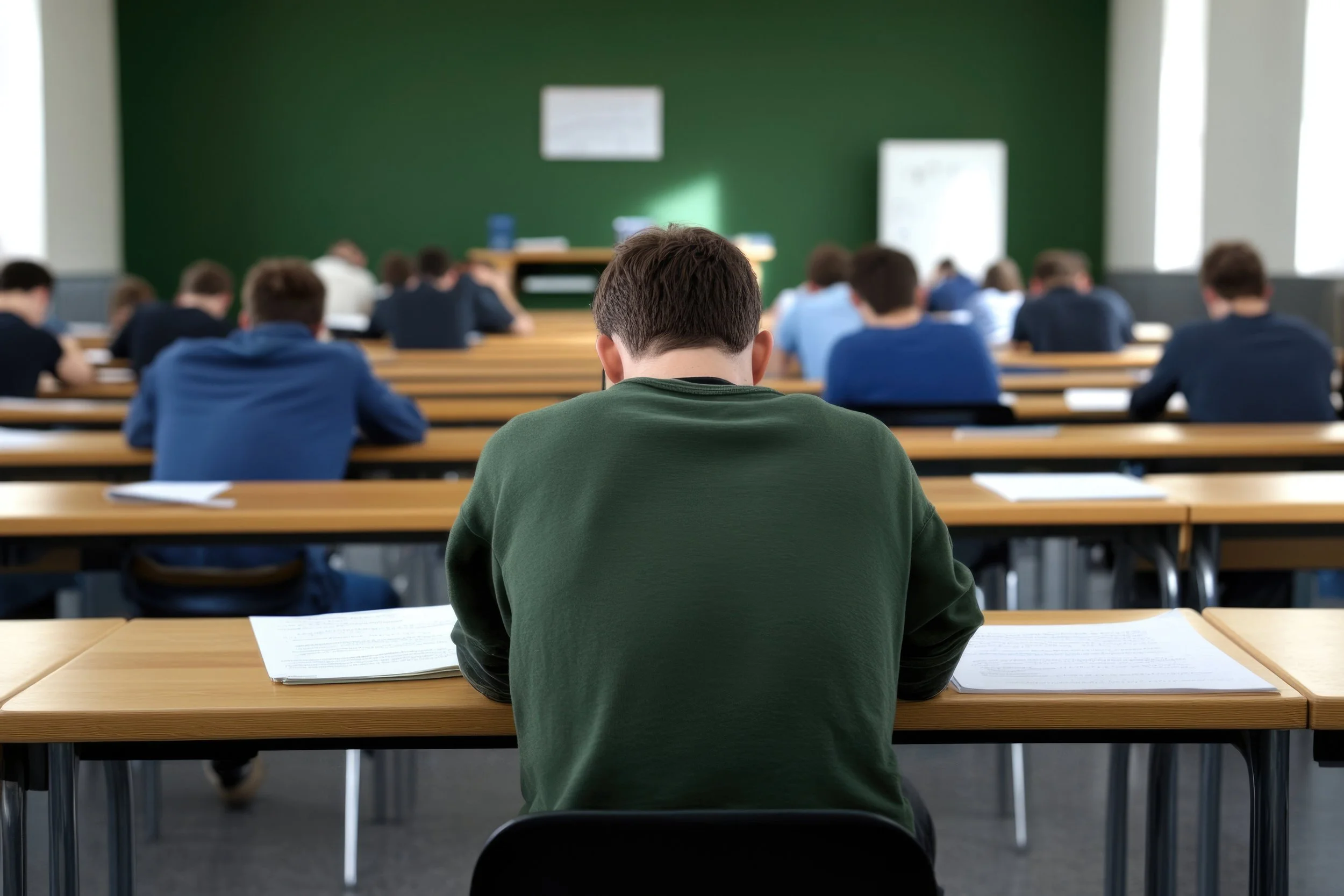
To test this hypothesis, Danzglock, Berger, and Hänze orchestrated a robust experiment involving 376 secondary school students across 30 physics classes. The study’s design was meticulous, employing a quasi-experimental approach that accounted for real-world classroom settings. Physics was chosen as the subject matter due to its inherent complexity, abstract nature, and the frequent need to differentiate between superficially similar but fundamentally distinct concepts—such as magnetic and electric fields, which formed the core content of the learning intervention.
The classes were randomly assigned to either a collaborative learning condition or an individual learning condition. Within each class, students were further assigned to either an interleaved practice or a blocked practice condition. This nested design allowed for a precise examination of the interaction between learning modality (individual vs. collaborative) and practice schedule (blocked vs. interleaved).
The learning phase was conducted using a digital educational game, a common and increasingly sophisticated tool in modern classrooms. This digital platform allowed for standardized task presentation and data collection. Students engaged with 36 tasks in total: 18 focused on magnetic fields and 18 on electric fields. In the blocked practice condition, students first completed all 18 magnetic field tasks consecutively, followed by all 18 electric field tasks. In stark contrast, the interleaved practice condition presented these tasks in an alternating sequence, ensuring that students continuously switched between magnetic and electric field problems.
In the individual learning condition, students worked through these tasks autonomously. For the collaborative learning condition, students worked in pairs. Crucially, the researchers implemented measures to ensure genuine collaboration: prompts encouraged discussion and shared problem-solving, and the digital game was designed to facilitate equal contribution, requiring each student in a pair to periodically take control of the game, preventing one student from dominating the interaction.
To assess the impact of these learning conditions, students underwent two main performance assessments: one immediately after the practice phase and another eight weeks later. The delayed assessment was particularly vital, as it provides a robust measure of long-term retention and transfer, distinguishing genuine learning from mere short-term memory effects. Beyond performance, the researchers also collected data on several control variables, including students’ prior knowledge in physics, their self-reported cognitive load during the tasks, their self-concept in physics, their interest in the subject, and their prior experience with collaborative learning. These measures were crucial for ruling out alternative explanations and providing a holistic view of the learning experience.
Unlocking Performance: The Collaborative-Interleaved Advantage
The results of the study were unequivocal and shed significant light on the conditions under which interleaved practice thrives for complex material. The primary finding was a powerful interaction effect: collaborative learning demonstrably brought out the benefits of interleaved practice on both the immediate and, more importantly, the delayed performance tests concerning complex physics content.
Specifically, students in the collaborative-interleaved group performed significantly better on both assessments compared to students in the individual-interleaved group. This advantage was not observed for blocked practice; whether students practiced individually or in pairs had no significant impact on their performance in the blocked condition. This means the benefit of interleaving over blocking only materialized when students were engaged in collaborative learning. In the individual learning condition, interleaving did not offer a significant advantage over blocked practice for complex physics concepts.
A critical piece of explanatory data emerged from the cognitive load measures. Students in the collaborative-interleaved group reported perceiving the material as less complex than students in any other condition. This finding provides direct empirical support for the researchers’ hypothesis: working in pairs on interleaved problems effectively reduced the students’ intrinsic cognitive load. This reduction is consistent with the idea that collaborative environments facilitate the externalization of cognitive processes and the co-creation of knowledge, thereby making the inherently demanding task of interleaved practice more manageable and, ultimately, more effective for deep learning. The collective brainstorming, peer explanations, and shared problem-solving allowed students to navigate the "desirable difficulty" of interleaving without becoming overwhelmed, thus enabling the germane cognitive processing essential for long-term retention.
Broader Implications for Education and Policy
The findings of Danzglock, Berger, and Hänze carry substantial implications for educational practice, curriculum design, learning technology, and education policy, particularly in STEM fields.
Redefining Pedagogical Strategies in STEM Education
For educators, this study offers a clear directive: simply implementing interleaved practice is not enough for complex subjects. The strategy must be carefully scaffolded. Teachers need to be equipped with the skills and resources to foster effective collaborative learning environments where students can genuinely discuss, explain, and co-construct understanding. This goes beyond mere group work; it requires structured tasks, clear roles, and mechanisms to ensure equitable participation and meaningful peer interaction. Physics teachers, in particular, can leverage this research to design lessons that intentionally combine alternating problem types with opportunities for students to work together, articulate their reasoning, and resolve conceptual ambiguities. This could involve incorporating "think-pair-share" activities, structured group problem-solving sessions, or peer-teaching components directly into interleaved practice exercises.
Informing Curriculum and Assessment Design
Curriculum developers should consider integrating collaborative-interleaved practice into instructional materials for complex topics. Rather than presenting concepts in isolated, sequential blocks, curricula could be designed to naturally blend related but distinct concepts, immediately followed by collaborative practice opportunities. Assessment design could also evolve, incorporating elements that require students to differentiate between similar concepts, reflecting the higher-order thinking skills fostered by collaborative-interleaved practice. The emphasis on long-term retention revealed by the 8-week delayed test also reinforces the importance of spaced retrieval practice as an ongoing component of any curriculum.
Advancements in Learning Technology
The study’s use of a digital educational game highlights the potential for technology to facilitate both interleaved practice and collaborative learning. Developers of educational software and platforms can design tools that inherently support these combined strategies. This could include adaptive learning systems that identify concepts suitable for interleaving, then prompt students to work in virtual pairs, providing tools for shared whiteboards, real-time discussion, and collaborative problem-solving. Intelligent tutoring systems could be enhanced to monitor cognitive load and suggest collaborative interventions when a student appears to be struggling with interleaved tasks. The gamified approach also underscores that engagement can be maintained even with challenging learning strategies.
Guiding Education Policy and Professional Development
At a policy level, these findings add weight to arguments for investing in professional development programs that train teachers in both effective collaborative learning strategies and the nuanced implementation of "desirable difficulties." Policymakers should consider allocating resources towards research and development of pedagogical frameworks that integrate these evidence-based strategies into national and local curricula. The study advocates for a shift from a simplistic view of "more practice is better" to a sophisticated understanding of how practice should be structured and how learners should be supported.
Statements from the Field and Future Directions
While the original article does not provide direct quotes, one can infer the significance of these findings. Dr. Danzglock and the research team would likely emphasize that their work provides a crucial mechanistic explanation for when and why interleaved practice works, moving beyond anecdotal evidence to empirical validation. "Our findings underscore that ‘desirable difficulties’ are not universally beneficial in isolation," a researcher might state, "but require thoughtful scaffolding to truly unlock their potential, especially in cognitively demanding subjects like physics. Collaborative learning acts as a powerful cognitive buffer, allowing students to engage deeply with complex, interleaved content without being overwhelmed."
Educational experts, upon reviewing these findings, would likely express optimism. "This study offers a pragmatic roadmap for educators grappling with how to teach abstract STEM concepts effectively," remarked an inferred educational psychologist. "It validates the importance of social interaction in learning and provides concrete evidence for integrating collaboration into advanced practice strategies."
Looking ahead, future research could explore the generalizability of these findings across different age groups, subject domains (e.g., advanced mathematics, chemistry, engineering, medicine), and cultural contexts. Investigating different forms of collaborative support, the optimal group size, and the role of individual differences (e.g., prior knowledge, metacognitive skills) would also be valuable. Further research could also delve deeper into the specific mechanisms of cognitive load reduction within collaborative settings, perhaps utilizing neuroimaging techniques to observe brain activity during these learning interactions. Understanding how to sustain these benefits beyond eight weeks and adapt them for diverse learning needs will be key to translating this compelling research into widespread educational improvement.
In conclusion, the study by Danzglock, Berger, and Hänze marks a significant advance in learning science. It compellingly demonstrates that interleaved practice, when strategically supported by collaborative learning, is not merely a difficult challenge, but a highly effective pathway to long-term mastery of complex concepts. By reducing intrinsic cognitive load through shared intellectual effort, collaborative learning transforms a "desirable difficulty" into a truly desirable and powerful learning tool, paving the way for more effective and engaging STEM education.