admin
admin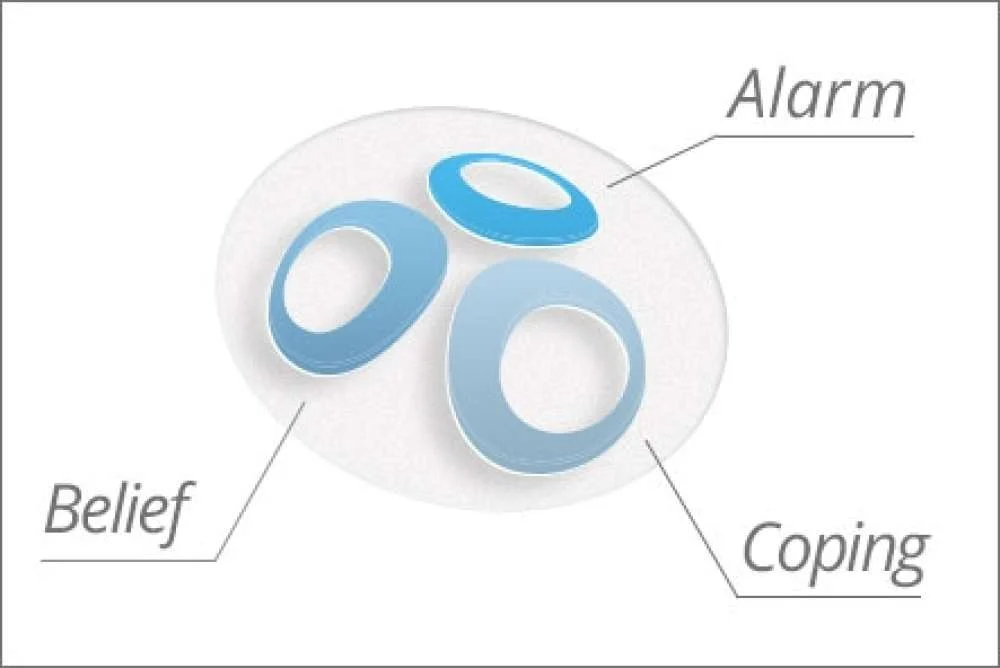
Mental health literacy has emerged as a critical frontier in public health, yet many individuals lack the foundational vocabulary to describe their internal emotional landscapes. Just as the acquisition of the alphabet serves as the prerequisite for lifelong communication and learning, psychological frameworks such as the ABCtracker™—an acronym for Alarm, Belief, and Coping—are increasingly being utilized to provide a structured approach to identifying and managing anxiety. This systematic methodology aims to transform a nebulous and often overwhelming emotional experience into a series of manageable, data-driven observations. By deconstructing anxiety into its constituent parts, healthcare professionals and patients are finding new ways to bridge the gap between instinctive biological responses and cognitive mastery.
The Evolution of Cognitive Frameworks in Anxiety Management
The conceptual roots of the ABC model can be traced back to the mid-20th century with the advent of Cognitive Behavioral Therapy (CBT). Pioneers such as Albert Ellis, who developed Rational Emotive Behavior Therapy (REBT), and Aaron Beck, often cited as the father of cognitive therapy, revolutionized the field by suggesting that it is not external events themselves that cause distress, but rather the individual’s interpretation of those events. The modern iteration of this concept, specifically tailored for anxiety through tools like the ABCtracker™, simplifies these complex psychological theories into a practical three-step process: identifying the physiological alarm, evaluating the underlying belief, and selecting an appropriate coping mechanism.
Historically, anxiety was often viewed through a purely pathological lens, treated primarily with sedative medications or long-term psychoanalysis. However, the shift toward cognitive-structural models represents a move toward patient empowerment. By understanding the "ABCs," individuals are encouraged to become active participants in their own treatment, moving from a state of passive suffering to one of informed observation.
A Stands for Alarm: The Biological Imperative of the Fight-or-Flight Response
The "A" in the ABC framework represents the Alarm—the body’s primitive, instinctive reaction to perceived threats. From an evolutionary perspective, the anxiety alarm is a survival mechanism mediated by the amygdala, a small, almond-shaped structure in the brain’s limbic system. When a threat is detected, the amygdala triggers the sympathetic nervous system, releasing a cascade of hormones including adrenaline and cortisol. This results in physiological symptoms such as increased heart rate, rapid breathing, and heightened sensory awareness, collectively known as the "fight-or-flight" response.
In the context of modern anxiety disorders, however, this alarm system is often recalibrated to a state of hypersensitivity. Clinical data suggests that for individuals with Generalized Anxiety Disorder (GAD) or Panic Disorder, the threshold for triggering this alarm is significantly lower than in the general population. The alarm may sound in response to non-threatening stimuli, such as a crowded room, a professional deadline, or even an ambiguous social interaction. Recognizing the "Alarm" phase is the first step in the ABCtracker™ process, allowing the individual to label the physical sensation as a biological event rather than an objective truth about their environment.
B Stands for Belief: The Cognitive Architecture of Anxiety
Once the alarm sounds, the human brain attempts to make sense of the physiological arousal. This is the "Belief" phase. In a split second, the prefrontal cortex—the area of the brain responsible for complex thinking and decision-making—evaluates the situation. For those without clinical anxiety, this assessment is usually grounded in reality; if a car alarm goes off, they check for a thief. If no thief is found, the alarm is dismissed.
However, for individuals struggling with pervasive anxiety, the "Belief" stage is often characterized by cognitive distortions. Common distortions include "catastrophizing" (assuming the worst possible outcome) or "emotional reasoning" (believing that because one feels endangered, they must actually be in danger). According to the American Psychological Association (APA), these automatic negative thoughts reinforce the initial alarm, creating a feedback loop that sustains the state of anxiety. The ABC framework encourages users to pause at this stage and ask: "Is this belief supported by evidence, or is it a byproduct of my heightened alarm?" By evaluating the validity of these beliefs, individuals can begin to dismantle the cognitive structures that allow anxiety to persist.
C Stands for Coping: Distinguishing Adaptive from Maladaptive Strategies
The final component of the framework is "Coping," which refers to the actions taken in response to the alarm and belief. Coping mechanisms are universal, as the human brain is hardwired to seek safety and equilibrium. However, psychologists categorize these responses into two distinct groups: adaptive and maladaptive.
Adaptive coping strategies are those that reduce anxiety in the long term without causing additional harm. These include mindfulness, deep breathing exercises, cognitive reframing, and seeking social support. Conversely, maladaptive coping strategies provide immediate relief but ultimately exacerbate the problem. Examples include avoidance (staying home to avoid social anxiety), substance use, or compulsive checking behaviors. The ABCtracker™ serves as a diagnostic tool in this regard, helping users and their healthcare providers identify patterns of maladaptive coping that may be maintaining an anxiety disorder. By tracking these responses over time, patients can consciously choose to replace harmful habits with constructive, evidence-based techniques.
Supporting Data: The Rising Global Prevalence of Anxiety
The implementation of frameworks like the ABCs of anxiety comes at a time when mental health statistics are reaching historic highs. According to the World Health Organization (WHO), an estimated 301 million people globally were living with an anxiety disorder in 2019, making it the most common of all mental disorders. The COVID-19 pandemic further exacerbated this trend, with the WHO reporting a 25% increase in the prevalence of anxiety and depression worldwide in the first year of the pandemic alone.
In the United States, data from the National Institute of Mental Health (NIMH) indicates that approximately 19.1% of adults had an anxiety disorder in the past year. Furthermore, the economic impact is staggering. Anxiety disorders are estimated to cost the global economy over $1 trillion per year in lost productivity, according to studies published in The Lancet Psychiatry. These figures underscore the urgent need for scalable, easy-to-understand tools like the ABCtracker™ that can be integrated into primary care and self-help contexts.
Professional Perspectives and Clinical Integration
Medical professionals have largely signaled support for structured self-monitoring tools. Dr. Elena Rodriguez, a clinical psychologist specializing in cognitive behavioral interventions, notes that "the primary challenge for most patients isn’t a lack of will, but a lack of data. When a patient uses a tool like the ABCtracker™, they come to their sessions with a map of their triggers. This allows us to move much faster from diagnosis to targeted treatment."
The American Psychiatric Association has also highlighted the importance of "mHealth" (mobile health) tools in bridging the gap between clinical visits. While the ABCtracker™ is not a replacement for professional therapy, it is viewed as a "force multiplier" that enhances the efficacy of physician-led care. By providing a common language for patients and providers, the ABC framework streamlines the diagnostic process and helps in tailoring individualized treatment plans.
Chronology of Mental Health Literacy Initiatives
The push for tools like the ABCs of Anxiety is part of a broader historical timeline of mental health advocacy:
- 1950s-1960s: The development of REBT and CBT begins the shift toward cognitive models of emotion.
- 1990s: The "Decade of the Brain" increases public awareness of the biological basis of mental health conditions.
- 2000s: The rise of the Internet leads to an explosion of self-help resources, but also a surplus of unverified information.
- 2010s: The "Digital Health Revolution" sees the introduction of smartphone apps and trackers designed to monitor mood and anxiety.
- 2020-Present: Post-pandemic, there is a renewed focus on "mental health literacy," with schools and workplaces integrating frameworks like the ABCs into their core wellness programs.
Broader Impact and Future Implications
The widespread adoption of the ABC framework has implications that extend beyond individual wellness. In the workplace, organizations are beginning to recognize that emotional literacy is a component of professional development. By training employees to recognize their "Alarms" and evaluate their "Beliefs," companies can foster more resilient workforces and reduce the incidence of burnout.
Furthermore, in the realm of education, there is a growing movement to teach the ABCs of mental health alongside traditional subjects. Proponents argue that if children are taught to manage their "Alarms" early in life, they will be better equipped to handle the stresses of adolescence and adulthood, potentially lowering the long-term incidence of chronic anxiety disorders.
As technology continues to evolve, the integration of biofeedback—such as wearable devices that detect heart rate variability—with the ABC framework could provide even more precise interventions. Imagine a future where a smartwatch detects a physiological "Alarm" and prompts the user to evaluate their "Belief" before a maladaptive "Coping" mechanism can take hold.
In conclusion, the ABCs of Anxiety—Alarm, Belief, and Coping—represent more than just a mnemonic device; they are a sophisticated distillation of decades of psychological research. By providing a structured path to self-awareness, these tools offer a scalable solution to a global mental health crisis. While anxiety remains an inherent part of the human experience, the ability to track, analyze, and master these feelings through the ABC framework ensures that individuals are no longer at the mercy of their instinctive alarms, but are instead empowered by their own cognitive insight.