 admin
admin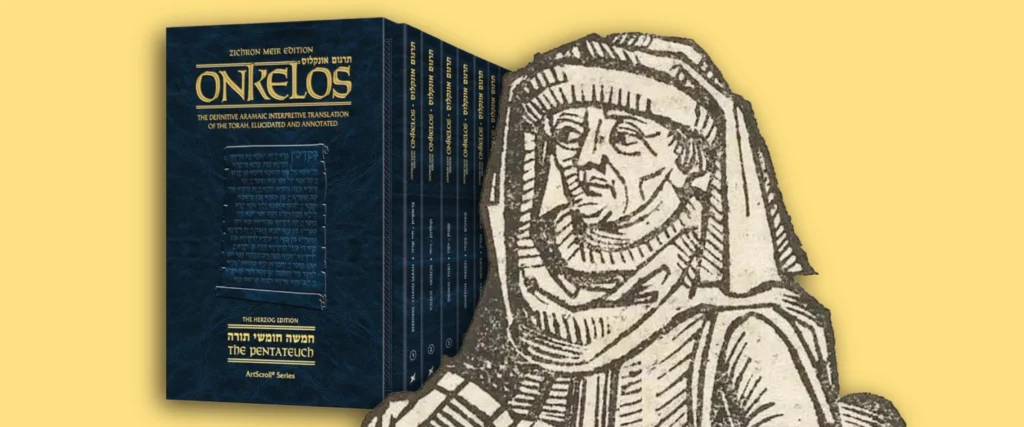
The ancient narrative of Genesis 2 offers a poetic rendering of the human origin story, describing the moment the Creator formed man from the dust of the earth and "blew into his nostrils the breath of life." This transition from inanimate matter to a living being has long been the subject of intense theological and linguistic scrutiny. Central to this inquiry is the Hebrew term often translated as "living being." Onkelos, the influential second-century Roman convert and Torah scholar, translated this phrase into Aramaic as ruach memalela, or a "speaking spirit." This interpretation posits that the capacity for speech is not merely a secondary skill but is constitutive of humanity itself. According to medieval commentator Rashi, speech represents the unique boundary between the human experience and the rest of the biological world. In this traditional view, to speak is to exercise the divine spark.
As generative artificial intelligence (AI) achieves unprecedented levels of linguistic fluency, these ancient philosophical questions have moved from the realm of theology into the center of global ethical debate. The emergence of Large Language Models (LLMs) has forced a confrontation with the "sacredness" of speech. When a machine can simulate the most intimate human act—the exchange of complex thought through language—it challenges the long-held belief that speech is the exclusive domain of the human spirit.
The Evolution of Human Communication and the Rise of the Alphabet
To understand the current unease surrounding AI, one must look at the historical trajectory of human communication. The scribes of the Hebrew Bible were writing during a period when the rise of alphabet systems in the ancient Near East was revolutionizing human society. Unlike earlier logographic systems, which required years of elite training to master, the phonetic alphabet democratized literacy. This shift enabled the recording of laws, the sharing of philosophy, and the birth of universal justice and human dignity.
Speech and its written counterparts allowed for what some philosophers describe as a "miraculous act of human-to-human telepathy." It is the process of transforming internal mental states into vocalized phonemes or written symbols that are then decoded by another mind. This exchange has historically served as the foundation of the social contract. However, the introduction of "Technopoly"—a term coined by social critic Neil Postman to describe a society where technology is deified—has begun to shift the status of language from a sacred human bond to a commodified digital output.
A Chronology of the Generative AI Revolution
The current ethical crisis did not emerge in a vacuum but is the result of decades of computational advancement that accelerated sharply in the late 2010s.
- 2017: Google researchers publish the seminal paper "Attention Is All You Need," introducing the Transformer architecture. This innovation allowed models to process words in relation to all other words in a sentence, rather than in a linear sequence, drastically improving context comprehension.
- 2018–2019: OpenAI releases GPT-1 and GPT-2. The latter was initially deemed "too dangerous to release" due to its ability to generate coherent, deceptive text.
- 2020: The release of GPT-3 marks a turning point, demonstrating that "scaling laws"—simply adding more data and computing power—could produce human-like fluency.
- 2022 (November): ChatGPT is launched, bringing generative AI into the mainstream and reaching 100 million users in record time.
- 2023–2024: The introduction of GPT-4, Claude 3, and Gemini Pro 1.5 pushes AI capabilities into complex reasoning, multimodal interaction (voice and vision), and long-form content creation.
This rapid timeline has left little room for the development of a robust ethical framework, placing modern society in a position similar to the medical community in the mid-20th century prior to the establishment of formal bioethics.
The Mechanics of Machine Fluency vs. Human Intent
The unease many feel when interacting with a chatbot stems from a fundamental mismatch between appearance and reality. While an AI may seem to "understand" a conversation, its underlying process is purely mathematical. LLMs function through autoregressive generation, utilizing matrix multiplications to predict the next "token" (a fragment of a word) in a sequence based on statistical probabilities derived from massive datasets.
This "lexical fluidity" is an illusion of consciousness. In the field of digital ethics, researchers often refer to these systems as "stochastic parrots," a term popularized by linguist Emily M. Bender and computer scientist Timnit Gebru. The term highlights that while the output is sophisticated, it lacks the ruach (spirit) or intent that characterizes human speech. The "transgression" felt by many users occurs when the machine enters the sacred space of dialogue—a space traditionally reserved for beings with agency, empathy, and moral responsibility.
Data and Public Sentiment on AI Interaction
Recent data highlights a growing tension in how the public perceives these digital "speaking spirits." According to a 2023 Pew Research Center study, 52% of Americans feel more concerned than excited about the increased use of artificial intelligence. Furthermore, a study by the University of Chicago’s NORC Center for Public Affairs Research found that only 11% of adults believe AI will do more good than harm for society in the long run.
In the corporate sector, the adoption of generative AI has been aggressive. A 2024 McKinsey & Company report indicates that 65% of organizations are regularly using generative AI in at least one business function, nearly double the percentage from the previous year. The most common applications are in marketing and sales—fields that rely heavily on the persuasive power of speech and text—raising concerns about the potential for mass-scale linguistic manipulation.
The Bioethics Parallel: A Need for Digital Ethics
The current state of digital ethics is frequently compared to the state of bioethics in the 1960s and 70s. During that era, breakthroughs in organ transplantation, life support, and genetic mapping forced society to define the moral boundaries of life and death. The resulting frameworks, such as the 1979 Belmont Report, established principles of autonomy, beneficence, and justice.
Today, digital ethics must address similar "golemic" quandaries. In Jewish folklore, a Golem is an anthropomorphic being created from inanimate matter (clay) through the use of sacred words, but it lacks a soul and can become dangerously uncontrollable. Critics argue that allowing AI to serve as a "golemic conversation partner"—writing our emails, drafting our laws, or providing companionship to the lonely—risks devaluing the authentic human connection.
Official Responses and Regulatory Frameworks
Governments and international bodies have begun to react to the potential "profanation" of human discourse.
- The European Union AI Act (2024): The world’s first comprehensive AI law, it categorizes AI systems by risk. Notably, it mandates that AI-generated content (deepfakes and text) must be clearly labeled as such to protect the integrity of public information.
- The White House Executive Order on AI (2023): This order emphasizes the need for "watermarking" AI-generated content to ensure that the "speaking spirit" of the machine is never mistaken for that of a human without disclosure.
- UNESCO Recommendation on the Ethics of AI: Signed by 193 member states, this document emphasizes that AI should never be granted legal personhood and that human agency must remain central to all technological deployments.
Industry leaders like Sam Altman (OpenAI) and Dario Amodei (Anthropic) have called for "guardrails," yet they continue to push for the "inevitability" of Artificial General Intelligence (AGI). This creates a paradox: developers acknowledge the risks of machine speech while simultaneously working to make it indistinguishable from human thought.
Implications for the Future of Human Dignity
If speech is indeed constitutive of humanity, the outsourcing of that speech to machines represents a significant shift in the human condition. The democratization of holiness enabled by the ancient alphabet is now challenged by the algorithmic centralization of language. When a machine speaks on behalf of a human, the "human-to-human telepathy" is broken, replaced by a human-to-machine-to-human interface that lacks moral weight.
The work ahead for the field of digital ethics is to determine what aspects of communication must remain "sacred." Should AI be allowed to perform religious rituals, deliver eulogies, or provide psychological counseling? These are not merely technical questions but ontological ones. As the generative AI revolution continues to unfold, the primary challenge will not be improving the fluency of the machine, but rather preserving the dignity and uniqueness of the "speaking spirit" that Onkelos identified nearly two millennia ago. Before blindly embracing the next wave of technological "inevitability," society must decide which parts of the human experience are not for sale to the highest-performing algorithm.