admin
admin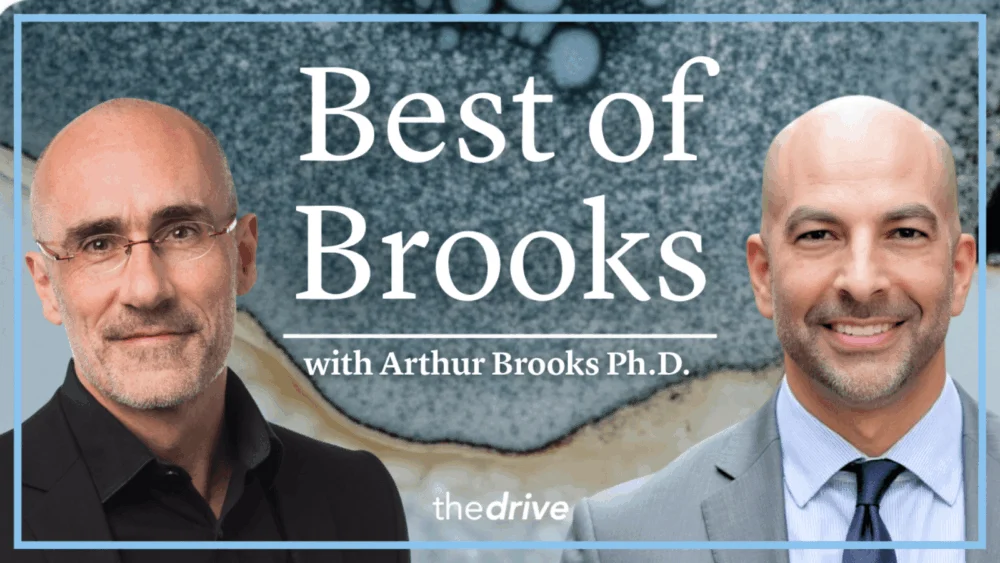
Dr. Peter Attia, a prominent physician and researcher specializing in longevity, has released a comprehensive retrospective episode of his podcast, The Peter Attia Drive, featuring a curated synthesis of conversations with social scientist and Harvard professor Arthur C. Brooks. This special installment consolidates the most impactful insights from two previous long-form interviews, focusing on the intersection of biological health, cognitive science, and emotional well-being. By distilling these discussions into four core themes—the definition of happiness, the biological forces that undermine it, the practical tools for cultivation, and the courage required for a meaningful life—the episode serves as a definitive guide for those seeking to optimize their mental health alongside their physical lifespan.
The release marks a significant moment for the podcast, which typically focuses on the "Four Pillars" of physical longevity: exercise, nutrition, sleep, and pharmacology. By dedicating a "best of" episode to Brooks’ work, Attia acknowledges that emotional health is not a secondary concern but a foundational component of human longevity. The episode aims to provide listeners with rigorous, evidence-informed insights into how to build a life that is both high-performing and deeply fulfilling.
The Distinction Between Happiness and Happy Feelings
A central premise of the discussion is the conceptual clarification of what happiness actually entails. Brooks argues that a major obstacle to well-being in modern society is the conflation of "happiness" with "happy feelings." Drawing on a culinary metaphor, Brooks notes that feelings are merely evidence of happiness, just as the smell of a turkey indicates a Thanksgiving dinner but is not the meal itself. According to Brooks, happiness is a macro-state composed of three distinct components: enjoyment, satisfaction, and purpose.
During the conversation, Attia reflects on the difficulty of maintaining this perspective during periods of "negatively valenced feelings." The dialogue explores the psychological phenomenon where individuals often allow a temporary emotional state to define their overall well-being. Brooks emphasizes that happiness and unhappiness are not polar opposites on a single spectrum; rather, they are distinct states that can and often do coexist. This neurological reality allows an individual to feel the sting of a temporary setback while maintaining a high baseline of existential happiness.
The Biological Foundations of Emotion and Evolutionary Survival
The discussion delves into the evolutionary biology that governs human emotion, identifying the "six fundamental emotions" as categorized in traditional psychological frameworks. Brooks and Attia focus on the powerful negative emotions—fear, anger, sadness, and disgust—that were essential for the survival of Homo sapiens in a pre-civilized environment.
Brooks explains that fear and anger are primarily responses to perceived threats. In an evolutionary context, these emotions triggered the "fight or flight" response, ensuring that ancestors could navigate physical dangers. However, in the 21st century, these biological triggers often misfire in response to non-lethal stressors, such as social media criticism or professional setbacks. This "evolutionary mismatch" creates a chronic state of anxiety for many high-achievers. By understanding that negative emotions are biological signals intended for survival rather than reflections of reality, individuals can learn to "metacognate"—or think about their thinking—thereby reducing the power these emotions hold over their daily lives.
Chronology of Arthur Brooks’ Career and Intellectual Evolution
The depth of the podcast is enriched by the unique professional trajectory of Arthur Brooks, which provides a narrative framework for his findings. Brooks’ career did not begin in academia but in the arts. At the age of 19, he left college to pursue a career as a professional French hornist, eventually performing with the Annapolis Brass Quintet and the City Orchestra of Barcelona.
His transition into social science began in his late twenties when, while still a touring musician, he pursued a bachelor’s degree via distance learning. This was followed by a Master’s in Economics and eventually a PhD in public policy analysis from the Rand Graduate School. Brooks’ subsequent decade as a university professor culminated in his tenure at Syracuse University before he took the helm of the American Enterprise Institute (AEI) in Washington, D.C., as its president for ten years.
Currently, as the William Henry Bloomberg Professor of the Practice of Public Leadership at the Harvard Kennedy School and a Professor of Management Practice at the Harvard Business School, Brooks utilizes his diverse background to bridge the gap between hard data and the "humanities" of happiness. This chronological journey from the disciplined world of music to the analytical world of public policy informs his "best of" contributions to Attia’s podcast, offering a blend of artistic intuition and scientific rigor.
Supporting Data: The Science of Satisfaction and the Striver’s Curse
A significant portion of the synthesis addresses the "Striver’s Curse," a phenomenon familiar to much of Attia’s audience. Brooks presents data suggesting that individuals who are highly successful in the first half of their lives—characterized by "fluid intelligence" or the ability to solve novel problems—often experience a sharp decline in happiness as they age and their cognitive processing speed naturally slows.
To combat this, Brooks introduces the concept of "crystallized intelligence," which is the ability to use accumulated knowledge to teach and synthesize complex ideas. The data shows that those who successfully transition from being "strivers" to "teachers" or "mentors" in their later years report significantly higher levels of life satisfaction. This shift is crucial for longevity, as chronic dissatisfaction and social isolation are correlated with increased cortisol levels, systemic inflammation, and a higher risk of cardiovascular disease.

Furthermore, the discussion touches upon the "Happiness Portfolio," a framework Brooks uses to categorize the four essential investments for a happy life:
- Faith and Philosophy: A sense of transcendence or a way to make sense of the world.
- Family: Maintaining deep, stable connections with kin.
- Community: Meaningful friendships and social circles.
- Meaningful Work: Labor that creates value and provides a sense of earned success.
Official Responses and Public Reception
While the podcast is a private production, the collaboration between Attia and Brooks has garnered significant attention from the medical and psychological communities. Health experts have praised Attia for expanding the definition of "longevity" to include the "healthspan of the mind." Dr. Attia’s decision to keep the podcast ad-free, relying instead on a premium membership model, has been cited as a successful example of independent scientific journalism that avoids the conflicts of interest often found in commercial health media.
Social media reactions from listeners indicate a high level of engagement with Brooks’ "turkey dinner" analogy, with many noting that the distinction between transient feelings and long-term happiness has provided a practical tool for managing workplace stress and personal relationships. The episode has also seen high shares among professional coaching and mental health circles, where Brooks’ "science-based" approach to joy is increasingly used as a supplement to traditional therapy.
Broader Impact and Implications for Longevity
The synthesis of Brooks’ work on The Peter Attia Drive has broader implications for public health policy and individual aging strategies. As the global population ages, the "longevity economy" has focused heavily on pharmaceutical interventions and biotechnology. However, the Attia-Brooks dialogue suggests that without a corresponding focus on the "science of happiness," extended lifespans may be marked by a "longevity paradox"—living longer in a state of emotional decline.
The analysis presented in the episode suggests that the next frontier of human health is the mastery of the prefrontal cortex over the limbic system. By utilizing the tools discussed—such as identifying the six fundamental emotions, investing in the "happiness portfolio," and transitioning toward crystallized intelligence—individuals can effectively "engineer" a more satisfying later life.
In conclusion, this special episode serves as more than a mere summary of past interviews; it is a strategic roadmap for the "second half" of life. By combining Attia’s clinical focus on physical durability with Brooks’ social-scientific focus on emotional fulfillment, the episode provides a holistic blueprint for what it means to live well. As Attia notes in his introduction, the mission of the podcast remains the provision of rigorous, evidence-informed insights, and this retrospective on Arthur Brooks stands as a cornerstone of that objective.