admin
admin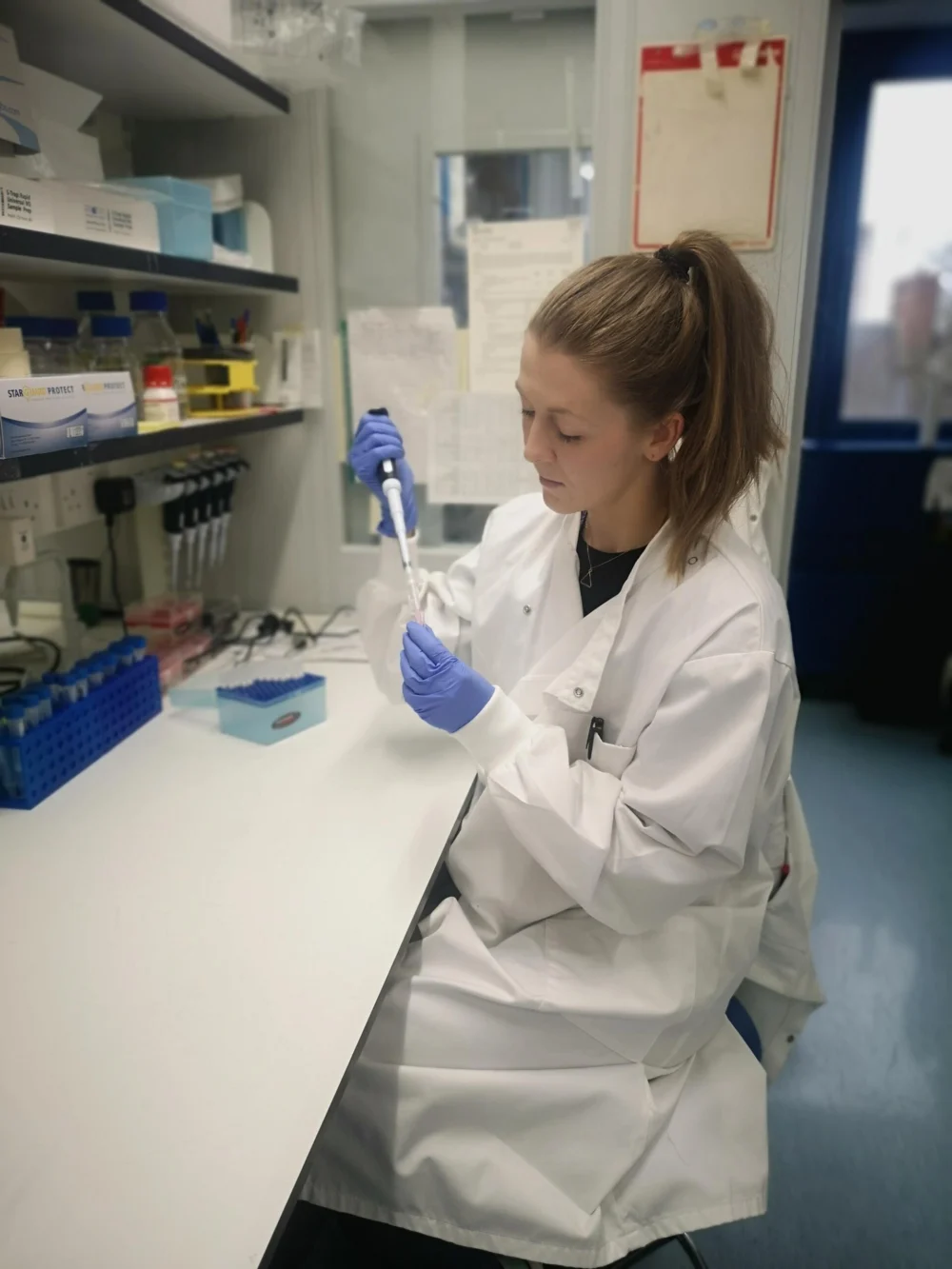
A substantial grant of £500,000 has been jointly awarded to Dr. Amy Lloyd at the University of Dundee, marking a significant advancement in the global effort to combat Alzheimer’s disease. This critical funding, provided by Race Against Dementia (RAD), a charity founded by three-time Formula 1 World Champion Sir Jackie Stewart OBE, in strategic partnership with Alzheimer’s Research UK (ARUK), the nation’s foremost dementia research charity, will underpin a five-year investigation into the complex and often paradoxical behaviour of immune cells within the brain, known as microglia. Dr. Lloyd’s pioneering research aims to unravel the mechanisms behind how these vital cells transition from being protective agents to contributors of neural damage during the progression of Alzheimer’s, offering a new frontier for therapeutic intervention.
The focus of Dr. Lloyd’s investigation centres on understanding the enigmatic transformation of microglia. These immune cells are the brain’s resident guardians, constantly monitoring their environment for signs of damage or infection. In the early stages of Alzheimer’s disease, microglia are believed to play a beneficial role, actively engaging in the breakdown and clearance of toxic protein aggregates, specifically amyloid-beta plaques, which are a hallmark of the condition. However, as the disease advances, these cells appear to undergo a detrimental shift, losing their ability to clear harmful proteins and instead releasing pro-inflammatory molecules that actively damage surrounding nerve cells. This critical pivot, from ‘good to bad,’ remains poorly understood, representing a significant knowledge gap that Dr. Lloyd’s research seeks to address.
The Enigma of Microglia: From Protectors to Perpetrators
Microglia constitute approximately 10-15% of all cells in the brain and spinal cord, performing essential functions such as immune surveillance, phagocytosis (the engulfing of cellular debris and pathogens), and synaptic pruning, which is crucial for brain development and plasticity. Their dynamic nature allows them to rapidly respond to changes in the brain microenvironment. In the context of Alzheimer’s, the initial response of microglia to amyloid-beta accumulation is often seen as a beneficial attempt to maintain brain homeostasis. They migrate to plaques, forming a protective barrier and attempting to clear the toxic protein load.
However, chronic exposure to amyloid-beta, along with other age-related factors and genetic predispositions, can lead to persistent microglial activation, pushing them into a dysfunctional state. In this altered state, microglia become less efficient at clearing amyloid, and crucially, begin to release cytokines, chemokines, and reactive oxygen species – inflammatory molecules that contribute to neuroinflammation. This chronic inflammation can accelerate neuronal damage, exacerbate tau pathology (another key feature of Alzheimer’s), and ultimately drive cognitive decline. The lack of understanding regarding the precise molecular triggers and pathways governing this transition represents a major hurdle in developing effective treatments. Dr. Lloyd’s work is poised to provide unprecedented insights into this complex cellular choreography.
To dissect these intricate cellular changes, Dr. Lloyd will employ a sophisticated method known as proteomics. Over the five-year research period, this powerful analytical tool will enable her to identify and quantify the entire complement of proteins expressed by microglia at different stages of Alzheimer’s progression. By comparing the protein profiles of microglia when they are performing their protective functions versus when they begin to exhibit detrimental behaviour, Dr. Lloyd aims to pinpoint specific protein signatures. This will reveal not only which proteins microglia produce when they are helpful but also which ones they start producing when they turn harmful. Such detailed molecular mapping could unveil critical regulatory pathways and potential vulnerabilities that could be exploited therapeutically. Proteomics offers a snapshot of the cellular machinery in action, providing a functional readout that complements genetic and transcriptomic studies, making it an ideal approach for understanding dynamic cellular states.
A Personal Crusade: Sir Jackie Stewart and Race Against Dementia
The driving force behind Race Against Dementia is the personal experience of its founder, Sir Jackie Stewart OBE. The legendary Scottish racing driver, a three-time Formula 1 World Champion, established the charity after his beloved wife, Helen, was diagnosed with frontotemporal dementia (FTD), a rarer and often more aggressive form of dementia that primarily affects personality, behaviour, and language. Witnessing the devastating impact of the disease firsthand galvanised Sir Jackie to channel his formidable energy and influence into accelerating dementia research.
Sir Jackie founded Race Against Dementia in 2016 with a distinctive mission: to bring the fast-paced, innovative culture of Formula 1 to the traditionally slower-moving world of scientific research. The charity’s ethos is rooted in the principles of speed, efficiency, and collaboration that define elite motorsport. It seeks to raise funds to foster groundbreaking research, speed up the discovery of new treatments, and ultimately find a cure for dementia. RAD achieves this through strategic collaborations between leading scientific experts, industry partners, and other charitable foundations, creating a dynamic ecosystem for accelerated scientific discovery. Sir Jackie’s personal commitment has not only raised significant funds but has also brought invaluable public awareness to the urgency of dementia research, transforming his personal tragedy into a beacon of hope for countless families affected by the condition. His dedication underscores the profound human cost of dementia and the imperative for rapid scientific breakthroughs.
Alzheimer’s Research UK: A Force in the Fight Against Dementia
Partnering with Race Against Dementia in this crucial funding initiative is Alzheimer’s Research UK (ARUK), the nation’s leading charity dedicated to dementia research. Established in 1993, ARUK has grown into a formidable force, investing millions of pounds annually into projects across the UK and internationally. Their mission is clear: to bring about life-changing breakthroughs in the diagnosis, prevention, treatment, and cure of dementia. ARUK funds a diverse portfolio of research, from fundamental discovery science to clinical trials, supporting a broad spectrum of scientific talent, from early-career researchers to established world leaders.
The statistics on dementia, often cited by ARUK, paint a stark picture of a growing global health crisis. In the UK alone, nearly one million people are living with dementia, a number projected to rise significantly in the coming decades as populations age. Globally, an estimated 55 million people live with dementia, with a new case diagnosed every three seconds. Dementia is not a normal part of ageing but a group of progressive neurological conditions, of which Alzheimer’s disease is the most common form, accounting for 60-70% of cases. Tragically, dementia remains the leading cause of death in the UK, surpassing heart disease and cancer. The emotional, social, and economic burden is immense, with the cost to the UK economy estimated at over £34 billion per year. Despite these overwhelming figures, there are currently no treatments available that can stop or reverse the progression of Alzheimer’s disease; existing medications primarily offer symptomatic relief for a limited period. This grim reality underscores the desperate need for more research and innovative approaches, which ARUK tirelessly champions.

The Power of Partnership: Accelerating Discovery
The collaboration between Race Against Dementia and Alzheimer’s Research UK exemplifies the power of synergistic partnerships in scientific advancement. By pooling resources, expertise, and networks, these two organisations are able to fund ambitious, high-impact research projects that might otherwise struggle to secure funding. The joint fellowship awarded to Dr. Amy Lloyd is a testament to this collaborative spirit, ensuring that future leaders in dementia research are supported in tackling some of the most challenging questions in neuroscience.
Dr. Susan Kohlhaas, Executive Director of Research & Partnerships at Alzheimer’s Research UK, emphasised the strategic importance of such collaborations: "Collaborating with Race Against Dementia ensures that ambitious research projects from future leaders of dementia research are supported. Dr. Lloyd’s research will give us valuable insight into why immune cells behave differently in Alzheimer’s, which will open up new avenues of research exploration and potential new treatments for dementia." This partnership not only provides crucial financial backing but also fosters a dynamic environment for knowledge exchange and accelerates the translation of scientific discoveries into tangible benefits for patients. The shared vision of accelerating breakthroughs against dementia is magnified by their combined efforts, creating a more robust and responsive research ecosystem.
Dr. Amy Lloyd’s Vision: Paving the Way for New Therapies
Dr. Amy Lloyd, now a Race Against Dementia – Alzheimer’s Research UK Fellow at the University of Dundee, expressed her profound gratitude and optimism regarding the grant. "I’m delighted to have been awarded this funding, which could help find new ways to slow down or prevent the build-up of toxic plaques in Alzheimer’s disease. I hope my work will pave the way for new treatments for this devastating condition; it’s what people affected by dementia want and deserve. I am incredibly proud to be part of finding a cure." Her statement encapsulates the immense hope that this research carries.
The University of Dundee, where Dr. Lloyd’s research will be conducted, has a strong reputation for excellence in biomedical research, particularly in areas related to neurodegeneration and drug discovery. The institutional support and state-of-the-art facilities available will be instrumental in the successful execution of Dr. Lloyd’s ambitious five-year plan. Her findings from the proteomics analysis are expected to provide a detailed molecular blueprint of microglial dysfunction. This blueprint could then be used to identify specific proteins or pathways that could be targeted by novel pharmacological interventions. Imagine a drug that could ‘re-educate’ misbehaving microglia, reverting them to their protective state or preventing them from becoming harmful in the first place. Such an intervention could significantly alter the trajectory of Alzheimer’s disease, offering a completely new therapeutic avenue beyond current amyloid- or tau-centric approaches. The potential for her work to identify early biomarkers of microglial dysfunction could also pave the way for earlier diagnosis or even preventative strategies.
Voices from the Frontline: Leadership Perspectives
Sir Jackie Stewart OBE, in adding his remarks, highlighted the critical role Dr. Lloyd represents in the broader fight. "Amy is the latest to a growing team of scientists Race Against Dementia is backing to accelerate dementia research. Dr. Lloyd is an inspiring early career researcher working in Scotland, bringing academic expertise together with cutting-edge research. I know she will contribute hugely to the progress being made in the fight against dementia." His words underscore the charity’s commitment not only to funding specific projects but also to nurturing the next generation of scientific leaders, ensuring a sustainable pipeline of talent dedicated to this cause. The investment in early-career researchers like Dr. Lloyd is a strategic move, recognising that fresh perspectives and innovative methodologies are vital for breaking new ground.
Dr. Susan Kohlhaas reiterated the urgency and the broader context of the fight against dementia: "Dementia will not wait for anyone; it remains the biggest killer in the UK. If nothing changes, one in two of us will be directly affected by it – either by caring for someone with the condition, developing it ourselves, or both. The only way we can change this and find a cure is through research, which can be made even more powerful through collaborations with pioneering organisations like Race Against Dementia." Her powerful statistics serve as a stark reminder of the widespread impact of dementia and the collective responsibility to support scientific inquiry. The "one in two" figure highlights the pervasive nature of the disease, affecting families across all demographics and backgrounds, reinforcing the universal need for a cure.
Implications and the Path Forward: A Glimmer of Hope
The implications of Dr. Lloyd’s research extend far beyond the laboratory at the University of Dundee. A deeper understanding of microglial behaviour could fundamentally shift our approach to Alzheimer’s disease and potentially other neurodegenerative conditions where neuroinflammation plays a role, such as Parkinson’s disease or multiple sclerosis. If successful, her work could lead to the identification of novel drug targets that could modulate microglial activity, either by boosting their protective functions or preventing their transition to a detrimental state. This could represent a paradigm shift, moving beyond treatments that solely target amyloid or tau, to a more holistic approach that addresses the complex inflammatory processes within the brain.
The challenge of finding effective treatments for Alzheimer’s is monumental. Decades of research, despite significant investment, have yielded limited success in developing disease-modifying therapies. This is partly due to the complex, multifactorial nature of the disease, involving genetic, environmental, and lifestyle factors, as well as the intricate interplay of various cell types in the brain. Dr. Lloyd’s research, by focusing on the adaptive immunity of the brain, addresses a critical and relatively underexplored aspect of Alzheimer’s pathology. The potential for her work to uncover mechanisms that could revert microglia from "bad" to "good" offers a glimmer of hope for millions worldwide. This funding represents not just an investment in a specific research project, but an investment in the future of dementia care and the ultimate aspiration of a world free from the devastating impact of this disease. The race against dementia is long and arduous, but with collaborative efforts and groundbreaking research like Dr. Lloyd’s, the scientific community is making steady progress towards the finish line.