 admin
admin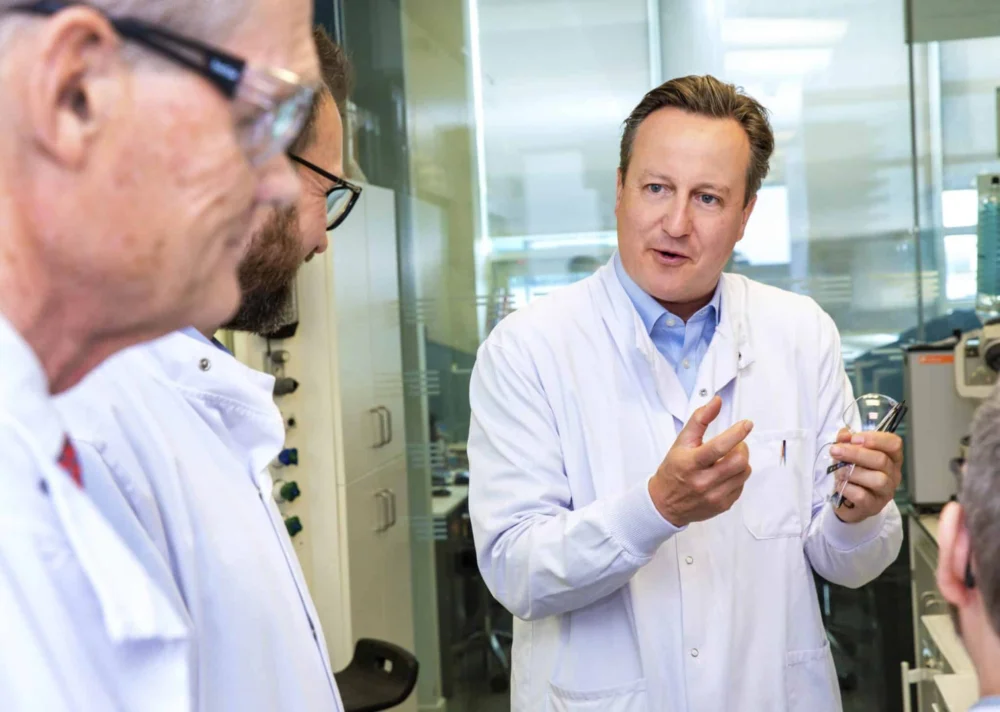
Following his recent appointment as Secretary of State for Foreign, Commonwealth and Development Affairs, Lord David Cameron has formally stepped down from his role as President of Alzheimer’s Research UK, a position he held for nearly seven years. His departure marks the end of a highly impactful tenure during which the charity significantly advanced its mission to defeat dementia through research. While relinquishing the presidency, Lord Cameron will maintain a vital connection with the organisation, continuing his support as a Patron, thereby reaffirming his enduring commitment to the cause.
A Significant Chapter: Lord Cameron’s Leadership at Alzheimer’s Research UK
Lord Cameron assumed the unpaid, voluntary role of President in January 2017, a pivotal moment in his public life shortly after his resignation as Prime Minister in July 2016. His decision to dedicate his post-premiership efforts to a major health charity underscored the growing national and global urgency surrounding dementia. This move was widely seen as a testament to his personal conviction regarding the societal challenge posed by neurodegenerative diseases and the transformative potential of scientific research.
Over the course of his nearly seven years at the helm, Lord Cameron’s leadership proved instrumental in elevating Alzheimer’s Research UK’s profile and significantly bolstering its fundraising capabilities. Under his guidance, the charity successfully raised over £20 million specifically for dementia research. This substantial sum directly contributed to funding groundbreaking studies, innovative clinical trials, and critical infrastructure essential for advancing scientific understanding and potential therapeutic breakthroughs. Beyond financial contributions, his involvement facilitated the establishment of new strategic partnerships and collaborations, both domestically and internationally, expanding the charity’s reach and influence within the global research community.
Lord Cameron actively engaged in raising awareness of Alzheimer’s Research UK’s vital work, leveraging his extensive network and public speaking capabilities. He undertook numerous speaking engagements across the world, advocating for increased investment in dementia research and highlighting the devastating impact of the condition on individuals and families. His commitment extended to meeting countless supporters, researchers, and, crucially, people directly affected by dementia, offering a high-profile voice to a cause that often struggles for adequate visibility and funding compared to other major diseases.
The Global Challenge of Dementia and the Role of Research
Dementia represents one of the most pressing global health crises of the 21st century. Worldwide, an estimated 55 million people live with dementia, a number projected to rise to 78 million by 2030 and 139 million by 2050, according to the World Health Organization (WHO). In the UK alone, over 900,000 people are currently living with dementia, a figure expected to surpass one million by 2024. The economic burden is staggering, with the annual cost of dementia in the UK estimated at over £34.7 billion, encompassing healthcare, social care, and the unpaid care provided by family and friends. This figure is projected to reach £90 billion by 2040 if no significant breakthroughs in treatment or prevention are achieved.
Alzheimer’s Research UK stands as the UK’s leading dementia research charity, dedicated to funding research into the causes, diagnosis, prevention, treatment, and cure of all forms of dementia. The charity’s mission is rooted in the belief that scientific research holds the key to overcoming the challenges posed by these complex conditions. Historically, dementia research has been significantly underfunded compared to other major diseases, a disparity that charities like Alzheimer’s Research UK strive to correct through sustained fundraising and advocacy. The funds raised during Lord Cameron’s presidency have been crucial in addressing this gap, enabling cutting-edge projects that push the boundaries of scientific knowledge.
Chronology of a Dedicated Engagement
Lord Cameron’s association with Alzheimer’s Research UK can be traced through several key milestones:
- July 2016: Resigns as Prime Minister of the United Kingdom following the EU referendum. This marked a transition period, opening avenues for new public service engagements outside direct politics.
- January 2017: Appointed as President of Alzheimer’s Research UK. This marked his first major voluntary role post-premiership, signalling a strong personal commitment to the charity sector, specifically health research.
- 2017-2023: Actively serves as President, engaging in extensive fundraising activities, awareness campaigns, and strategic partnership development. During this period, he became a prominent advocate for dementia research, using his platform to influence policy discussions and inspire public donations. Key initiatives included participating in global conferences, hosting charity events, and meeting with researchers and affected families. His tenure saw significant growth in the charity’s public profile and fundraising capacity, culminating in the £20 million raised for research.
- November 2023: Unexpectedly appointed as Secretary of State for Foreign, Commonwealth and Development Affairs, re-entering frontline politics. This appointment necessitated a review of his existing voluntary commitments.
- November 2023 (shortly after appointment): Steps down as President of Alzheimer’s Research UK, transitioning into the role of Patron. This ensures a continued, albeit less operationally intensive, association with the charity.
Statements and Tributes: Acknowledging Profound Impact
Hilary Evans-Newton, Chief Executive of Alzheimer’s Research UK, expressed profound gratitude for Lord Cameron’s unwavering dedication and significant contributions. "We are incredibly grateful to Lord Cameron for the time, dedication and energy that he has given in his role as our President," she stated. "With his support, Alzheimer’s Research UK remains at the forefront of global efforts to deliver new treatments and work towards a cure." This statement underscores the tangible impact of his presidency on the charity’s strategic goals and its standing within the international research community.
Further amplifying this sentiment, sources within the charity indicated that Lord Cameron’s ability to open doors to new networks and his astute understanding of policy landscapes were invaluable. "His unique perspective as a former head of government allowed us to engage with stakeholders and decision-makers at levels previously challenging to access," commented a senior ARUK board member, who preferred to remain anonymous. "He brought not just a name, but genuine strategic insight and a passion for the science."
While Lord Cameron himself has not issued a public statement specifically on his departure from the presidency, his previous remarks often highlighted the personal connection many individuals have to dementia. He consistently articulated the urgent need for scientific breakthroughs, reflecting a deep understanding of the human toll of the disease. His acceptance of the Patron role implicitly conveys his enduring belief in the charity’s mission and its critical work.
From the wider dementia community, the news was met with a mix of understanding and appreciation. "Lord Cameron’s high-profile involvement brought much-needed attention to a disease that is often overlooked," noted a spokesperson for the Dementia Action Alliance. "His voice undoubtedly helped to demystify dementia and encourage public discourse, which is vital for both fundraising and reducing stigma. We are pleased he will continue as a Patron."
The Enduring Role of a Patron
The transition from President to Patron signifies a shift in engagement rather than a complete disassociation. While the President typically holds a more active, often public-facing and strategic role in a charity, a Patron serves as an ambassador, lending their name and influence to support the organisation’s objectives. This position often involves advocacy, attending key events, and offering counsel, without the day-to-day responsibilities of the presidency.
For Alzheimer’s Research UK, Lord Cameron’s continued patronage is immensely valuable. It ensures that a figure of significant public standing remains associated with their cause, providing credibility and continued visibility. As Foreign Secretary, his global interactions will inevitably intersect with health and research diplomacy, potentially creating new avenues for international collaboration and awareness for dementia research. His continued advocacy, even from a different vantage point, can help to keep dementia on the agenda of world leaders and policymakers, reinforcing the message that scientific investment is crucial for global health security.
Looking Ahead: The Future of Alzheimer’s Research UK
With Lord Cameron’s departure from the presidency, Alzheimer’s Research UK will embark on the process of identifying a new President. This transition presents both challenges and opportunities. The challenge lies in finding a successor who can match the profile and fundraising acumen that Lord Cameron brought to the role. The opportunity, however, is to bring in fresh perspectives and energies, potentially broadening the charity’s appeal to new demographics or sectors.
The charity’s strategic priorities are likely to remain focused on accelerating the discovery of new treatments, improving diagnostic tools, and working towards preventative strategies. The £20 million raised under Lord Cameron’s leadership will continue to fuel these efforts, but the ongoing need for funding remains immense. Research in neurodegeneration is complex, expensive, and often takes many years to yield results. Therefore, sustained public and private investment is paramount.
Alzheimer’s Research UK will continue to champion a multi-pronged approach, supporting fundamental research to understand the underlying biology of dementia, translational research to move discoveries from the lab to the clinic, and clinical trials to test new therapies. The charity’s vision for a world free from the fear, harm, and heartbreak of dementia is ambitious, yet achievable with concerted global effort and sustained scientific progress.
Implications for High-Profile Charity Engagements
Lord Cameron’s tenure at Alzheimer’s Research UK exemplifies the significant impact that high-profile individuals, particularly former political leaders, can have on charitable organisations. Their ability to command media attention, open doors to influential networks, and inspire public confidence can be transformative for fundraising and awareness campaigns. However, it also highlights the potential for such engagements to be temporary, subject to the individuals’ evolving public and professional responsibilities.
The seamless transition from President to Patron demonstrates a thoughtful approach to maintaining valuable relationships, ensuring that even when direct operational involvement ceases, the power of association and advocacy endures. This model allows charities to benefit from the prestige and network of prominent figures while acknowledging the dynamic nature of their careers. Ultimately, Lord Cameron’s dedicated service has left an indelible mark on Alzheimer’s Research UK, propelling it forward in the critical global race to find a cure for dementia. His continued patronage will serve as a reminder of his lasting commitment to a cause that affects millions worldwide.