 admin
admin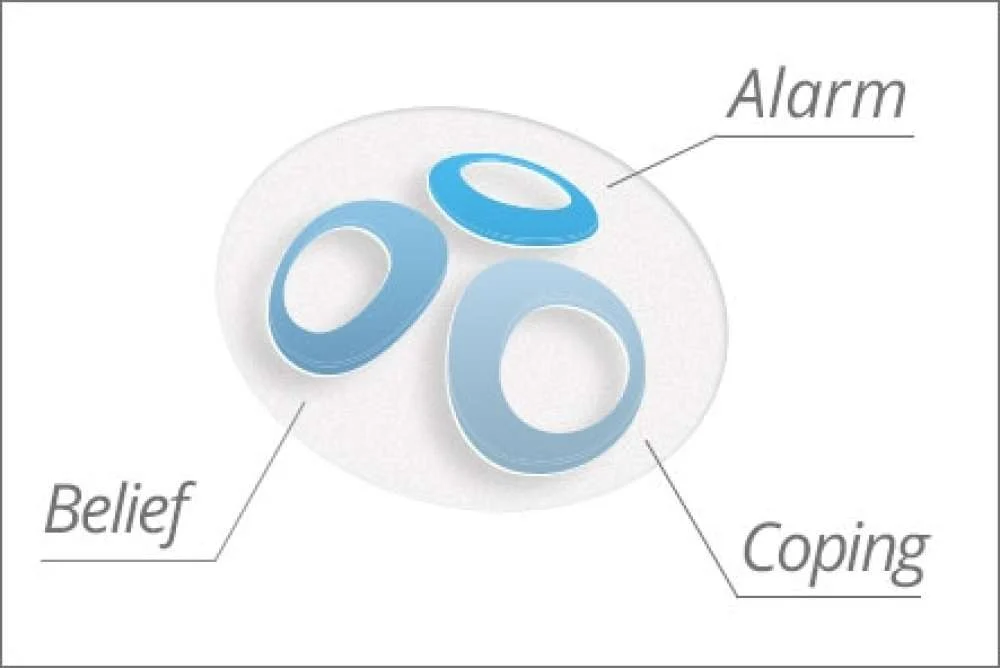
The global landscape of mental health has undergone a seismic shift over the last decade, with anxiety disorders emerging as the most prevalent mental health condition worldwide. While anxiety is a fundamental human emotion designed to protect the individual from environmental threats, the modern manifestation of this instinct often becomes dysregulated, leading to chronic distress and functional impairment. In response to this growing public health challenge, clinical frameworks such as the ABCtracker™ have been developed to provide a structured methodology for identifying, monitoring, and mitigating the triggers of anxiety. By breaking down the complex psychological experience of anxiety into three distinct components—Alarm, Belief, and Coping—this systematic approach allows both patients and healthcare providers to deconstruct anxious episodes and implement targeted interventions.
The Global Prevalence and Economic Burden of Anxiety Disorders
Recent data from the World Health Organization (WHO) indicates that anxiety disorders affect approximately 301 million people globally, making them the most common of all mental disorders. In the United States, the National Institute of Mental Health (NIMH) reports that an estimated 19.1% of adults experienced an anxiety disorder in the past year, with a higher prevalence among females compared to males. The economic implications are equally staggering; anxiety disorders contribute significantly to lost productivity, with the global economy losing an estimated $1 trillion annually due to depression and anxiety.
The necessity for tools like the ABCtracker arises from the fact that a significant portion of the population remains untreated. According to the Anxiety and Depression Association of America (ADAA), only about 36.9% of those suffering from anxiety disorders receive treatment. This gap is often attributed to a lack of mental health literacy—specifically, the inability of individuals to recognize the physiological and cognitive patterns that constitute an anxiety disorder versus normal stress.
A Chronological Overview of Anxiety Research and Management
The conceptualization of anxiety has evolved through several distinct phases over the last century. In the early 20th century, psychoanalytic theories viewed anxiety as a manifestation of internal conflicts. However, the mid-20th century saw a pivot toward behavioralism, which focused on learned responses to stimuli.
By the 1960s and 1970s, the "Cognitive Revolution" led by figures such as Aaron T. Beck and Albert Ellis introduced the idea that it was not the events themselves, but the interpretation of those events, that caused distress. This era birthed Cognitive Behavioral Therapy (CBT), the gold standard for anxiety treatment today. The ABC model—originally popularized in different forms by Ellis as Activating event, Belief, and Consequence—has been refined in modern clinical practice into the Alarm, Belief, and Coping framework utilized by tools like ABCtracker. This evolution reflects a shift toward patient-centered, data-driven monitoring where the individual becomes an active participant in their own recovery.
Deconstructing the Framework: The Physiological "Alarm"
The first stage of the ABC framework is the Alarm. In biological terms, the alarm is the activation of the sympathetic nervous system, often referred to as the "fight or flight" response. This reaction is governed by the amygdala, a small, almond-shaped structure in the brain that serves as a sentinel for danger. When the amygdala perceives a threat, it signals the hypothalamus to release a cascade of hormones, including adrenaline and cortisol.
For individuals with clinical anxiety, this alarm system is often hypersensitive or "misfiring." Research in neuroplasticity suggests that chronic stress can actually strengthen the neural pathways associated with fear, making the alarm easier to trigger. In a journalistic context, the alarm is the "event" or the "symptom"—the racing heart, the shallow breathing, or the sudden sense of dread. The ABCtracker methodology encourages users to document these physical sensations immediately, allowing them to identify patterns in their environment that may be acting as catalysts.
The Cognitive Filter: The Role of "Belief"
The second component, Belief, represents the cognitive assessment of the Alarm. Once the body is in a state of physiological arousal, the prefrontal cortex—the area of the brain responsible for executive function and rational thought—attempts to make sense of the situation. However, in the context of an anxiety disorder, this assessment is often marred by "cognitive distortions."
Common distortions include catastrophizing (assuming the worst-case scenario), overgeneralization (applying one negative event to all future events), and "all-or-nothing" thinking. For example, if an individual experiences a racing heart (Alarm) while giving a presentation, their Belief might be: "I am having a heart attack and everyone can see I am failing." This belief reinforces the alarm, creating a feedback loop that escalates the anxiety.
By utilizing a tracking tool, patients can pause to analyze the validity of these beliefs. Clinical psychologists emphasize that the goal is not to "stop thinking" but to "think accurately." Identifying that a belief is a subjective interpretation rather than an objective fact is a critical milestone in cognitive restructuring.
Behavioral Responses: Adaptive versus Maladaptive "Coping"
The final stage of the framework is Coping, which encompasses the actions taken in response to the Alarm and the Belief. Coping mechanisms are generally categorized into two groups: adaptive and maladadaptive.
Adaptive coping strategies are those that reduce anxiety in the long term and promote resilience. Examples include deep breathing exercises, mindfulness, cognitive reappraisal, and seeking social support. Conversely, maladadaptive coping strategies are behaviors that provide short-term relief but exacerbate the disorder over time. The most common maladadaptive strategy is avoidance. While avoiding a stressful situation (such as a social gathering or a difficult work task) provides immediate calm, it prevents the brain from learning that the situation is not actually dangerous, thereby "locking in" the anxiety for the future.
The ABCtracker serves as a diagnostic mirror, showing the user whether their typical responses are helping or hurting their progress. Data suggests that self-monitoring significantly increases the efficacy of therapy, as it provides "real-world" data that can be reviewed during clinical sessions.
Expert Perspectives and Clinical Implications
Healthcare professionals have increasingly advocated for the integration of digital tracking tools into standard psychiatric care. Dr. Elena Richardson, a clinical psychologist specializing in anxiety disorders, notes that "the transition from subjective memory to objective data is a game-changer for treatment. Patients often struggle to remember the specifics of an anxious episode days later. Tools like the ABCtracker provide a granular look at the ‘when, where, and why’ of anxiety."
Furthermore, the data collected through such frameworks can assist physicians in determining the necessity of pharmacological interventions. By seeing how a patient’s beliefs and coping mechanisms change over time, doctors can better assess whether a patient requires SSRIs (Selective Serotonin Reuptake Inhibitors) or if cognitive-behavioral interventions alone are sufficient.
From a public health perspective, the widespread adoption of these frameworks could lead to a "preventative" model of mental health. Rather than waiting for an individual to reach a point of crisis, the ABCs of anxiety can be taught in educational and workplace settings as a form of emotional literacy, potentially reducing the incidence of full-blown anxiety disorders.
Broader Impact: Mental Health in the Digital Age
The emergence of the ABCtracker and similar methodologies coincides with the broader "quantified self" movement, where individuals use technology to track everything from sleep patterns to heart rate variability. In the realm of mental health, this trend has led to the rise of tele-therapy and mobile health (mHealth) applications.
However, the implications go beyond individual wellness. Large-scale data on anxiety triggers and coping efficacy can inform urban planning, workplace design, and educational policy. For instance, if data shows a high prevalence of "Alarm" triggers in specific high-stress environments, organizations can implement structural changes to mitigate those triggers at the source.
Moreover, the normalization of the "ABCs of Anxiety" helps to destigmatize the condition. By framing anxiety as a manageable biological and cognitive process—rather than a character flaw or a permanent "brokenness"—society can foster a more supportive environment for those affected.
Conclusion: The Path Toward Mastery
Mastering one’s anxiety is not synonymous with the total absence of fear. Rather, it is the ability to recognize the "Alarm" for what it is, challenge the "Beliefs" that follow, and choose "Coping" strategies that lead to growth rather than retreat. The ABCtracker framework provides the necessary scaffolding for this mastery.
As the global community continues to grapple with the aftermath of the COVID-19 pandemic—an event that saw a 25% increase in the prevalence of anxiety and depression—the need for accessible, evidence-based tools has never been greater. By returning to the "ABCs" of mental health, individuals can reclaim control over their emotional lives, transforming a paralyzing instinct into a manageable aspect of the human experience. The integration of clinical knowledge with user-friendly tracking represents a significant step forward in the democratization of mental healthcare, ensuring that the tools for emotional stability are as fundamental and accessible as the ABCs themselves.