admin
admin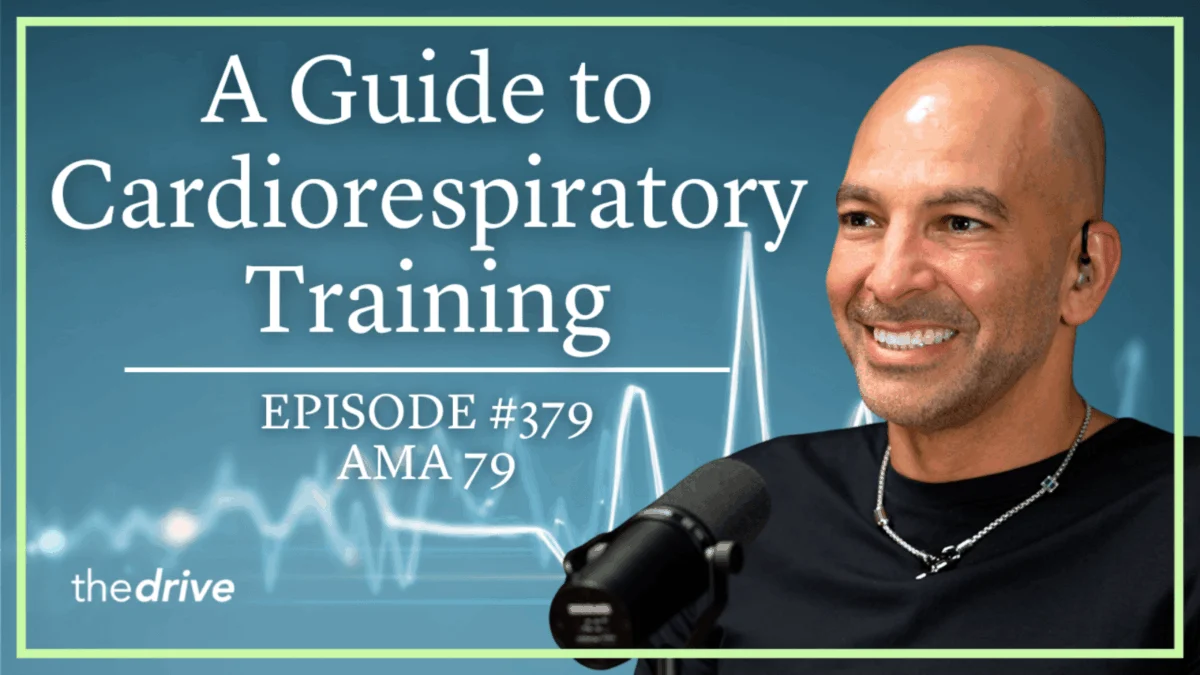
Dr. Peter Attia, a prominent figure in the field of longevity medicine and host of The Drive podcast, has released a comprehensive technical guide focused on cardiorespiratory fitness (CRF) as a primary lever for extending human healthspan and lifespan. In his latest "Ask Me Anything" (AMA) episode, number 79, Attia consolidates years of clinical observation and scientific research into a structured framework designed to help individuals navigate the complexities of aerobic conditioning. The episode serves as a definitive resource for understanding the physiological distinctions between low-intensity steady-state exercise, commonly referred to as Zone 2, and high-intensity aerobic work aimed at increasing VO2 max. By addressing the persistent confusion surrounding exercise volume, intensity, and time management, Attia aims to provide a scalable roadmap for everyone from sedentary beginners to elite masters athletes.
The core thesis of the presentation rests on the assertion that cardiorespiratory fitness is not merely a component of athletic performance but is, in fact, one of the most powerful modifiable predictors of all-cause mortality. Attia explores the biological underpinnings of this claim, detailing how mitochondrial efficiency and peak oxygen consumption dictate the rate of biological aging. The guide is specifically structured to address the "Marginal Decade"—the final ten years of an individual’s life—and how physical preparation today determines the level of independence and physical capability one possesses in the future.
The Evolution of Longevity Science and the Focus on Fitness
The release of this consolidated guide marks a significant point in the timeline of modern longevity discourse. Over the past decade, the focus of preventative medicine has shifted from a purely pharmacological approach—managing cholesterol and blood pressure—to a more holistic "Medicine 3.0" model that prioritizes physical architecture and metabolic health. Dr. Attia has been a central figure in this transition, moving away from his early background in surgical oncology toward a practice dedicated to the science of longevity.
This specific episode acts as a synthesis of previous discussions, acknowledging that while topics like Zone 2 and VO2 max have been covered in isolation, a unified field theory was required for practical application. The chronology of Attia’s work shows a deepening emphasis on exercise as the "most potent tool" in the longevity toolkit, surpassing nutrition and even pharmacological interventions in its impact on hazard ratios for death.
Quantifying the Impact: Supporting Data on Mortality Risk
The rationale for prioritizing cardiorespiratory fitness is supported by robust epidemiological data. Attia frequently references landmark studies, such as the 2018 retrospective cohort study by Mandsager et al., published in JAMA Network Open, which analyzed over 122,000 patients undergoing exercise treadmill testing. The data revealed a clear, dose-dependent relationship between fitness levels and survival.
According to the research, individuals in the "Elite" category of fitness (the top 2.5% for their age and sex) demonstrated an 80% reduction in mortality risk compared to those in the "Low" fitness category (the bottom 25%). To put this into perspective, the risk associated with low cardiorespiratory fitness was found to be comparable to, or even greater than, traditional clinical risk factors such as smoking, diabetes, and end-stage renal disease. The "below average" fitness group still faced a significantly higher risk of death than those in the "above average" or "high" categories, suggesting that even modest improvements in aerobic capacity can yield outsized benefits for lifespan.
Furthermore, Attia highlights that while many health metrics have a "U-shaped" curve—where too much or too little of a variable can be harmful—VO2 max appears to follow a linear or even exponential benefit curve. There is currently no evidence of a "ceiling" where higher levels of cardiorespiratory fitness become detrimental to longevity, provided that recovery is managed appropriately.
Physiological Pillars: Zone 2 and VO2 Max Defined
Central to Attia’s training philosophy is the distinction between two primary "gears" of aerobic training. The guide provides technical clarity on these zones to help trainees avoid the common mistake of "training in the middle," which often results in excessive fatigue without the specific adaptations of either polar extreme.
Zone 2: The Mitochondrial Foundation
Zone 2 is defined as the highest level of exertion where an individual can still maintain a conversation, corresponding physiologically to the point where the body is maximizing fat oxidation and keeping blood lactate levels below 2.0 millimoles per liter. This intensity promotes mitochondrial biogenesis—the creation of new mitochondria—and improves the efficiency of existing mitochondria to clear lactate. Attia argues that a robust Zone 2 foundation is essential for metabolic health, as mitochondrial dysfunction is a hallmark of Type 2 diabetes, Alzheimer’s disease, and various forms of cancer.
VO2 Max: The Aerobic Ceiling
VO2 max represents the maximum rate at which an individual can utilize oxygen during intense exercise. While Zone 2 focuses on metabolic efficiency, VO2 max training focuses on the structural and functional capacity of the heart and lungs. This involves high-intensity intervals (often 4-minute bursts followed by 4 minutes of recovery) designed to push the stroke volume of the heart to its limit. Attia posits that a high VO2 max acts as a "buffer"; because aerobic capacity naturally declines by roughly 10% per decade after age 30, starting from a higher peak ensures that an individual remains above the threshold of frailty in their 80s and 90s.
Tailoring the Protocol: Demographics and Time Constraints
A significant portion of the guide is dedicated to the practical application of these scientific principles across different populations. Attia acknowledges that a "one size fits all" approach is ineffective, particularly when considering biological sex and age.
For women, Attia notes specific considerations regarding hormonal fluctuations and bone mineral density, suggesting that cardio training must be carefully balanced with resistance training to maintain muscle mass. For older adults, the focus shifts toward maintaining the "Centenarian Decathlon" goals—a list of physical tasks one wishes to perform at age 100, such as lifting a 30-pound suitcase into an overhead bin or getting up off the floor unassisted.
The guide also addresses the reality of time constraints. For the "average" trainee with limited hours, Attia recommends a minimum of 150 to 300 minutes of Zone 2 per week, supplemented by one dedicated VO2 max session. He provides strategies for "habit stacking" and using technology, such as heart rate monitors and lactate meters, to ensure training remains within the intended physiological zones.
Analysis of Implications: The Future of Preventative Healthcare
The consolidation of this information into a single guide has broader implications for the healthcare industry and public health policy. Attia’s approach challenges the current medical standard, which often ignores cardiorespiratory fitness in favor of managing symptoms through medication. By elevating VO2 max to the status of a "vital sign," Attia is advocating for a systemic shift toward proactive health management.
Critics of high-intensity training often point to the risk of injury or overtraining, particularly in older populations. However, the guide mitigates these concerns by emphasizing a "slow and steady" progression and the necessity of a base level of stability and strength. The focus on "long-term independence" shifts the motivation for exercise from aesthetic goals to functional survival, which may prove to be a more sustainable psychological driver for long-term adherence.
From a socioeconomic perspective, increasing the average cardiorespiratory fitness of the population could significantly reduce the burden of chronic disease on healthcare systems. Given that the leading causes of death—cardiovascular disease, cancer, and neurodegenerative disorders—are all mitigated by higher fitness levels, the widespread adoption of Attia’s protocols could lead to a compression of morbidity, where the period of illness at the end of life is shortened.
Conclusion and Future Outlook
Dr. Peter Attia’s AMA #79 serves as more than just a podcast episode; it is a clinical manifesto for the role of exercise in human longevity. By providing clear definitions, supporting data, and actionable training templates, Attia has created a framework that bridges the gap between complex exercise physiology and daily health habits.
As the science of longevity continues to evolve, the emphasis on cardiorespiratory fitness remains a constant. The guide reinforces the idea that while we cannot stop the passage of time, we can significantly alter the trajectory of our physical decline. For the listener and the trainee, the message is clear: the investments made in Zone 2 and VO2 max training today are the primary determinants of the quality of life in the marginal decade and beyond. The episode concludes by encouraging a disciplined, data-driven approach to fitness, viewing it as a lifelong practice rather than a short-term intervention.