admin
admin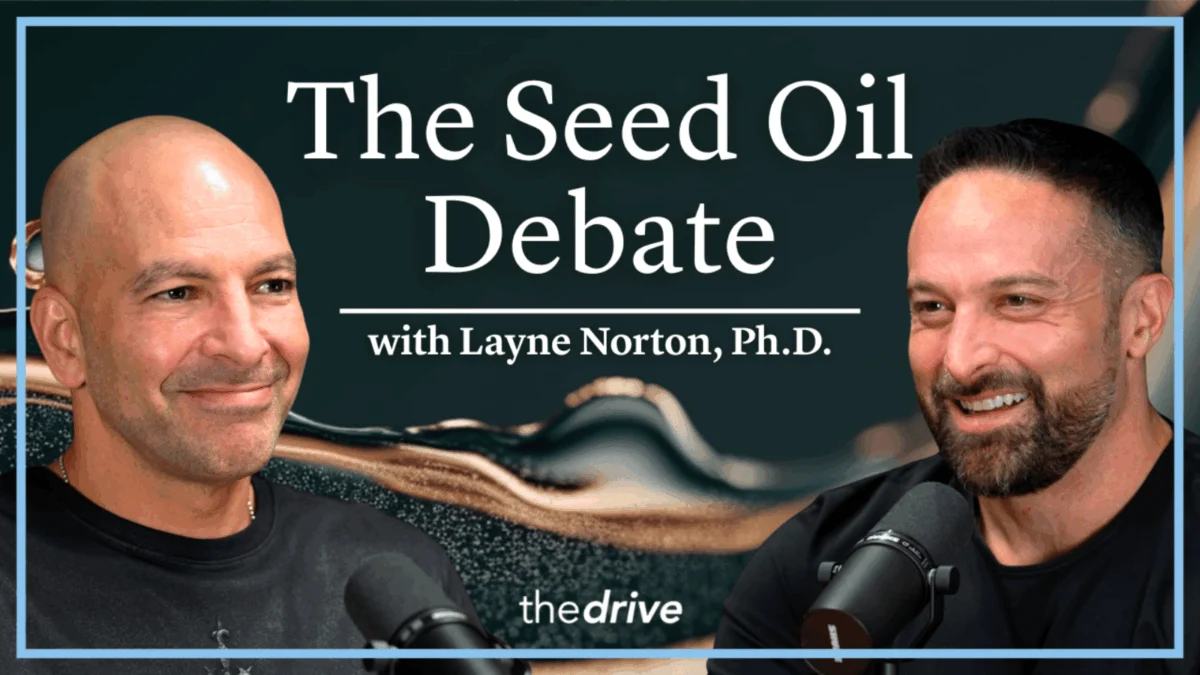
The discourse surrounding human nutrition has rarely been as polarized as it is today, particularly regarding the consumption of vegetable and seed oils. In a recent and highly anticipated technical exchange, nutrition scientist Layne Norton, Ph.D., joined physician Peter Attia on The Drive podcast to dissect the complex scientific landscape of polyunsaturated fatty acids (PUFAs). The discussion, which moved beyond standard dietary advice into the realms of mechanistic biology, lipidology, and the philosophy of science, sought to address whether seed oils—such as soybean, corn, and canola oils—are the primary drivers of modern chronic disease or merely casualties of a broader dietary shift toward ultra-processed foods.
The Foundations of the Seed Oil Debate
Seed oils, often referred to as "industrial seed oils" by critics, became a staple of the Western diet during the mid-20th century. This shift was largely driven by public health recommendations to reduce saturated fat intake in an effort to lower serum cholesterol levels and mitigate the risk of cardiovascular disease. Common seed oils are high in linoleic acid, an omega-6 polyunsaturated fatty acid. While linoleic acid is an essential nutrient that the human body cannot synthesize on its own, its massive increase in the food supply has sparked a fierce debate over its long-term health implications.
During the conversation, Dr. Norton presented a case rooted in clinical trial data, arguing that when caloric intake is held constant (isocaloric conditions), seed oils do not exhibit the unique harm often attributed to them. Conversely, Dr. Attia "steelmanned" the opposing view—the practice of presenting the strongest possible version of an opponent’s argument—to explore the potential risks of lipid peroxidation and the evolutionary mismatch of high-PUFA diets.
A Chronology of Research and the Evolution of Nutrition Science
To understand the current controversy, one must examine the historical timeline of lipid research. The mid-20th century saw the emergence of the "Diet-Heart Hypothesis," championed by Ancel Keys, which suggested a direct link between dietary fat, cholesterol, and heart disease.
In the 1960s and 1970s, several landmark randomized controlled trials (RCTs) were conducted to test this hypothesis. These included the Minnesota Coronary Experiment (MCE) and the Sydney Diet Heart Study. These trials replaced saturated animal fats with vegetable oils high in linoleic acid. While these studies successfully lowered cholesterol levels, the results regarding mortality were ambiguous or, in some re-analyses, suggested a lack of benefit. Critics of seed oils frequently point to these historical trials as evidence that lowering cholesterol via PUFAs does not necessarily translate to improved longevity.
However, Dr. Norton noted that many of these older studies had significant limitations, including high dropout rates, the use of trans-fats in some "treatment" groups, and the lack of modern statistical controls. In the decades since, nutrition science has shifted toward large-scale prospective cohort studies and more refined RCTs. Meta-analyses of these studies, such as those published by the American Heart Association and the Cochrane Collaboration, generally suggest that replacing saturated fats with polyunsaturated fats reduces the risk of coronary heart disease events.
The Four Core Arguments Against Seed Oils
The debate generally centers on four primary pillars of concern. Dr. Attia summarized these arguments to set the stage for a rigorous scientific rebuttal:
- The Inflammatory Hypothesis: The concern that high intakes of omega-6 fatty acids lead to an overproduction of pro-inflammatory arachidonic acid derivatives, potentially fueling chronic low-grade inflammation.
- Oxidative Stress and Lipid Peroxidation: The chemical structure of PUFAs makes them highly susceptible to oxidation. Critics argue that these oxidized lipids incorporate into cell membranes and LDL particles, making them more "atherogenic" or likely to cause arterial plaque.
- The Evolutionary Mismatch: The argument that the human genome is not adapted to the high levels of linoleic acid found in modern diets, which are vastly higher than those found in ancestral hunter-gatherer diets.
- The Processing and Chemical Refining: The concern that the high-heat and chemical extraction processes used to create seed oils introduce harmful byproducts and "toxins" into the food supply.
Dr. Norton addressed these points by emphasizing that human clinical data often contradicts mechanistic speculation. For example, he cited studies showing that increasing linoleic acid intake does not consistently raise markers of inflammation in humans, and in some cases, may actually lower them.
Mechanistic Biology: LDL Oxidation and Atherosclerosis
A significant portion of the discussion focused on the role of seed oils in the development of atherosclerosis. The "oxidation hypothesis" of atherogenesis suggests that for LDL cholesterol to become trapped in the arterial wall and form a plaque, it must first be oxidized. Because seed oils increase the unsaturation of the LDL particle, they could theoretically make that particle more prone to oxidation.
Dr. Norton countered this by looking at "hard endpoints"—actual heart attacks and deaths—rather than just intermediate markers of oxidation. He argued that even if PUFAs increase the susceptibility of LDL to oxidation in a laboratory setting, the concurrent lowering of the total number of LDL particles (ApoB) typically outweighs this risk. In the hierarchy of evidence, Dr. Norton argued, clinical outcomes in humans must take precedence over biochemical theories derived from test tubes or animal models.
The Role of Ultra-Processed Foods and Lifestyle Factors
One of the most critical points of agreement between the two experts was the role of the "food matrix." Seed oils are a ubiquitous ingredient in ultra-processed foods (UPFs), which are also typically high in refined sugars, sodium, and refined carbohydrates. These foods are designed to be hyper-palatable, leading to passive overconsumption of calories.
Dr. Norton argued that much of the vitriol directed at seed oils is misplaced. The negative health outcomes observed in populations with high seed oil consumption may be more accurately attributed to the "caloric surplus" and the obesity-promoting nature of ultra-processed diets rather than the specific fatty acid profile of the oils themselves. When seed oils are used for home cooking in a diet consisting of whole foods, the evidence of harm becomes significantly weaker.
Furthermore, the discussion touched upon the broader context of cardiometabolic health. Factors such as exercise, sleep, muscle mass, and total caloric balance play a far more substantial role in determining longevity than the choice of cooking oil. Dr. Norton, an accomplished powerlifter, emphasized that metabolic health is a systemic issue that cannot be reduced to a single nutrient.

Addressing Scientific Bias and the Information Silo
A unique aspect of the conversation was the focus on the philosophy of science. Dr. Norton acknowledged that everyone, including scientists, carries inherent biases. He disclosed his own research funding and professional background, noting that despite his personal preference for high-quality animal proteins, he must follow the weight of the evidence regarding dietary fats.
The rise of social media has created "information silos" where consumers are often presented with cherry-picked data. Dr. Norton expressed concern that "clickbait" science often ignores the totality of evidence in favor of provocative, counter-intuitive claims. He advocated for a "converging lines of evidence" approach, where results from mechanistic studies, animal models, epidemiological cohorts, and human RCTs are synthesized to form a conclusion.
Practical Considerations for the Consumer
For the average individual navigating the grocery store, the technical debate can be overwhelming. Dr. Norton and Dr. Attia concluded with practical advice. They suggested that while seed oils are not the "poison" they are often portrayed to be on social media, they should not necessarily be viewed as a "superfood."
Key practical takeaways included:
- Prioritize Whole Foods: Reducing the intake of ultra-processed foods naturally reduces the intake of refined seed oils and, more importantly, reduces excess caloric intake.
- Thermal Stability: When cooking at very high temperatures, using oils with higher oxidative stability (such as avocado oil or certain saturated fats) may be prudent, though the health impact of standard home frying with seed oils is often exaggerated.
- Focus on the Big Picture: For most people, the health benefits of losing excess body fat and increasing physical activity will far outweigh any marginal benefit or harm from switching between different types of unsaturated fats.
Implications for Public Health Policy
The ongoing debate between figures like Norton and Attia reflects a broader tension in public health. As the medical community grapples with a global obesity epidemic, the focus is shifting from "nutrient-specific" guidelines to "dietary-pattern" guidelines.
The consensus among many nutritional scientists is that the obsession with seed oils may be a distraction from the more pressing issue of hyper-palatable, energy-dense diets. However, the persistent questions regarding lipid peroxidation and evolutionary biology ensure that the "Seed Oil War" will likely continue in the public sphere for years to come.
As research continues to evolve, this dialogue serves as a reminder of the importance of scientific rigor. By "steelmanning" opposing views and demanding high-quality evidence, experts can provide the public with a more nuanced and accurate understanding of how to achieve long-term health and longevity. The meeting of Dr. Norton and Dr. Attia highlights a path forward for nutritional science: one that values civil discourse, acknowledges the complexity of human biology, and remains committed to the pursuit of objective truth over ideological dogma.