admin
admin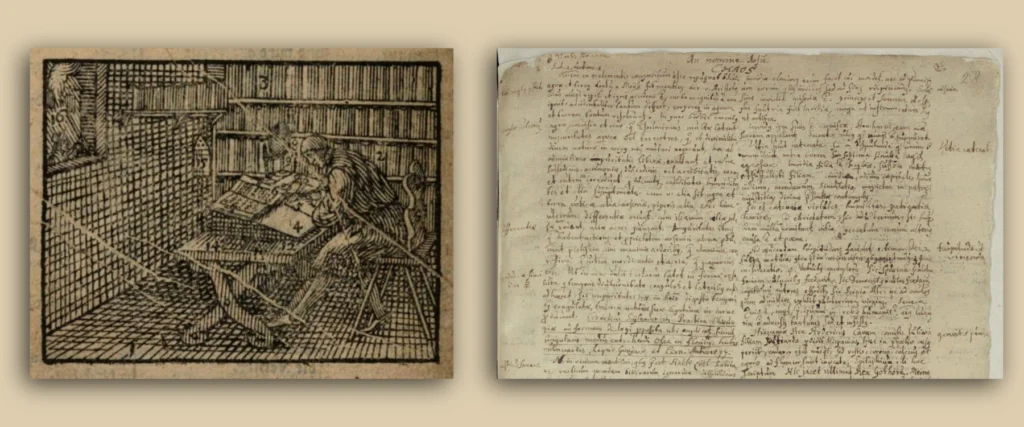
The contemporary struggle to navigate an increasingly dense digital landscape mirrors historical challenges faced during the early modern period, suggesting that the human difficulty with information overload is a recurring theme in the evolution of knowledge. Recent insights from historians of science and financial analysts indicate that while the medium of information changes—from the printed book to the artificial intelligence agent—the fundamental strategies for maintaining cognitive focus and economic stability remain rooted in disciplined attention management. As modern markets react to speculative reports regarding AI-driven labor displacement, a look back at the 17th century reveals that the "novel" problem of having too much to process is centuries old, and the solutions developed by Enlightenment-era scholars continue to provide a blueprint for high-level productivity in the 21st century.
The Seventeenth-Century Information Crisis
In the mid-1600s, the intellectual world was grappling with the consequences of the printing press, an invention that had fundamentally altered the pace of knowledge dissemination. Nicolaus Steno, a Danish scientist recognized as a pioneer in both anatomy and geology, operated within this era of rapid change. Before his eventual ordination as a Catholic Bishop, Steno was a scholar at the forefront of the scientific revolution, a period where the "humanist revival" of ancient texts met a surge in new scientific discovery.
Historians at institutions such as All Souls College, Oxford, have recently highlighted Steno’s career as a case study in managing what was then termed an "overabundance of books." Following the 1500s, the democratization of knowledge through print meant that scholars were no longer limited by the scarcity of manuscripts but were instead burdened by their volume. This shift prompted existential questions among the intelligentsia: the necessity of reading every available chapter, the criteria for selecting relevant material, and the methodology for retaining vast amounts of data.
To combat this, early modern thinkers developed the "book of commonplaces." This technique involved maintaining a master notebook where excerpts, ideas, and observations were meticulously categorized. This served as a manual database, allowing scholars to synthesize information without becoming overwhelmed by the physical volume of their libraries. As noted in William Powell’s 2010 work, Hamlet’s Blackberry, these "techno-histories" show that the human brain has long required external systems to organize the "noise" of technological progress.
Nicolaus Steno’s Advanced Attention Management
By the 1650s, Steno recognized that note-taking alone was insufficient to manage the influx of information. During his studies at the University of Copenhagen and later in Italy, he innovated strategies that would eventually form the basis of modern productivity frameworks. Steno’s primary observation was that "harmful hastening should be avoided," a critique of the tendency to skim multiple subjects without achieving depth.
Steno’s solution was twofold: thematic focus and temporal boundaries. He advocated for "sticking to one topic" for extended periods to ensure mastery. His personal journals reveal a rigorous adherence to time blocking, a practice where specific hours are dedicated to a single, demanding task. One of his most famous self-imposed rules was that "before noon nothing must be done except medical things." By reserving his morning hours for his primary scientific work—and later for the study of Church Fathers and biblical manuscripts at the Medici library—Steno effectively insulated his most productive hours from the distractions of general correspondence and less rigorous reading.
This methodology predates and mirrors several 21st-century concepts, including "deep work," which emphasizes distraction-free concentration, and "slow productivity," which prioritizes the quality of output over the volume of tasks. Steno’s success as a geologist—specifically his formulation of the law of superposition—is often attributed to this ability to filter out the peripheral and focus on the fundamental.
The Modern Parallel: AI and the "Intelligence Crisis"
The historical anxiety over the printing press finds a modern equivalent in the current discourse surrounding Artificial Intelligence (AI). In early 2026, the financial and technological sectors experienced a significant "reality check" following the publication of a viral essay by Citrini Research. The report, titled after a hypothetical "2028 Global Intelligence Crisis," presented a bleak outlook for the white-collar labor market. It suggested that AI agents would soon possess the capability to automate complex cognitive tasks, leading to a widespread destruction of professional roles.
The impact of this essay was not merely academic. Following its circulation, the S&P 500 experienced a modest but notable decline, which Bloomberg and other financial outlets attributed to the "Citrini effect." The report tapped into a growing trend of "vibe-based" economic forecasting, where the perceived trajectory of technology outweighs empirical data regarding its current implementation.
This period saw a surge in similar prognostications from major publications. Articles in The Atlantic and The New York Times proposed scenarios of an "AI white-collar apocalypse," arguing that the economy was unprepared for the speed of labor market transformation. These narratives created a feedback loop of anxiety, mirroring the 17th-century fear that the sheer volume of printed information would render traditional scholarship obsolete.
Economic Pushback and the "Vibes-to-Substance" Ratio
As the speculative fervor reached a peak, professional economists and market analysts began to offer a more grounded counter-narrative. A Deutsche Bank analyst famously critiqued the Citrini report for having an "undeniably high vibes-to-substance ratio." This critique points to a broader issue in modern tech reporting: the tendency to confuse potential future capabilities with immediate economic realities.
Analysts from Global Macro Strategies at Citadel Securities further destabilized the "labor destruction" narrative. In a detailed response, they noted the inherent difficulty in forecasting even short-term payroll growth with accuracy, suggesting that long-term predictions of total economic upheaval based on Substack essays were statistically dubious. The Citadel report highlighted several key points:
- Macroeconomic Complexity: The labor market is influenced by thousands of variables, including demographics, interest rates, and global trade, which AI cannot unilaterally override in a short timeframe.
- Historical Precedent: Previous technological leaps—from the steam engine to the internet—initially sparked fears of mass unemployment but ultimately led to the creation of new industries and higher-value roles.
- Implementation Lags: The gap between a technology’s "capability" and its "integration" into complex corporate workflows is often measured in decades, not months.
This "AI Reality Check" suggests that while AI will undoubtedly transform work, the "apocalyptic" scenarios often ignore the friction of real-world economic systems.
Chronology of the AI Market Reaction (2026)
- February 10-15: Citrini Research publishes the "2028 Intelligence Crisis" essay. It gains traction on social media and professional forums.
- February 24: Bloomberg reports on the essay’s influence as the S&P 500 sees a sell-off in the tech and professional services sectors.
- February 25: Major op-eds in The Atlantic and The New York Times amplify the labor displacement narrative.
- February 26-28: Institutional analysts from Deutsche Bank and Citadel Securities issue formal rebuttals, calling for a more rigorous, data-driven approach to AI forecasting.
- March 5: Market volatility stabilizes as investors shift focus toward quarterly earnings and actual AI adoption rates rather than speculative "vibes."
Implications for the Future of Knowledge Work
The synthesis of historical lessons from Nicolaus Steno and modern economic critiques of AI suggests that the most valuable asset in an age of information overload remains the human capacity for deep, focused thought. Just as Steno used time blocking and thematic focus to navigate the "distraction" of books, modern professionals must use similar strategies to navigate the "distraction" of AI-generated content and digital noise.
The "AI Reality Check" serves as a reminder that technological advancement does not automatically equate to economic collapse. Instead, it shifts the requirements for success. The ability to avoid "overload," to focus on "one thing at a time," and to "block off specific hours" for mentally demanding efforts remains the gold standard for productivity.
Furthermore, the pushback from economists suggests that the "white-collar job market" is more resilient than viral essays suggest. The human element—judgment, ethics, and complex problem-solving—remains difficult to replicate, even for sophisticated AI agents. The current period of technological transition is not a signal to succumb to anxiety, but an invitation to refine the cognitive habits that have sustained thinkers since the early modern period.
As society continues to integrate AI, the primary challenge will not be the lack of information or the lack of tools, but the management of attention. The strategies pioneered by Steno in the 1650s—limiting distractions, prioritizing depth over speed, and protecting the morning hours for high-value work—are likely to remain the most effective defenses against the "intelligence crises" of the future. The enduring lesson is clear: while technology evolves at an exponential rate, the fundamental mechanics of the human brain and the principles of sound economic analysis provide a stable foundation for navigating change.