admin
admin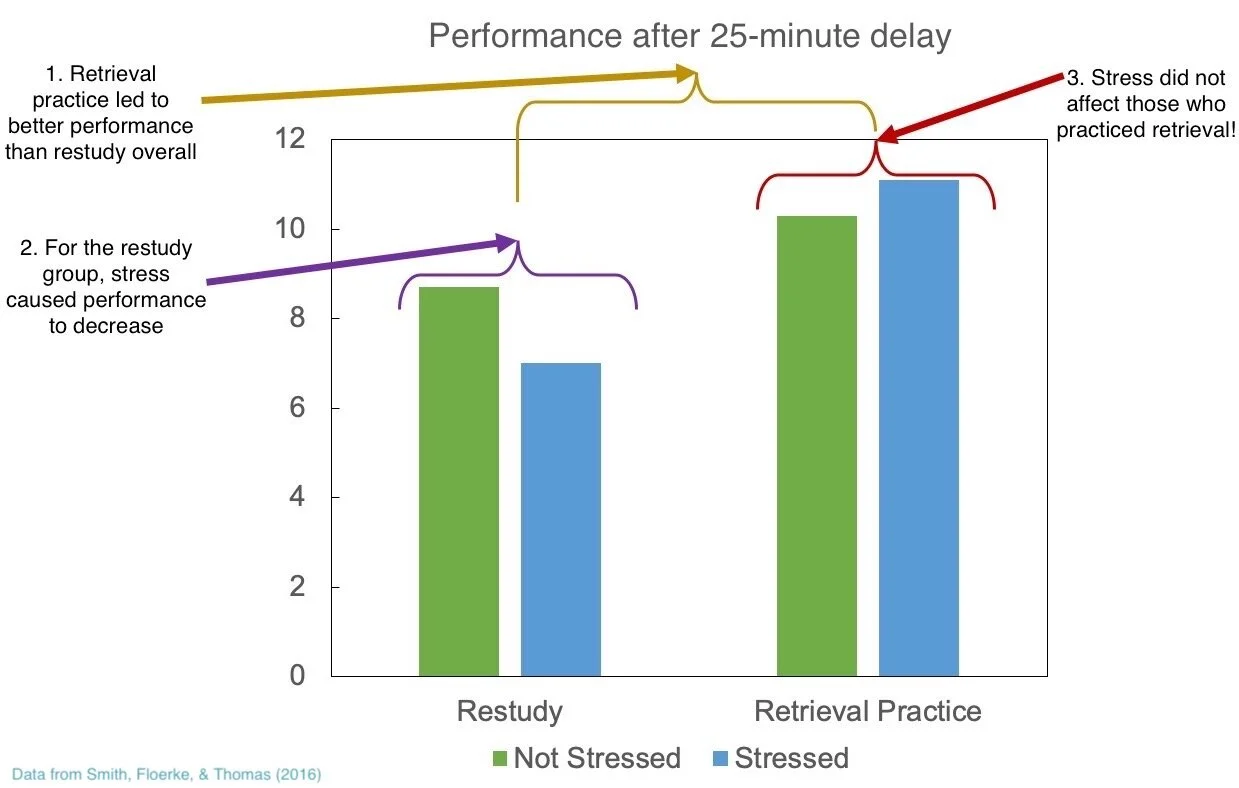
The persistent challenge of academic stress, a concern amplified during the tumultuous year of 2020 and seemingly resurging with renewed intensity in the current educational landscape, underscores the critical need for effective cognitive strategies. Recent reflections by educational psychologist Megan Sumeracki, referencing an original blog post from June 25, 2020, highlight how the pressures on students may be even more pronounced today. This re-evaluation brings into sharp focus a crucial finding from cognitive science: retrieval practice, a potent learning strategy, appears to offer significant protection against the memory-inhibiting effects of acute stress. This insight holds profound implications for students navigating high-stakes examinations and stressful academic environments.
The Enduring Challenge of Academic Stress in Education
The academic environment has long been a source of stress for students, but the past decade has seen a notable increase in reported stress levels across educational tiers. The year 2020, marked by a global pandemic, introduced unprecedented stressors including remote learning challenges, social isolation, health anxieties, and economic uncertainty, profoundly impacting student mental health. While some of these immediate pandemic-related pressures have receded, new forms of stress have emerged or intensified, including increased academic demands, competitive environments, and a pervasive sense of future uncertainty. Data from organizations like the American Psychological Association (APA) consistently indicate high levels of stress, anxiety, and depression among college students, with academic pressure frequently cited as a primary contributor. Surveys often reveal that a significant majority of students report feeling overwhelmed, exhausted, and burnt out, impacting their ability to learn, retain information, and perform optimally. This enduring and escalating mental health crisis within academia necessitates robust, evidence-based interventions that can mitigate the negative cognitive consequences of stress.
Unpacking Stress: Acute Versus Chronic Responses
To understand how stress impacts memory and how retrieval practice can intervene, it is essential to distinguish between acute and chronic stress. Acute stress is a sudden, intense, and typically short-lived physiological and psychological response to a specific event or perceived threat. Examples include public speaking, an imminent exam, or a sudden accident. This "fight-or-flight" response involves the rapid release of stress hormones like adrenaline and cortisol, preparing the body for immediate action. While beneficial in survival situations, this acute stress response can significantly alter cognitive functions, including attention, working memory, and, crucially, memory retrieval.
In contrast, chronic stress results from prolonged or repeated exposure to stressful situations without adequate recovery. This sustained activation of the stress response system can lead to long-term health problems, including impaired immune function, cardiovascular issues, and persistent cognitive deficits. For instance, chronic elevation of cortisol can damage hippocampal neurons, a brain region critical for memory formation and retrieval. While both types of stress are detrimental to learning, the research discussed here primarily focuses on acute stress, which students frequently encounter before and during exams. Renowned neuroscientist Robert Sapolsky, through his extensive research and popular works like "Why Zebras Don’t Get Ulcers," has extensively illuminated the physiological and psychological mechanisms by which stress, particularly chronic stress, impacts health and cognitive function, providing a foundational understanding for these discussions.
The Deleterious Effects of Acute Stress on Memory Retrieval
Prior research has consistently demonstrated that acute stress can significantly hinder an individual’s ability to retrieve previously learned information. When a student experiences acute stress—whether due to the impending pressure of a high-stakes test, a demanding presentation, or external personal circumstances—the body’s physiological response can interfere with the brain’s capacity to access stored memories. This can manifest as "blanking out" during an exam, difficulty recalling facts under pressure, or a general reduction in performance despite thorough preparation. The mechanism involves the stress hormones, particularly cortisol, which can disrupt the delicate balance of neurotransmitters and neural pathways in regions like the hippocampus and prefrontal cortex, both vital for memory processes. This disruption can make it harder for the brain to efficiently locate and bring stored information to conscious awareness, leading to a disconnect between what a student knows and what they can demonstrate under stress. This impairment poses a significant challenge in educational settings where performance on tests often dictates academic progression and future opportunities.
The Landmark Smith et al. Study (2016): Retrieval Practice as a Cognitive Buffer
Against this backdrop of stress-induced memory impairment, a groundbreaking study by Amy M. Smith and colleagues, published in the high-profile journal Science in 2016, presented compelling evidence that retrieval practice can protect memory against the detrimental effects of acute stress. This research provided a significant "good news" finding for educators and students alike, suggesting a proactive strategy to bolster cognitive resilience.
Methodology: The researchers designed a rigorous experiment involving four distinct groups of participants to isolate the effects of retrieval practice and stress.
- Initial Learning Phase: All participants began by studying a set of noun-image pairs, a standard experimental material chosen for its ability to establish clear cause-and-effect relationships in a controlled laboratory setting. This phase ensured all groups started with a common learning experience.
- Intervention Phase: Following the initial study, participants were divided into two main learning conditions:
- Retrieval Practice Group: Engaged in active recall, attempting to retrieve as many noun-image pairs as they could remember across multiple trials. This involved self-testing and feedback, strengthening memory traces through effortful recall.
- Restudy Group: Re-examined the noun-image pairs passively across similar trials, reinforcing exposure without active recall.
- The specific nuances of study and restudy/practice were carefully controlled to ensure comparability, though the core distinction lay in active retrieval versus passive review.
- Delay and Stress Induction: After completing their respective learning phases, all participants left the lab. They returned 24 hours later, introducing a significant retention interval to test long-term memory. Upon return, participants were again divided into two conditions related to stress:
- Stress Condition: Individuals assigned to this group underwent a highly stressful laboratory procedure known to reliably induce acute psychological stress. This typically involved tasks like delivering an impromptu speech in front of stern judges and peers, followed by difficult mental arithmetic problems under timed pressure. Physiological measures, such as salivary cortisol levels and heart rate, were taken to objectively confirm that participants indeed experienced acute stress.
- Non-Stress Condition: Participants in this group engaged in a simple, non-stressful control activity, ensuring a baseline for comparison.
- Memory Testing: Immediately after the stress induction (or control activity) and again after a 25-minute delay, all participants’ memory for the initial noun-image pairs was tested. This allowed the researchers to observe both immediate and slightly delayed effects of stress on retrieval, and how retrieval practice influenced these effects.
Key Findings: The results were illuminating and provided strong empirical support for the protective role of retrieval practice:
- Acute stress inhibited memory retrieval in the restudy group: Participants who had only restudied the material and were subsequently subjected to acute stress performed significantly worse on the memory tests compared to their non-stressed counterparts. This confirmed the known detrimental effect of acute stress on memory retrieval.
- Retrieval practice protected memory against acute stress: Crucially, participants who had engaged in retrieval practice performed comparably well on the memory tests, regardless of whether they had experienced acute stress or not. Their performance under stress was significantly better than the restudy group who experienced stress, demonstrating that retrieval practice effectively buffered the negative impact of stress on memory retrieval.
- Retrieval practice enhanced memory overall: Even in non-stressful conditions, the retrieval practice groups generally outperformed the restudy groups, reinforcing the established benefits of retrieval practice for long-term retention.
In essence, the study powerfully demonstrated that while acute stress can indeed impair our ability to retrieve learned information, actively practicing retrieval beforehand fortifies memory traces, rendering them more resilient to the disruptive effects of stress.
Neurological Underpinnings: How Stress Impairs and Retrieval Protects
The protective mechanism of retrieval practice against acute stress likely involves complex neurobiological pathways. When acute stress hormones like cortisol are released, they can bind to receptors in brain regions critical for memory, particularly the hippocampus and the prefrontal cortex. High levels of cortisol can impair synaptic plasticity in the hippocampus, which is essential for memory consolidation and retrieval. Additionally, stress can disrupt the optimal functioning of the prefrontal cortex, responsible for executive functions, working memory, and focused attention, making it harder to strategically access stored information.
Retrieval practice, on the other hand, is believed to strengthen memory traces by creating more robust and diverse retrieval pathways in the brain. Each time information is successfully retrieved, the neural connections associated with that memory become stronger and more interconnected. This process makes the memory more accessible and less dependent on a single, potentially vulnerable, neural pathway. When an individual is then subjected to acute stress, these strengthened and redundant pathways might provide a "buffer," allowing the brain to bypass or compensate for stress-induced disruptions in other areas. The effortful nature of retrieval practice also engages the prefrontal cortex more actively than passive restudying, potentially enhancing its resilience or efficiency under subsequent stressful conditions. This "deep processing" during retrieval could lead to a more ingrained and stable representation of the information, making it less susceptible to the transient neurochemical imbalances caused by acute stress.
Practical Implications for Student Success and Well-being
The findings from Smith et al. (2016) carry profound practical implications for students, educators, and educational institutions, particularly in a climate of heightened academic stress.
For Students: The most direct takeaway is the importance of incorporating low-stakes or no-stakes retrieval practice into their regular study routines. This means actively quizzing themselves, using flashcards, attempting practice problems, or explaining concepts aloud without referring to notes, rather than merely re-reading textbooks or lecture slides. By consistently engaging in these activities, students can build more resilient memory networks that are less prone to collapse under the pressure of high-stakes exams. This strategy not only enhances overall learning and retention but also acts as a cognitive shield, improving performance when stress is inevitable. Students should be encouraged to view self-testing not just as an assessment tool but as a powerful learning strategy.
For Educators: Teachers and professors can integrate retrieval practice more explicitly into their pedagogical approaches. This could involve frequent, low-stakes quizzes that contribute minimally to the final grade, incorporating "think-pair-share" activities where students recall information, or designing class discussions that prompt active retrieval of prior knowledge. By normalizing and encouraging retrieval practice as a routine part of learning, educators can equip students with a robust tool to combat test anxiety and improve academic outcomes. Furthermore, emphasizing the process of learning through retrieval practice, rather than solely the outcome of performance, can help shift student mindsets away from fear of failure towards embracing effective learning strategies.
For Institutions and Policy Makers: Educational institutions should consider promoting retrieval practice through workshops, study skill resources, and curriculum design. Integrating cognitive science principles into teacher training and faculty development programs can ensure that effective, evidence-based learning strategies are widely adopted. Moreover, recognizing the interconnectedness of mental health and academic performance, institutions should continue to invest in comprehensive student support services that address stress and anxiety, alongside academic skills development. Policies that encourage diverse assessment methods, reducing over-reliance on single, high-stakes exams, could also alleviate some systemic pressures.
The Nuance of Performance Pressure During Retrieval Practice
While retrieval practice offers significant protective benefits, it is crucial to understand a critical nuance highlighted by other research. The benefits of retrieval practice are maximized when the practice itself is conducted under low-stakes or no-stakes conditions. A study by Hinze and Rapp (2014) in Applied Cognitive Psychology suggested that higher levels of performance pressure and anxiety during retrieval practice sessions can reduce its positive benefits. This makes intuitive sense: if acute stress inhibits our ability to retrieve information, then imposing significant stress or pressure during the very act of practicing retrieval could undermine the learning process itself.
Therefore, the ideal scenario involves low-stakes or no-stakes retrieval practice activities—such as self-quizzing, using practice tests for learning, or informal group discussions—that allow students to freely recall information without the fear of immediate negative consequences. This environment fosters a growth mindset and encourages experimentation with retrieval. These strengthened memories can then better withstand the acute stress experienced before or during a high-stakes examination or performance situation (e.g., a job interview, a professional presentation), where the pressure is external and unavoidable. This distinction is vital for educators to implement retrieval practice effectively, ensuring that the strategy is introduced in a supportive, rather than anxiety-inducing, manner.
Broader Impact and Future Directions in Research
The understanding that retrieval practice can buffer against stress-induced memory impairment has far-reaching implications beyond the classroom. It suggests potential applications in professional training for high-stress occupations (e.g., medical, military, emergency services), where accurate recall under pressure is paramount. For instance, simulating real-world scenarios through active recall during training could enhance performance during actual emergencies.
However, the scientific community acknowledges that results are likely nuanced, and more research is needed. Future studies could explore:
- Different Types of Stress: Investigating whether retrieval practice offers similar protection against chronic stress or specific types of acute stressors (e.g., social evaluation stress vs. physical stress).
- Individual Differences: Examining how factors like personality traits (e.g., trait anxiety), prior experiences with stress, or individual physiological responses to stress might modulate the effectiveness of retrieval practice.
- Long-term Effects: Assessing the sustained impact of retrieval practice on memory resilience over longer periods and across diverse learning materials.
- Optimal Practice Schedules: Determining the most effective frequency, timing, and format of retrieval practice to maximize its stress-buffering effects.
- Neuroimaging Studies: Using fMRI or other neuroimaging techniques to precisely map the brain changes associated with retrieval practice and its interaction with stress, providing a deeper understanding of the underlying mechanisms.
The re-examination of the initial blog post by Megan Sumeracki, driven by a recognition of persistent and perhaps increasing student stress, serves as a timely reminder of the critical intersection between cognitive science and mental well-being. The robust evidence supporting retrieval practice as a cognitive defense against acute stress offers a powerful, actionable strategy for enhancing learning, improving performance, and fostering resilience in an increasingly demanding educational landscape. Continued research and the widespread application of these findings are essential to equip students with the tools they need to thrive.