
 admin
admin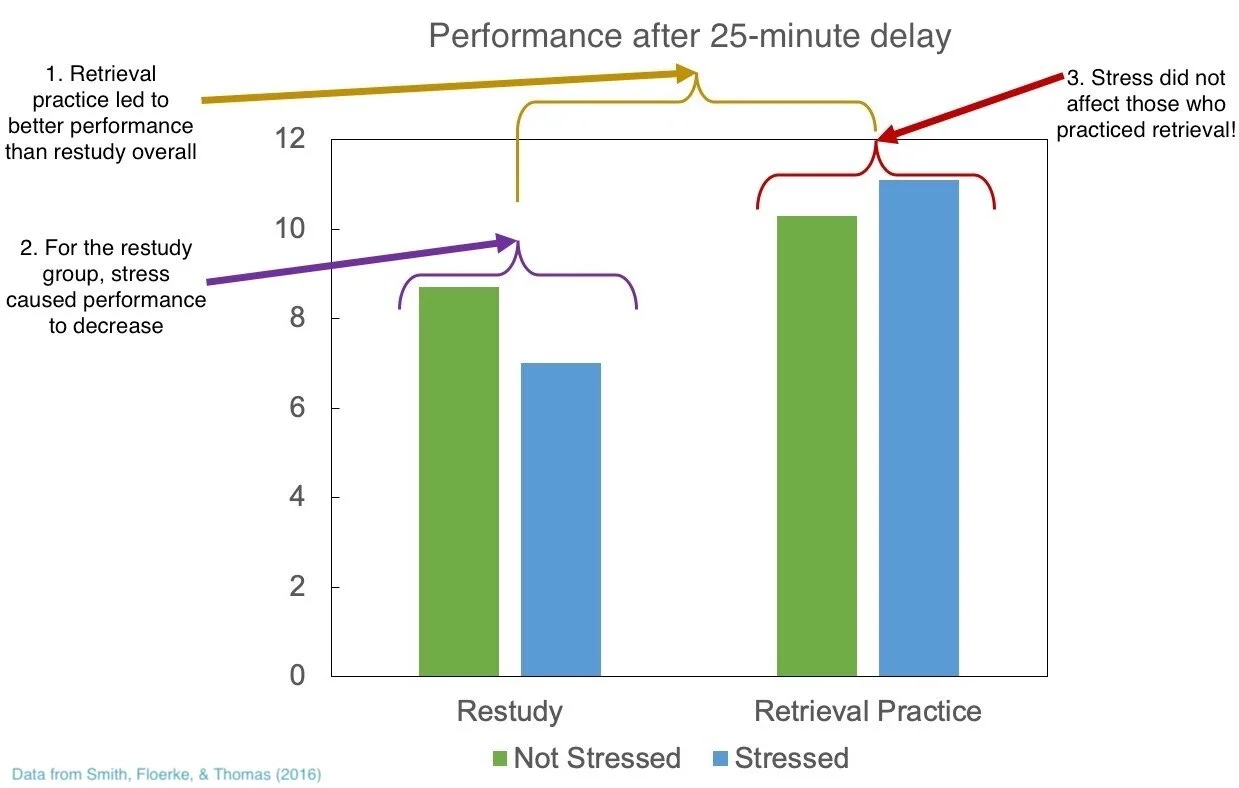
In an educational landscape increasingly characterized by high pressure and fluctuating global circumstances, the intersection of learning strategies and student well-being has become a critical area of focus. Recent discussions among learning scientists, reignited by reflections on past and present academic environments, underscore the profound relevance of retrieval practice as a potent tool not only for enhancing long-term memory but also for mitigating the detrimental effects of acute stress on cognitive performance. This enduring insight, rooted in rigorous scientific inquiry, offers a beacon of hope for students navigating demanding academic pathways.
The Enduring Challenge of Student Stress
The year 2020 stands as a stark reminder of unprecedented global stressors, particularly within educational systems. The rapid pivot to remote learning, widespread health anxieties, economic uncertainties, and social isolation collectively created an exceptionally challenging environment for students and educators alike. This period highlighted the inherent vulnerability of academic performance to external pressures. While the immediate crisis of 2020 has evolved, the sentiment of pervasive stress has persisted and, in some quarters, intensified. Educators and mental health professionals note a continuing upward trend in student stress levels, potentially even surpassing those observed during the initial pandemic surge. Factors contributing to this sustained pressure include post-pandemic academic catch-up, heightened competition for university admissions and employment, the pervasive influence of digital connectivity, and ongoing global socio-economic instability. This complex tapestry of stressors makes the search for effective, evidence-based coping mechanisms and learning strategies more urgent than ever.
Understanding Acute Stress and Its Cognitive Impact
To appreciate the protective role of retrieval practice, it is crucial to first understand the nature of acute stress and its documented impact on memory. Acute stress is characterized by a sudden, intense physiological and psychological response to a specific, short-term threat or challenge. Unlike chronic stress, which involves prolonged exposure to stress hormones and can have more severe, long-term health consequences, acute stress is typically transient. However, even brief periods of acute stress, such as those experienced before a major examination, during a public speaking engagement, or in response to a personal crisis, can significantly impair cognitive functions, particularly memory retrieval.
Research into the neurobiology of stress reveals that acute stressors trigger the release of hormones like cortisol and adrenaline. While these hormones can enhance certain aspects of memory formation (e.g., flashbulb memories for highly emotional events), they can simultaneously disrupt the efficient access and recall of previously learned information. This phenomenon, often referred to as "choking under pressure," can lead to a frustrating disconnect between what a student knows and what they are able to demonstrate in a high-stakes situation. For instance, a student might have diligently studied and mastered complex material, only to find their mind drawing a blank during an exam due to intense pre-test anxiety. This memory inhibition directly impacts academic performance, potentially undermining years of effort and dedication.
Retrieval Practice: A Robust Learning Strategy
Retrieval practice, often colloquially known as "testing yourself," is an evidence-based learning strategy that involves actively recalling information from memory rather than passively re-reading or restudying it. This active engagement strengthens memory traces, making the information more accessible and durable over time. Common forms of retrieval practice include using flashcards, self-quizzing, answering practice questions, or simply trying to recall everything one knows about a topic from scratch. The efficacy of retrieval practice has been extensively documented across various disciplines and age groups, establishing it as one of the most powerful techniques for improving long-term retention and transfer of knowledge.
The mechanism behind retrieval practice’s effectiveness lies in the "testing effect," where the act of retrieving information itself acts as a powerful learning event. Each successful retrieval effort not only reinforces the memory but also helps identify gaps in understanding, guiding further study. Furthermore, retrieval practice encourages deeper processing of information, prompting learners to organize and connect concepts more effectively than passive review.
Scientific Evidence: Retrieval Practice as a Stress Buffer
The groundbreaking research by Amy M. Smith, Victoria A. Floerke, and Alena K. Thomas, published in Science in 2016, provided compelling evidence that retrieval practice might offer a unique protective effect against the memory-impairing consequences of acute stress. Their study, "Retrieval practice protects memory against acute stress," meticulously investigated the interplay between learning strategies, stress, and memory recall.
The researchers designed an experiment involving four distinct groups of participants. Initially, all participants engaged in a learning phase where they studied a series of nouns and associated images. This foundational learning ensured a common baseline for subsequent memory assessment. Following this, participants were divided into two primary learning strategy groups: one engaged in retrieval practice, actively recalling the items learned, while the other restudied the materials. This phase involved multiple trials to solidify the learning through either active recall or passive review.
After a 24-hour delay, participants returned to the laboratory for the critical phase of the experiment. Half of the participants from each learning strategy group were then subjected to an acute stress induction procedure, typically involving elements of the Trier Social Stress Test (TSST). This widely used laboratory protocol involves tasks such as delivering an impromptu speech and performing mental arithmetic under observation by stern judges and peers. Such tasks are known to reliably induce physiological and psychological stress responses, which the researchers confirmed through measures like heart rate variability and salivary cortisol levels. The other half of the participants engaged in a non-stressful control activity. Immediately following the stress or control activity, and again after a 25-minute delay, all participants completed a memory test to assess their recall of the previously studied items.
The results were profoundly insightful:
- Stress Impairs Memory: For participants who had only restudied the material, exposure to acute stress significantly hindered their ability to retrieve the information during the memory test. This finding corroborated prior research on the negative impact of acute stress on memory recall.
- Retrieval Practice Enhances Memory: In the absence of acute stress, participants who had engaged in retrieval practice consistently outperformed those who had merely restudied, demonstrating the well-established benefits of retrieval practice on long-term retention.
- Retrieval Practice Protects Against Stress-Induced Forgetting: Crucially, participants who had utilized retrieval practice during the learning phase showed remarkable resilience to the effects of acute stress. Even when subjected to the stressful activity, their memory recall was significantly less impaired compared to the restudy group under stress. This suggests that the act of actively retrieving information creates stronger, more accessible memory traces that are more resistant to disruption by stress hormones.
These findings carry profound implications for students, particularly those facing high-stakes examinations or performance scenarios. The study demonstrated that while acute stress can indeed inhibit memory retrieval, the proactive engagement in retrieval practice appears to build a cognitive buffer, protecting learned information from being "blocked" during stressful moments.
Nuances and Considerations: The Role of Low-Stakes Practice
While the protective benefits of retrieval practice against acute stress are compelling, subsequent research and practical considerations highlight an important nuance: the conditions under which retrieval practice itself occurs. A study by Hinze and Rapp (2014) in Applied Cognitive Psychology suggested that higher levels of performance pressure and anxiety during retrieval practice sessions might actually diminish its positive benefits. If the act of retrieving information is itself a stressful, high-stakes event, it could potentially undermine the learning gains.
This finding underscores the importance of implementing retrieval practice in a low-stakes or no-stakes environment. When students practice recalling information without the added pressure of grades or severe consequences for errors, they can fully engage with the learning process. This relaxed environment fosters effective encoding and strengthening of memory traces, which then serve as robust foundations when faced with subsequent high-stakes, stressful assessments. Educators and learning institutions are increasingly advocating for integrating frequent, informal quizzes, self-testing, and practice exams that are primarily for formative assessment and learning reinforcement, rather than punitive grading.
Broader Implications for Education and Student Well-being
The convergence of these research findings offers a powerful framework for enhancing academic performance and supporting student mental well-being:
- Empowering Students: Students can be empowered with a tangible strategy to manage the cognitive impact of stress. By proactively integrating retrieval practice into their study routines, they can build resilience against exam anxiety and other acute stressors. This shifts the focus from simply "knowing the material" to "being able to access the material under pressure."
- Transforming Teaching Practices: Educators can integrate low-stakes retrieval practice more systematically into their curriculum. This includes frequent short quizzes, exit tickets, think-pair-share activities that require recall, and encouraging students to generate their own practice questions. Emphasizing the process of retrieval practice as a learning tool, rather than solely an assessment tool, is crucial.
- Curriculum Design: Educational institutions can design curricula that naturally incorporate spaced retrieval practice, ensuring that students revisit concepts over time through active recall. This systematic approach can foster deeper learning and create a more robust knowledge base.
- Mental Health and Academic Support Services: University and school support services can leverage these findings to provide more targeted advice to students struggling with exam anxiety. Workshops on effective study strategies can prominently feature retrieval practice, explaining its dual benefit for learning and stress mitigation.
- Future Research Directions: While the Smith et al. study provides a strong foundation, further research is needed to explore the nuances of these findings. This includes investigating different types of stressors, individual differences in stress response, the optimal timing and frequency of retrieval practice, and its effectiveness across diverse learning contexts and populations. Understanding how chronic stress might interact with these mechanisms also presents a vital avenue for future inquiry.
Conclusion
The journey through academic life is inherently challenging, and the presence of stress, particularly acute stress, is an unavoidable reality for many students. However, the scientific evidence consistently points towards practical, empowering strategies that can help students not only navigate these challenges but thrive amidst them. Retrieval practice, long recognized for its efficacy in strengthening memory, now stands revealed as a powerful cognitive shield against the memory-inhibiting effects of acute stress. By fostering environments where low-stakes retrieval practice is commonplace, educators can equip students with an invaluable tool that enhances their learning, bolsters their confidence, and protects their ability to demonstrate their knowledge when it matters most, paving the way for sustained academic success in an ever-stressful world.