 admin
admin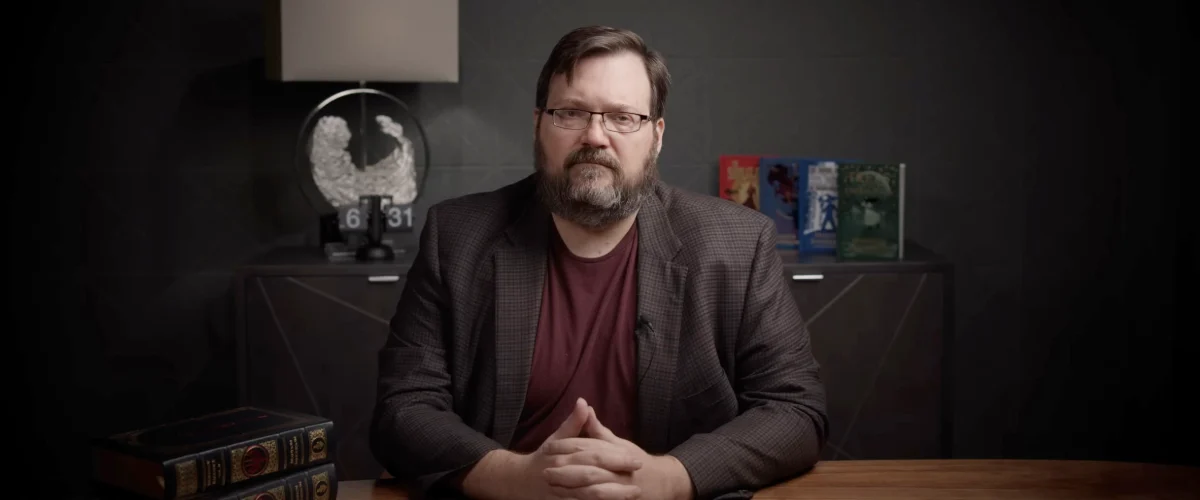
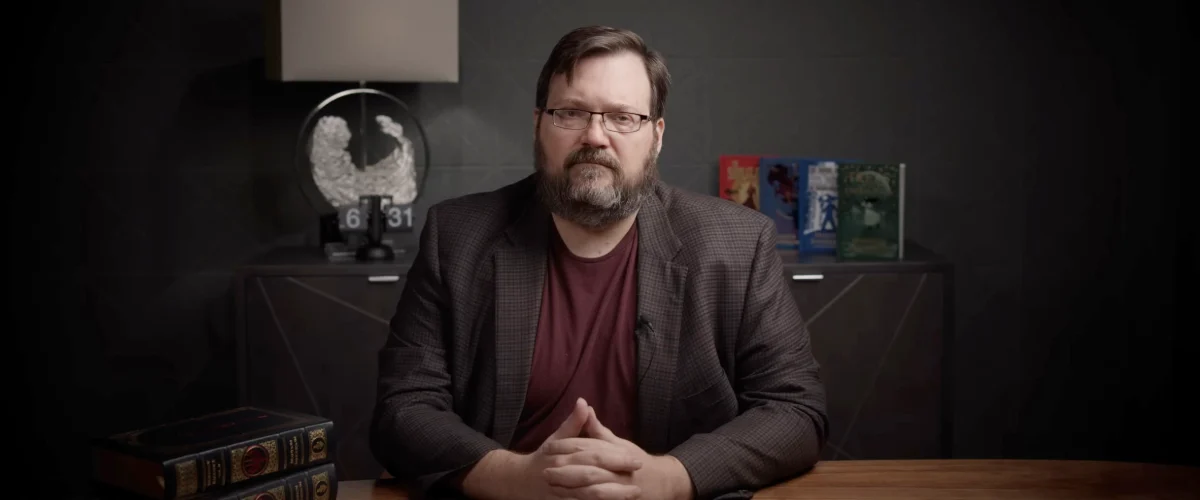
The rapid evolution of generative artificial intelligence has prompted a significant re-evaluation of the intrinsic value of human creativity, a sentiment recently highlighted by prominent fantasy author Brandon Sanderson. Speaking at Dragonsteel Nexus, an annual literary and fan convention organized by his media company, Dragonsteel Entertainment, Sanderson addressed the growing intersection of large language models (LLMs) and the creative arts. His presentation, titled "The Hidden Cost of AI Art," moved beyond common economic anxieties to explore the philosophical and psychological implications of delegating artistic creation to automated systems. Sanderson’s critique centers on the distinction between art as a final commodity and art as a transformative human process, a perspective that has gained traction among creators facing the encroachment of generative technologies.
Contextual Background of the Dragonsteel Nexus Address
Dragonsteel Nexus serves as a focal point for the "Cosmere" fandom, the interconnected universe of Sanderson’s best-selling novels, including the Mistborn series and The Stormlight Archive. Sanderson, who holds the record for the most successful Kickstarter campaign in history—raising over $41 million for a series of "secret projects"—occupies a unique position of influence within the publishing industry. His remarks on AI carry weight not only because of his commercial success but also because of his reputation for transparency regarding the mechanics of writing and professional authorship.
The address came at a time of heightened tension between the creative community and AI developers. Throughout 2023 and early 2024, the industry witnessed a surge in legal and ethical challenges. The Authors Guild, representing thousands of writers, filed class-action lawsuits against companies like OpenAI, alleging that the unauthorized use of copyrighted works to train LLMs constitutes "systemic theft on a mass scale." It was within this climate of litigation and uncertainty that Sanderson sought to articulate a deeper, non-economic objection to AI-generated content.
The Philosophical Core: Art as Process Over Product
During his address, Sanderson acknowledged the technical fascination surrounding LLMs but expressed a visceral disapproval of their application in creative fields, stating that the current trajectory of AI art caused his "stomach to turn." To analyze this reaction, he systematically reviewed and dismissed several common arguments against AI. He noted that while concerns about copyright infringement, the displacement of entry-level artists, and the potential for digital "slop" are valid, they do not fully capture the fundamental "cost" he perceives.
Sanderson’s central thesis posits that the primary value of art lies in how the act of creation changes the artist. Reflecting on his own early career—a period marked by several unpublished and technically "failed" manuscripts—he argued that the purpose of writing his first novel was not the creation of a salable product, but the personal transformation required to complete it. He described the "transcendent moment" of finishing a massive project as a vital human experience that AI bypasses entirely. By viewing art strictly as a "product" to be consumed, Sanderson suggests that society risks losing the developmental benefits of the "struggle" inherent in human craft.
The Cognitive Dimension: Art as Human Communication
Supporting this view, cultural critics and authors like Cal Newport have expanded on the definition of art as an act of "deep human communication." In this framework, a piece of art—whether a novel, a painting, or a film—serves as a tangible medium through which a complex internal cognitive state is transmitted from one human mind to another. Newport describes this phenomenon as a form of "telepathy," a uniquely human capability that allows individuals to share subjective experiences across time and space.
From this perspective, the consumption of AI-generated content is viewed as fundamentally "anti-human." If the purpose of reading a book is to connect with the consciousness and intent of another person, a machine-generated manuscript offers only a "quixotic simulation" of that connection. This analysis suggests that the aesthetic quality of AI output is secondary to its lack of human origin; even a technically perfect AI novel would fail the primary function of art because there is no "sentience" on the other end of the transmission.
Technical Capabilities and Cybersecurity Implications
The debate over AI art is occurring alongside rapid advancements in the raw capabilities of LLMs, which extend far beyond creative writing. This dual nature of AI—as both a creative tool and a powerful analytical engine—was recently highlighted by data released regarding Anthropic’s "Opus 4.6" model. In supplementary release notes and technical reports, Anthropic researchers detailed the model’s proficiency in identifying cybersecurity flaws.
According to the report, Opus 4.6 was utilized to find and validate more than 500 high-severity "zero-day" vulnerabilities—security flaws that were previously unknown to software developers and thus had no existing patches. Some of these vulnerabilities were reportedly decades old. While this demonstrates the immense utility of AI in enhancing digital security, it also underscores the "black box" nature of these systems. The ability of an LLM to parse code and identify flaws that have eluded human experts for years illustrates a level of pattern recognition that, while useful in engineering, becomes problematic when applied to the nuanced and subjective realm of human emotion and storytelling.
Chronology of the Generative AI Surge in Creative Industries
The timeline of the current AI debate reflects a rapid escalation from novelty to systemic disruption:
- November 2022: OpenAI releases ChatGPT, bringing generative text to the mainstream and sparking immediate debate in academic and creative circles.
- Early 2023: Image generators like Midjourney and DALL-E 3 begin winning digital art competitions, leading to protests on platforms like ArtStation.
- Mid 2023: The Hollywood writers’ and actors’ strikes (WGA and SAG-AFTRA) center heavily on protections against AI replacement, marking the first major labor contracts to address generative technology.
- Late 2023: Brandon Sanderson delivers "The Hidden Cost of AI Art" at Dragonsteel Nexus, shifting the conversation toward the intrinsic value of the creative process.
- Early 2024: Anthropic and OpenAI release more powerful models (Claude 3/Opus and GPT-4o), demonstrating advanced reasoning and technical capabilities, including the aforementioned cybersecurity discoveries.
Broader Impact and the Reassertion of Human Agency
The discourse surrounding AI often falls into a pattern of "nihilistic passivity," where the replacement of human effort by automation is viewed as an inevitable technological evolution. However, Sanderson’s conclusion at Dragonsteel Nexus serves as a call for human agency. He argued that because humans define what art is and what it means to society, they possess the collective power to reject the integration of AI in certain spheres.
"The machines can spit out manuscript after manuscript… they can pile them to the pillars of heaven itself," Sanderson noted. "But all we have to do is say ‘no.’"
This stance is reflected in the emergence of "Human-Made" certification marks and the growing "slow media" movement, which prioritizes artisanal creation over algorithmic efficiency. Market data suggests a bifurcated future: while AI may dominate high-volume, low-cost commercial content (such as technical manuals, SEO-driven marketing copy, and stock imagery), there is a projected premium on works with a verified human pedigree.
Fact-Based Analysis of Future Implications
The long-term impact of AI on the arts will likely depend on how society balances efficiency with meaning. Economically, the cost of generating "content" is approaching zero, which threatens the traditional livelihoods of commercial creators. However, the psychological and sociological data supports Sanderson’s view that the "cost" of AI is hidden within the loss of human development.
Educational experts have expressed concerns that if students use AI to bypass the "struggle" of writing and problem-solving, they may fail to develop the critical thinking skills that Sanderson identified as the "sweet, beautiful, and transcendent" result of finishing a difficult project. Therefore, the resistance to AI art is not merely a rejection of new technology, but an attempt to preserve the developmental pathways that have defined human culture for millennia.
As AI models like Anthropic’s Opus 4.6 continue to prove their superiority in technical tasks—such as finding 500-plus zero-day vulnerabilities—the distinction between "utility" and "art" becomes clearer. While society may welcome AI as a tool for security and data analysis, the consensus among many prominent creators is that the "hidden cost" of allowing it to replace the human creative process is a price too high to pay. The future of the creative industry may well be defined not by what the machines can do, but by what humans choose to continue doing for themselves.