admin
admin
The dawn of 2026 has witnessed a resurgence in the perennial debate regarding the optimization of physical exercise, driven largely by new data suggesting that the intensity of movement may be a far more critical determinant of longevity than previously understood. As the initial surge of New Year’s resolutions begins to collide with the logistical constraints of daily life, researchers and public health experts are scrutinizing a landmark study that quantifies the trade-off between time and effort. The study, which utilizes high-fidelity wearable data from tens of thousands of participants, proposes a staggering efficiency ratio: for certain health outcomes, a single minute of vigorous activity may offer the same protective benefits as more than two and a half hours of light movement.
The Core Findings of the Biswas et al. Study
At the center of this discourse is a comprehensive analysis conducted by Biswas and colleagues, who leveraged the extensive database of the UK Biobank to investigate how different tiers of physical activity intensity correlate with chronic disease and mortality. The researchers followed 73,485 adults, with a mean age of approximately 61.6 years, over an average follow-up period of eight years. Unlike historical studies that relied on the fallible nature of self-reported exercise logs, this investigation utilized wrist-worn accelerometers to capture objective movement data in 10-second intervals.
The investigators categorized movement into three primary tiers: light, moderate, and vigorous. These categories were defined by acceleration thresholds measured in milligravities (mg) and mapped to Metabolic Equivalents (METs). Light intensity was defined as activities producing less than 100 mg of acceleration (typically under 3 METs), such as slow walking or household chores. Moderate intensity ranged from 100 to 400 mg (3 to 6 METs), encompassing brisk walking. Vigorous intensity was reserved for movements exceeding 400 mg (over 6 METs), such as jogging, running, or high-intensity interval training.
The results, which have circulated widely across medical journals and social media platforms, suggest that vigorous activity provides a disproportionate return on investment. According to the data, one minute of vigorous movement is associated with the same reduction in all-cause mortality and cardiometabolic risk as 4 to 9 minutes of moderate activity or 50 to 95 minutes of light activity. Most notably, in the context of cancer mortality, the researchers reported that one minute of vigorous effort corresponded to the risk-reduction equivalent of 156 minutes of light-intensity movement.
A Chronology of Exercise Science and the Shift to Wearables
To understand the significance of these findings, it is necessary to view them within the historical context of exercise science. For decades, public health guidelines—such as those issued by the World Health Organization (WHO) and the American Heart Association (AHA)—have focused primarily on volume. The standard recommendation of 150 minutes of moderate-intensity aerobic activity per week was born out of large-scale epidemiological studies from the late 20th century.
However, the 2010s marked a pivot point as wearable technology became a viable tool for large-population research. In 2013, the UK Biobank began distributing accelerometers to over 100,000 participants, creating the world’s most robust dataset of objective physical activity. This move addressed a major "noise" factor in earlier research: the tendency for individuals to overreport their exercise and underreport their sedentary time.
By 2020, studies began to emerge suggesting that "vigorous" bursts—even those lasting only two to three minutes—could significantly lower the risk of cardiovascular disease. The 2026 Biswas paper represents the culmination of this trend, providing the most granular "equivalence ratios" to date. This timeline reflects a move away from the "more is better" philosophy toward a more nuanced "intensity-dependent" model of preventative medicine.
Statistical Methodology and the "Mutual Adjustment" Model
The precision of the reported ratios—such as the 1:156 ratio for cancer mortality—is derived from a statistical technique known as "mutually adjusted regression modeling." Because human movement is rarely homogenous, individuals who engage in vigorous exercise also tend to engage in more moderate and light activity. To isolate the specific impact of vigorous movement, the researchers had to statistically "correct" for the time spent in other categories.
This model asks a theoretical question: if all other factors (age, sex, smoking status, and time spent in other intensities) are held constant, how does an additional minute of vigorous activity influence the hazard ratio for mortality? While this provides a clean mathematical output, it creates a distinction between statistical association and physiological substitution. The model identifies how these behaviors cluster in a population, but it does not necessarily simulate what happens when an individual replaces two hours of walking with one minute of sprinting.
Critical Analysis: The Distinction Between Movement and Physiology
Despite the compelling nature of the data, medical experts urge caution against a literal interpretation of these "time-conversion" formulas. A primary limitation lies in the device-based definition of intensity. Accelerometers measure the movement of the wrist, which serves as a proxy for total body energy expenditure. However, acceleration is not synonymous with physiological load.
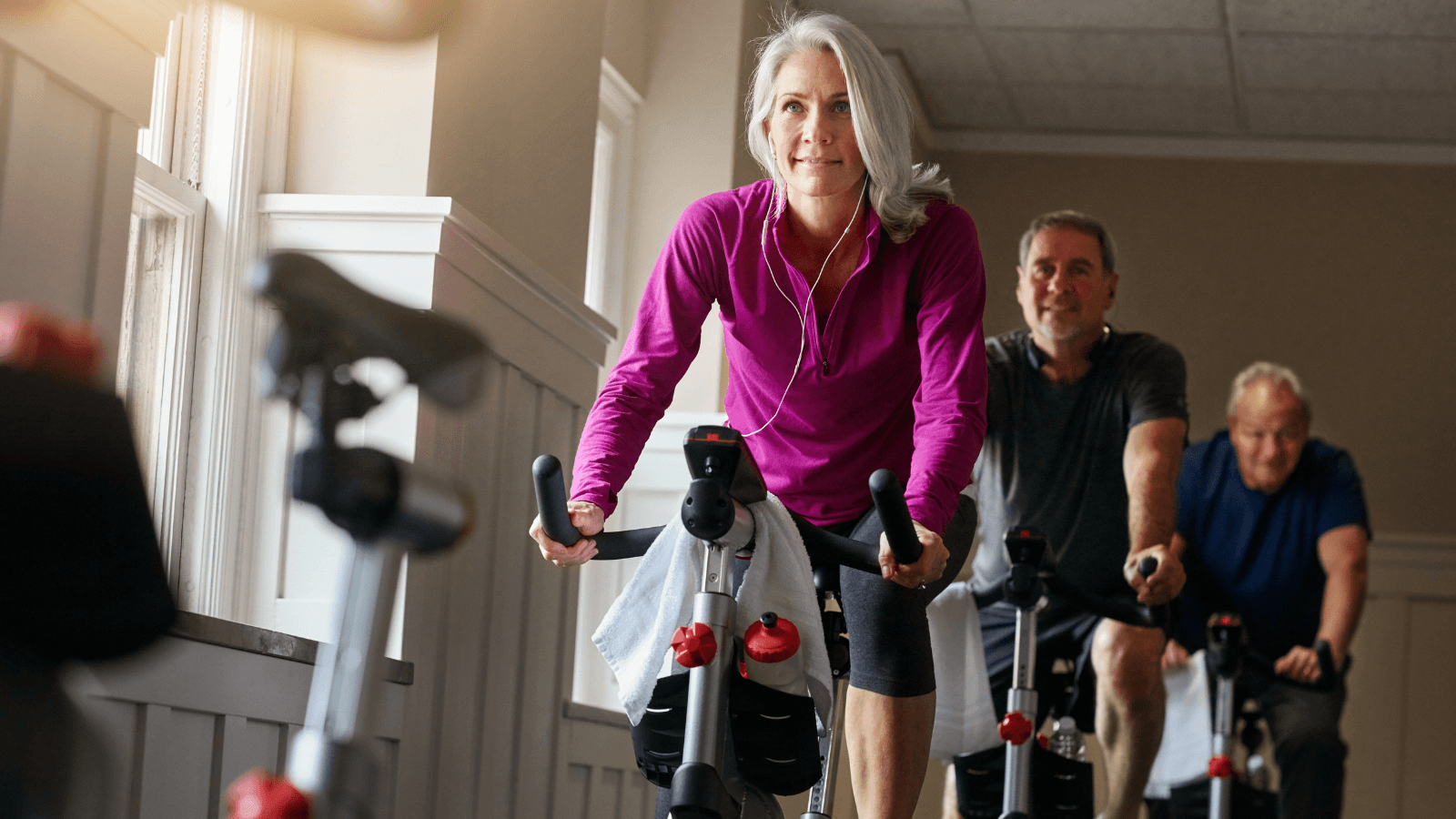
For a highly trained athlete, a brisk walk (moderate intensity) may barely elevate their heart rate or metabolic stress. Conversely, for a deconditioned individual or an elderly person with limited mobility, that same walk might represent a near-maximal effort. Because the study utilized a fixed acceleration threshold (e.g., 400 mg for vigorous), it may have misclassified the internal physiological strain experienced by different participants.
Furthermore, the data represents a "snapshot" of behavior. Participants wore the devices for only seven days. The researchers then extrapolated this one-week window to predict health outcomes nearly a decade later. This assumes that a participant’s exercise habits remained static over eight years—an assumption that fails to account for injuries, aging, or lifestyle changes. Consequently, while the study confirms that people who move vigorously are generally healthier, it cannot definitively prove that the vigorous movement itself is the sole cause of that health, nor that it can entirely replace lower-intensity volume.
Public Health Reactions and Professional Perspectives
The medical community’s reaction to the Biswas study has been a mixture of optimism and skepticism. Public health officials have noted that if vigorous activity is indeed this efficient, it could lower the "barrier to entry" for the millions of people who cite "lack of time" as the primary reason for sedentary behavior.
"The idea that you don’t need an hour in the gym to move the needle on your cancer risk is incredibly empowering," noted one public health analyst. "If we can convince the population that three minutes of hard effort is worth two hours of light activity, we might see higher compliance rates."
However, clinical exercise physiologists have expressed concern that the "efficiency" narrative could lead to an increase in injury and a decrease in foundational fitness. Experts in cardiorespiratory health emphasize that while vigorous exercise (often referred to as Zone 5 training) is excellent for increasing VO2 max, it requires a "base" of moderate-intensity (Zone 2) work. This lower-intensity volume is essential for mitochondrial health, fat oxidation, and building the structural integrity of joints and tendons. Without this foundation, a sudden shift to purely vigorous activity could lead to burnout or orthopedic issues, particularly in the aging population studied by the UK Biobank.
Broader Implications and the Future of Training Strategies
The implications of this research extend beyond the gym and into the realms of urban planning and corporate wellness. If short bursts of vigorous activity are highly protective, "exercise snacks"—brief periods of intense movement throughout the workday—may become a standard recommendation in workplace health programs. We may see a shift in architectural design to encourage stair climbing or the integration of high-intensity intervals into daily commutes.
From a clinical perspective, the study reinforces the importance of "durability." The goal of exercise is not merely to check a box for a specific number of minutes, but to build a body capable of handling high-intensity stress. The most successful training programs in the future will likely be those that view these intensities as complementary rather than interchangeable.
Moderate and light activity should be viewed as the "floor" of a healthy lifestyle—providing a consistent, low-stress stimulus that supports metabolic health. Vigorous activity should be viewed as the "ceiling"—a necessary stressor that pushes the limits of the cardiovascular system and triggers the body’s most robust survival mechanisms.
Conclusion: A Balanced Framework for Longevity
As the findings from 2026 continue to influence the health and fitness landscape, the consensus among experts is that efficiency should not be confused with sufficiency. While a minute of vigorous activity may be statistically "equivalent" to over two hours of light movement in a computer model, the human body operates on biological principles that require a variety of stimuli.
The Biswas et al. study provides a powerful reminder that intensity matters. It serves as a call to action for those who have plateaued in their fitness journey, suggesting that adding even small amounts of high-intensity work can yield significant longevity dividends. However, the most sustainable path to health remains a diversified approach: a foundation of consistent, low-to-moderate activity, punctuated by the very vigorous efforts that these new data so strongly support. In the quest for longevity, there are no shortcuts that entirely replace the need for movement, but there are certainly ways to make every minute count.