admin
admin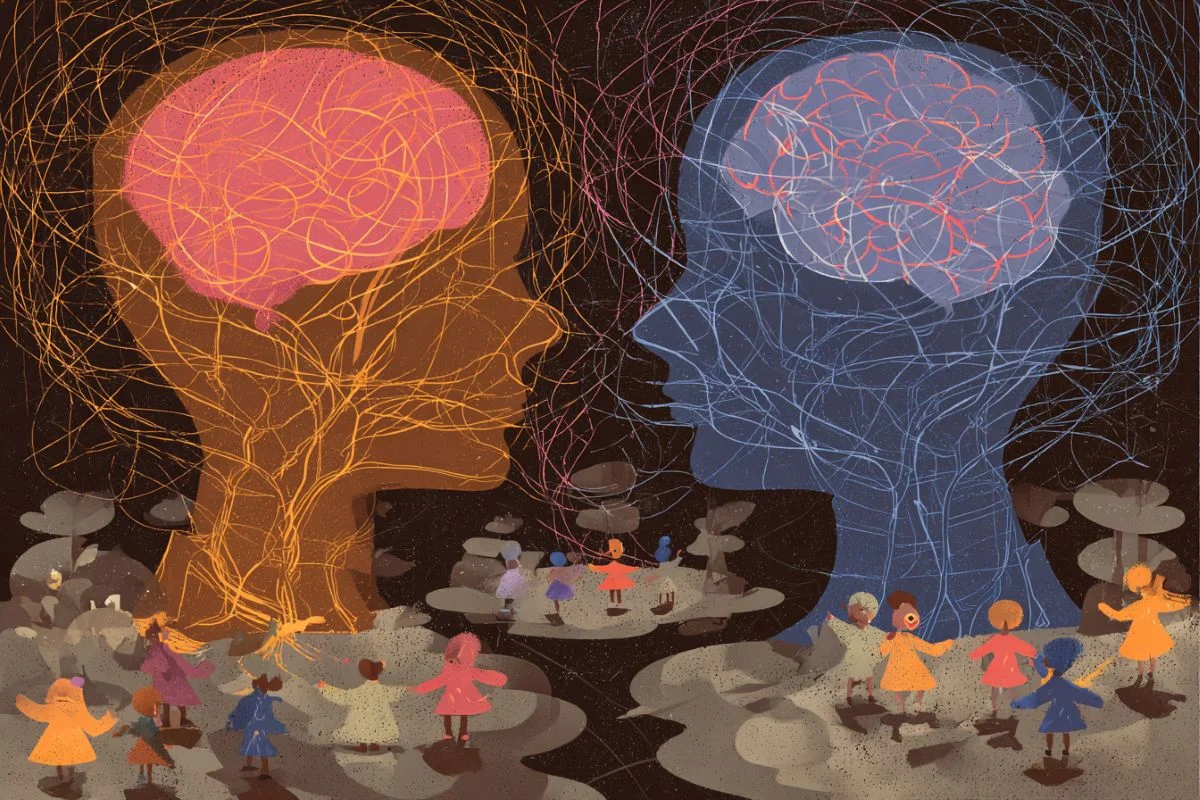
A groundbreaking study from UCLA has revealed that for social species, survival is not merely an individual pursuit but a highly coordinated, self-correcting collective endeavor. Challenging the long-held perception of survival as a "lonely race," new research published in Nature Neuroscience suggests that groups function akin to a single, unified organism, where individual brains are hardwired to continuously monitor and adapt to the needs of the collective. This innovative perspective highlights how the prefrontal cortex, the brain’s critical decision-making center, extends its purview beyond individual needs to actively model and respond to the behavior of every member within a social unit, ensuring collective stability even when an individual falters.
The research focused on the seemingly simple act of mice huddling for warmth in cold environments, unraveling a complex interplay of neural mechanisms that govern group cohesion and collective resilience. The findings underscore that when one member’s "social drive" or capacity to contribute to the group’s welfare is compromised, the remaining members automatically and precisely compensate, maintaining the group’s overall thermal stability and, by extension, its survival. This automatic compensation mechanism points towards an inherent biological imperative for collective well-being, suggesting that the brain’s role in survival is deeply intertwined with its capacity for social integration and adaptation.
Unveiling the Mechanisms of Collective Resilience
The study’s core objective was to investigate the neural underpinnings of collective social dynamics, particularly how groups adapt to environmental stressors. Researchers selected mice as their model organism due to their natural propensity for social interaction and huddling behavior in response to cold. The methodology involved meticulously tracking groups of mice as they navigated cold exposure. Sophisticated behavioral and thermal imaging techniques were employed to observe how these groups organized themselves to conserve warmth. This multi-faceted approach allowed the researchers to capture both the macroscopic group behavior and the microscopic physiological responses.
Crucially, the study identified four distinct behavioral strategies an individual mouse might employ in relation to a huddle: actively choosing to join, being sought out by others and thus joining, choosing to leave the huddle, or being left behind. These nuanced classifications allowed for a detailed analysis of individual decision-making within the collective context. Simultaneously, researchers monitored brain activity in the dorsomedial prefrontal cortex (dmPFC), a specific region within the prefrontal cortex known for its involvement in complex decision-making, social behavior, and self-regulation.
To further probe the causal role of the dmPFC in this collective behavior, a crucial experimental step involved selectively silencing this brain region in a subset of animals within each group using chemogenetic techniques. This allowed the researchers to observe the direct impact of compromised individual prefrontal cortex function on both the targeted animals and their untouched groupmates, and subsequently, on the overall group dynamics. The precision of this experimental manipulation was key to isolating the specific neural contributions to collective survival strategies.
Key Discoveries: The Brain as a Social Thermostat
The findings from this meticulously designed study were nothing short of remarkable. Researchers discovered that the prefrontal cortex, specifically the dmPFC, actively tracked not only an individual animal’s own choices and needs but also those made by its social partners. This suggests that the brain is not merely an egocentric processing unit but one that continuously models the behavior and states of others in its immediate social environment. This constant, subconscious modeling forms the basis for the group’s cohesive actions.
When the dmPFC was silenced in certain mice, those animals exhibited a noticeable shift in behavior; they became passive, no longer actively seeking out huddles but instead waiting for others to initiate contact or join them. This provided direct evidence of the dmPFC’s role in initiating active social engagement for survival.
What happened next was perhaps the most profound revelation: the untouched groupmates of the silenced animals automatically increased their activity, precisely compensating for the reduced engagement of their compromised peers. This compensation was so effective that the overall huddle time for the group remained stable, and critically, every animal’s body temperature remained within a healthy range. This "self-correction" occurred without any single individual animal overtly directing the process, highlighting an emergent property of collective intelligence encoded within the social brain circuits. The group simply adapted and rebalanced its efforts.
Furthermore, the study observed that mice huddled significantly more in larger groups. This finding points to a critical threshold effect, where collective behavior and its associated benefits become more pronounced and effective only when a sufficient number of individuals are present. This underscores the evolutionary advantage of sociality, where the sum of individual contributions, especially when coordinated through neural mechanisms, far exceeds what any individual could achieve alone.
The Science of Huddling: A Deeper Dive into Thermoregulation
Huddling, a common behavior across many social species, serves a fundamental biological purpose: thermoregulation. In cold environments, maintaining a stable core body temperature is paramount for survival. Hypothermia can rapidly lead to metabolic distress, organ failure, and death. Huddling reduces an individual’s exposed surface area to the cold air, minimizes convective and radiative heat loss, and allows for shared body warmth among group members.
The study employed thermal imaging and internal temperature loggers to quantify these thermoregulatory benefits. It confirmed that huddling significantly stabilized core body temperature by increasing thermal contact points between individuals and substantially reducing heat loss from the group as a whole. This direct physiological benefit provides a clear evolutionary driver for the sophisticated neural mechanisms observed. The ability to coordinate huddling effectively directly translates into a higher chance of survival for the group.
Mammalian thermoregulation is primarily controlled by the hypothalamus, a vital region in the brain that acts as the body’s thermostat, sensing internal temperature changes and initiating appropriate responses like shivering or seeking warmth. The UCLA study’s findings suggest a complex interaction between this ancient, fundamental thermoregulatory system and the more recently evolved prefrontal cortex, which governs higher-order social cognition and decision-making. The integration of "I’m cold" (hypothalamic signal) with "my groupmate isn’t moving" (prefrontal social signal) is where the magic of collective resilience truly lies.
Implications for Social Behavior and Human Health
The implications of this research extend far beyond the huddling behavior of mice. At a time when social isolation is increasingly recognized as a significant public health risk, and conditions such as depression, anxiety, and schizophrenia are understood to involve disruptions in social connection, these findings offer profound new insights. They suggest that social connection is not just a psychological comfort but a fundamental biological imperative, with neural circuits specifically dedicated to ensuring collective well-being.
For humans, who are quintessential social species, the concept of a "social brain" continuously modeling others’ behavior resonates deeply. It suggests that our capacity for empathy, altruism, and collective action may be rooted in these basic survival mechanisms. When an individual in a human social group experiences distress—whether due to illness, trauma, or mental health challenges—this research implies that the social circle’s capacity to adapt and "compensate" is a deeply ingrained biological process. The resilience of a social network, therefore, becomes a crucial determinant of individual and collective health.
Traditional approaches to mental health often focus on the individual, seeking to identify and treat internal dysfunctions. While invaluable, this study prompts a broader perspective: that social health is, in part, a group property. If an individual "disconnects" due to illness, the way their social environment responds—how effectively the group adapts to bring them back into the fold—is a biological process governed by neural circuits akin to those observed in mice. This could pave the way for new therapeutic strategies that don’t just target individual brains but also seek to strengthen the adaptive capacities of social groups and communities. Understanding how these neural mechanisms facilitate collective support could inform interventions for social disorders and foster more resilient communities.
Expert Perspectives and Future Research Directions
The researchers themselves emphasize the transformative nature of these findings. Tara Raam, the first author and co-corresponding author of the study and a postdoctoral scholar at UCLA’s Social Neuroscience Laboratory, articulated the core message: "When one individual in a group is compromised, the group doesn’t fall apart—it adapts. That collective resilience is encoded in the brain, and we’re now beginning to map the brain circuits behind it." This statement underscores the shift from an individualistic to a collective understanding of biological resilience. She further added, "Our findings suggest that to really understand how the brain controls behavior, we need to look beyond the individual and consider the whole group."
Weizhe Hong, the senior author of the study and a professor in the UCLA Departments of Neurobiology and Biological Chemistry, echoed this sentiment, stating, "This research shows that the brain not only helps individuals survive, it also helps groups coordinate collective responses to the challenges we face together." He highlighted the frontier nature of this work, concluding, "Understanding how groups think and act as one is one of the most exciting frontiers in neuroscience today." These expert opinions reinforce the notion that this study is not just an isolated finding but a foundational piece of a larger, evolving understanding of social neuroscience.
Looking ahead, the UCLA team is focused on deciphering the complex interplay between internal physiological signals and external social cues. A key question is how the brain weighs an internal signal, such as "I’m cold," against a social one, such as "my groupmate isn’t moving." The ultimate goal is to understand how these disparate signals merge into a single, cohesive decision that benefits both the individual and the group. Researchers are particularly interested in investigating the precise neural pathways and communication mechanisms between the prefrontal cortex and the hypothalamus, aiming to uncover how these two critical brain regions coordinate responses to environmental challenges through social behavior. This continued research promises to illuminate the intricate neural architecture supporting collective intelligence and social cooperation.
Broader Societal and Evolutionary Context
This research fundamentally challenges the "every animal for themselves" paradigm often associated with survival. From an evolutionary standpoint, the ability of social species to form coordinated, self-correcting units provides a powerful advantage. It enhances resource acquisition, predator defense, and, as demonstrated here, thermoregulation. This collective resilience ensures that the group, and thus the species, can withstand individual weaknesses or environmental perturbations that might prove fatal to solitary individuals.
The concept that a group can function as a "coordinated system" rather than a mere aggregation of individuals has profound implications. It suggests a form of distributed intelligence, where the collective brain power of the group leads to more robust and adaptive outcomes. This is not a "hive mind" in the fictional sense, but rather a sophisticated, biologically encoded system of mutual monitoring and reciprocal adjustment. Just as a sports team’s players instinctively cover for a struggling teammate, these neural circuits drive individuals to maintain the collective’s stability.
This study contributes significantly to the growing field of social neuroscience, which seeks to understand the neural mechanisms underlying social behavior. By demonstrating a direct link between individual brain activity and collective group resilience in a survival context, it provides a compelling argument for viewing sociality as a core biological strategy, not just a learned behavior. It underscores that our brains are fundamentally designed not just for individual survival, but for survival within a social fabric, a design that has profound implications for understanding human society, cooperation, and collective problem-solving.
Original Research Details
The research, titled "Cortical regulation of collective social dynamics during environmental challenge," was published in Nature Neuroscience. The lead authors include Tara Raam, Qin Li, Linfan Gu, Gabrielle M. Elagio, Kayla Y. Lim, Jay Y. Taimish, Xingjian Zhang, Norma P. Sandoval, Stephanie M. Correa, and Weizhe Hong. The study’s DOI is 10.1038/s41593-026-02224-0. This closed-access publication details the full experimental procedures, results, and analysis that underpin these significant findings. The work was conducted at UCLA, with Alana Prisco serving as the primary contact for media inquiries. The image associated with this news is credited to Neuroscience News. This seminal work is expected to stimulate further interdisciplinary research, bridging neuroscience, ethology, and social psychology to deepen our understanding of collective behavior across the animal kingdom, including humanity.