admin
admin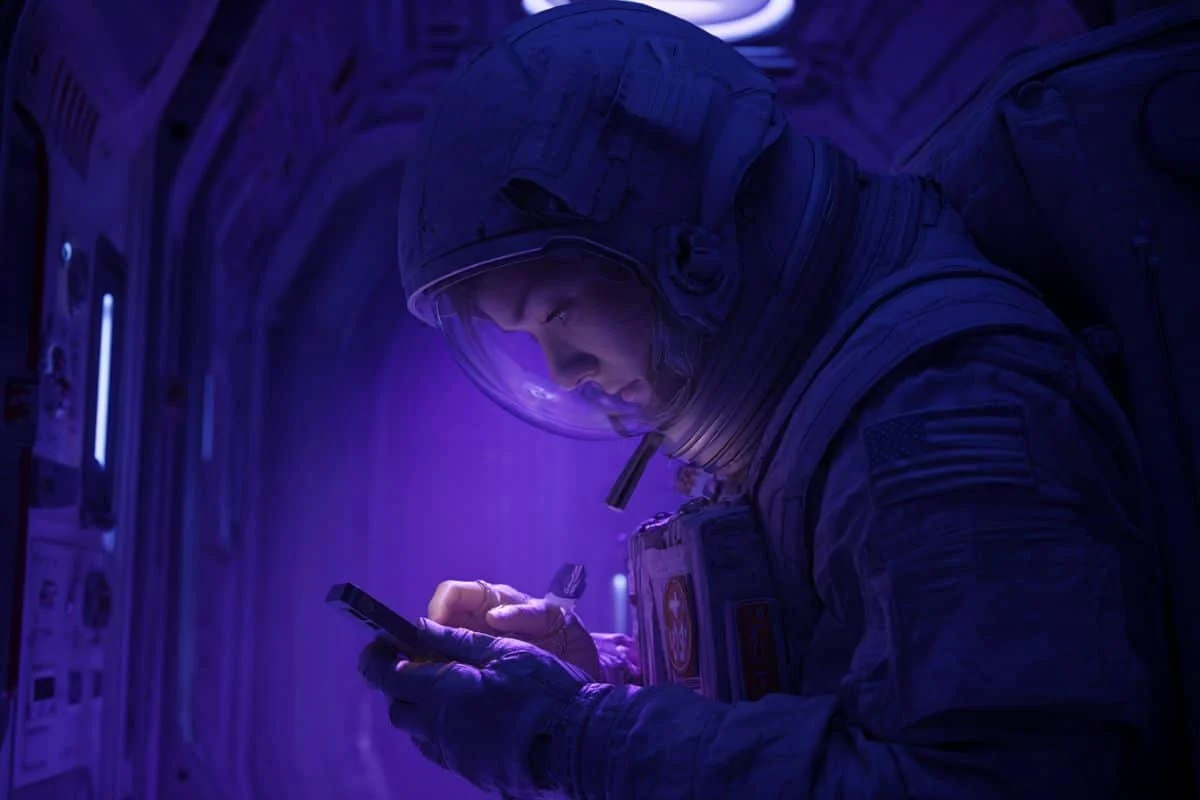
A groundbreaking, inexpensive 15-minute test, developed by an interdisciplinary team at Washington State University (WSU), promises to allow astronauts and individuals in demanding round-the-clock occupations to accurately monitor their internal biological clocks using just a drop of blood and a smartphone. This innovation represents a significant leap forward in understanding and managing circadian rhythms, offering objective data to optimize performance, enhance safety, and improve health outcomes in environments where natural light-dark cycles are disrupted or schedules are irregular. The research, which describes a paper-based test strip utilizing fluorescent nanoparticles to measure melatonin levels with "gold standard" accuracy, precisely identifies the onset of an individual’s "physiological night."
The Critical Role of Circadian Rhythms
The human body operates on an intricate network of internal biological clocks, collectively known as circadian rhythms. These roughly 24-hour cycles regulate nearly all physiological processes, from sleep-wake patterns and hormone secretion to digestion, metabolism, and cognitive function. Melatonin, often referred to as the "hormone of darkness," is a key marker of this internal timing. Produced by the pineal gland in the brain, its levels naturally rise in the evening, signaling the body’s transition into its physiological night, and fall in the morning, promoting wakefulness. Accurate knowledge of an individual’s melatonin profile, particularly the onset of its rise, is crucial for assessing their true internal time, independent of external cues like clocks or ambient light.
Disruptions to these finely tuned rhythms, often caused by shift work, jet lag, or extreme environments like space, can have profound and detrimental effects. For the estimated 15 million Americans engaged in shift work—including healthcare professionals, first responders, transportation workers, and manufacturing personnel—the constant battle against their body’s natural timing can lead to "circadian rhythm sleep disorders," chronic fatigue, impaired cognitive function, and an increased risk of accidents. Long-term health consequences include elevated risks of cardiovascular disease, diabetes, obesity, and certain cancers. The economic impact of these disruptions is also substantial, affecting productivity and healthcare costs.
In the unique and challenging environment of space, the stakes are even higher. Astronauts experience approximately 16 sunrises and sunsets every 24 hours while orbiting Earth, profoundly disorienting their biological clocks. This desynchronization can severely impair their cognitive abilities, judgment, and reaction times—critical functions for mission success and safety where a single error can have catastrophic consequences. Currently, assessing an astronaut’s circadian alignment relies heavily on subjective reports or complex, time-consuming laboratory tests. The WSU team’s rapid, portable test offers a much-needed objective tool to precisely gauge an astronaut’s internal state, allowing for proactive interventions to mitigate risks.
A Technological Breakthrough: Nanoparticles Meet Smartphones
The innovation lies in its elegant simplicity and advanced underlying technology. The test employs a "lateral flow immunoassay" – a format familiar from home pregnancy tests or rapid COVID-19 antigen tests – but with a critical enhancement: the integration of europium nanoparticles. Europium, a rare-earth element, is renowned for its exceptional fluorescent properties. These nanoparticles act as highly sensitive labels, allowing for the detection of melatonin at incredibly low concentrations, down to 10 picograms per milliliter (pg/mL). This specific threshold is vital because it represents the conventionally defined onset of melatonin secretion, marking the beginning of an individual’s physiological night.
Dr. Annie Du, a research professor in the College of Pharmacy and Pharmaceutical Sciences at WSU and corresponding author of the study published in Nanoscale Horizons, emphasized the portability and precision of the system. "One motivation for this study is monitoring astronauts’ circadian cycles, that’s the target," Dr. Du stated. "We focused on developing the sensing method, connected with a smartphone reader that can quantify the result. That is very important because it allows measurements to be taken on the spot, without needing to send blood samples to a laboratory for analysis." Unlike qualitative tests that offer a simple "yes" or "no," this method provides exact melatonin levels, enabling a nuanced understanding of an individual’s circadian phase.
The detection system consists of a paper test strip, a single drop of blood, and a 3D-printed fluorescence smartphone reader. The smartphone reader is ingeniously designed to block out interfering ambient light, ensuring that only the specific fluorescence emitted by the europium nanoparticles, when bound to melatonin, is measured. The phone’s camera then captures this fluorescent signal, and a specialized application quantifies the melatonin concentration. This integration of advanced nanomaterials with ubiquitous mobile technology makes sophisticated biological monitoring accessible and rapid, moving diagnostics from centralized laboratories to the point of need. The "magic," as researchers explain, is not solely in the phone’s camera, but in the highly efficient light emission of the europium nanoparticles and the controlled environment created by the 3D-printed reader, allowing detection of concentrations as minute as a trillionth of a gram.
Chronology of Development and Validation
The development of this novel melatonin test is the culmination of interdisciplinary research, bringing together expertise from pharmaceutical science, engineering, and sleep science across WSU. The initial phase focused on identifying suitable nanomaterials that could offer the necessary sensitivity to detect low concentrations of melatonin in blood plasma. Europium nanoparticles were selected for their superior fluorescent properties and stability.
Following material selection, the team meticulously designed and optimized the lateral flow immunoassay. This involved systematically evaluating six key parameters: readout time, EuNP size, antibody conjugation level, Tween-20 concentration, EuNP deposition volume, and the concentration of melatonin–bovine serum albumin on the nitrocellulose membrane. This rigorous optimization process was critical to achieve the "gold standard" level of sensitivity and accuracy, ensuring the test could reliably identify the 10 pg/mL threshold for physiological night onset. The integration of the 3D-printed smartphone reader then followed, with iterative design improvements to create a robust and user-friendly portable device.
The study, which appeared in Nanoscale Horizons, details the analytical performance of the platform. It achieved a limit of detection (LOD) of 9.99 pg/mL in buffer solution, directly aligning with the critical threshold for physiological night. For melatonin-spiked plasma samples, the recovery rates ranged from 82.58% to 114.70%, demonstrating excellent repeatability and reliability in a biologically relevant matrix.
Currently, the device is undergoing further validation by testing plasma samples from individuals participating in studies at WSU’s Sleep and Performance Research Center. This real-world validation is crucial to confirm the test’s efficacy and reliability across a diverse range of individuals and physiological states, moving it closer to practical application.
Implications for Space Exploration and Astronaut Safety
For space agencies like NASA, the European Space Agency (ESA), and others planning ambitious long-duration missions to the Moon and Mars, maintaining astronaut health and performance is paramount. The current reliance on subjective assessments or infrequent, complex blood draws for circadian monitoring is inadequate for the dynamic and demanding nature of spaceflight.
An astronaut might feel alert due to stimulants or sheer willpower, but their underlying biological clock could be severely desynchronized, leading to compromised reaction times, decision-making, and increased risk of error. This test provides objective data, informing mission control and astronauts themselves about their true internal physiological state. Knowing exactly when an astronaut’s “physiological night” begins allows for precise scheduling of rest periods, critical mission tasks, and the administration of countermeasures like timed light therapy or melatonin supplements, thereby optimizing crew performance and reducing risks during complex operations, extravehicular activities (EVAs), or emergency situations. The NASA-funded state of Washington, Biology in Space Consortium, BioS-ENDURES, which partially supported this work, underscores the strategic importance of this research for future space endeavors.
Transforming Shift Work Management and Public Health
Beyond space, the implications for the millions of people worldwide engaged in shift work are equally profound. Industries such as healthcare, transportation, logistics, and emergency services rely heavily on continuous operations, often requiring employees to work irregular hours that conflict with their natural circadian rhythms. The health and safety consequences are well-documented, from increased rates of chronic diseases to a heightened risk of workplace accidents.
Currently, managing shift work involves generalized guidelines or trial-and-error approaches to sleep hygiene and timing of interventions. This rapid melatonin test could revolutionize shift work management by enabling personalized circadian monitoring. An employer or individual could use the test to precisely determine their physiological night onset, allowing for tailored work schedules, optimized breaks, and precisely timed light exposure or melatonin supplementation to help adjust to a new shift pattern more effectively. This could lead to a significant reduction in fatigue-related errors, improved worker safety, enhanced productivity, and better long-term health outcomes for a substantial portion of the global workforce.
Advancing Personalized Medicine for Sleep Disorders
The test also holds immense promise for diagnosing and treating "circadian rhythm sleep disorders," which include conditions like jet lag, delayed sleep-phase syndrome (DSPS), advanced sleep-phase syndrome (ASPS), and non-24-hour sleep-wake rhythm disorder. Current clinical practice often involves educated guesses about the optimal timing for interventions like exogenous melatonin administration or light therapy.
With the WSU test, doctors could precisely map a patient’s melatonin profile, identifying the exact timing of their physiological night. This "surgical precision" would allow for personalized treatment plans, ensuring that therapeutic melatonin doses are administered at the most effective time to shift the biological clock, or that light therapy is timed to suppress melatonin production when needed. This targeted approach could significantly improve treatment efficacy, reduce the duration of symptoms, and enhance the quality of life for individuals struggling with these debilitating sleep disorders.
The Broader Landscape of Point-of-Care Diagnostics
This melatonin test is part of a broader trend in medical diagnostics: the development of portable, rapid, and user-friendly point-of-care (POC) testing devices. Dr. Du’s previous work, including a smartphone-based system for monitoring personal exposure to wildfire smoke, highlights her commitment to creating accessible health monitoring tools. The convergence of nanotechnology, biosensors, and mobile computing is democratizing health data, empowering individuals and healthcare providers with real-time, actionable insights that were once confined to specialized laboratories.
The ability to perform "on the spot" measurements eliminates the logistical hurdles, costs, and delays associated with traditional lab analysis. This is particularly beneficial in remote locations, austere environments (like space), or situations requiring immediate clinical decisions.
Future Prospects: Towards Continuous Monitoring
Looking ahead, Dr. Du expresses hope that this technology could pave the way for a continuous melatonin monitoring system. Analogous to continuous glucose monitoring (CGM) systems used by individuals with diabetes, a continuous melatonin sensor could provide an unbroken stream of data, offering an unprecedented level of insight into an individual’s circadian dynamics. Such a system would allow for real-time tracking of circadian shifts, immediate detection of desynchronization, and dynamic adjustments to schedules or interventions. This would represent the ultimate personalized approach to circadian health management, adapting to an individual’s unique physiological responses and environmental demands.
The interdisciplinary nature of this project, involving experts like Zhansen Yang, Xinyi Li, Hans Van Dongen, Yuehe Lin, and Yang Song alongside Dan Du, underscores the collaborative spirit essential for addressing complex scientific and societal challenges. As humanity ventures further into space and our societies continue to operate around the clock, innovations like this rapid, accurate, and accessible melatonin test will become increasingly vital for safeguarding human health, optimizing performance, and ensuring the success of critical endeavors.
Original Research:
Closed access.
“Europium nanoparticle label/lateral flow test strip integrated with a 3D-printed fluorescence smartphone reader for detection of melatonin in human blood” by Zhansen Yang, Xinyi Li, Hans P. A. Van Dongen, Yuehe Lin, Yang Song, and Dan Du. Nanoscale Horizons.
DOI: 10.1039/D5NH00853K