admin
admin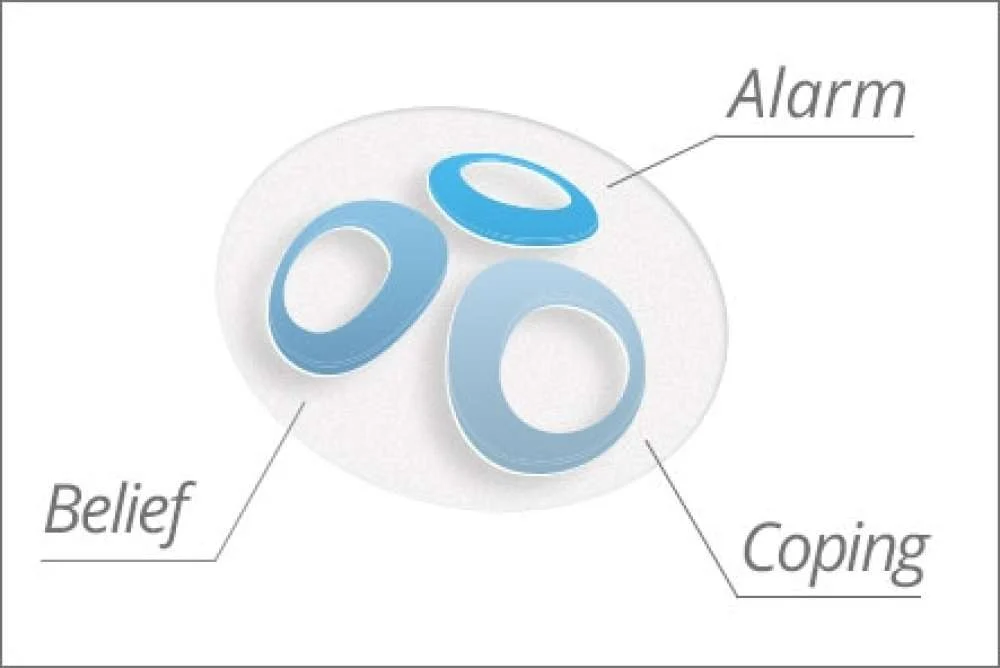
Anxiety disorders currently represent the most prevalent group of mental health conditions globally, affecting an estimated 301 million people according to the World Health Organization (WHO). While anxiety is a fundamental biological response designed to protect humans from environmental threats, the modern landscape has seen a significant rise in the frequency of "false alarms," where the body’s internal security system responds to perceived rather than actual danger. To address this growing public health concern, clinical frameworks such as the ABC model—comprising Alarm, Belief, and Coping—have been developed to provide individuals with a structured methodology for recognizing, monitoring, and managing their emotional responses. By utilizing tools like the ABCtracker™, patients and healthcare providers can transform abstract feelings of unease into quantifiable data points, facilitating more effective therapeutic interventions.
The Biological and Psychological Foundation of Anxiety
To understand the ABC model, one must first distinguish between functional anxiety and anxiety disorders. In its healthiest form, anxiety is an evolutionary survival mechanism. When a threat is detected, the brain’s amygdala triggers the sympathetic nervous system, releasing a surge of adrenaline and cortisol. This "fight or flight" response increases heart rate, sharpens senses, and prepares the body for immediate action. However, for the approximately 40 million adults in the United States living with anxiety disorders, this system becomes hypersensitive.
The ABC framework serves as a pedagogical tool to deconstruct this complex physiological process. Much like the foundational literacy of the alphabet allows for complex communication, the ABCs of anxiety provide the literacy required for emotional regulation. Without these tools, individuals often find themselves overwhelmed by symptoms without understanding the underlying mechanics of their distress.
A Stands for Alarm: The Physiological Trigger
The "Alarm" phase represents the initial somatic or psychological reaction to a stimulus. In a clinical context, alarms are instinctive responses to "triggers"—events, thoughts, or environments that the brain perceives as threatening. For an individual with a balanced nervous system, the alarm sounds only in the presence of legitimate danger, such as a near-miss traffic accident. For those with generalized anxiety disorder (GAD) or panic disorder, the alarm may be triggered by benign situations, such as a pending email, a social gathering, or even a specific facial expression from a peer.
Research into the neurobiology of anxiety suggests that the "extra-sensitive alarm" mentioned in clinical literature is often the result of a hyperactive amygdala paired with a less responsive prefrontal cortex. This imbalance means the body reacts before the rational brain can evaluate the threat level. By identifying the specific sensations of the alarm—such as a racing heart, shallow breathing, or "butterflies" in the stomach—individuals can begin to map their triggers. Chronological tracking of these alarms is the first step in identifying patterns that lead to chronic stress.
B Stands for Belief: The Cognitive Architecture of Anxiety
Once an alarm is triggered, the brain moves almost instantaneously to the "Belief" phase. This is the cognitive appraisal of the situation. According to the tenets of Cognitive Behavioral Therapy (CBT), it is not the event itself that causes anxiety, but the interpretation of that event. When the body’s alarm sounds, the brain seeks a reason for the physical discomfort, often leading to "cognitive distortions."
Common maladaptive beliefs include catastrophizing (assuming the worst possible outcome), overgeneralization (viewing a single negative event as a never-ending pattern of defeat), and "mind reading" (assuming others are thinking negatively of you). For a person with high anxiety, these beliefs function as an internal narrative that validates the false alarm. For example, if the alarm is triggered by a supervisor asking for a meeting, the belief might be "I am going to be fired." This belief then reinforces the alarm, creating a feedback loop that sustains the state of high arousal.
Clinical data suggests that the "Belief" stage is where the most significant therapeutic progress can be made. By recognizing that these thoughts are often an "incorrect sense of reality," patients can work with psychologists to challenge the validity of their internal narratives. The goal is to move from automatic, fear-based beliefs to evidence-based assessments of the situation.
C Stands for Coping: Adaptive vs. Maladaptive Strategies
The final component of the framework is "Coping," which refers to the actions taken in response to the alarm and belief. Coping mechanisms are categorized into two distinct types: adaptive and maladaptive. Adaptive coping strategies are those that reduce anxiety in the long term and promote resilience. These include mindfulness, deep breathing exercises, cognitive reappraisal, and seeking social support.
Conversely, maladaptive coping strategies are behaviors that provide short-term relief but exacerbate the problem over time. Avoidance is the most common maladaptive strategy; by avoiding the trigger, the individual reinforces the belief that the situation is dangerous, thereby making the next alarm even more intense. Other maladaptive behaviors include substance use, compulsive checking, and social withdrawal.
The introduction of the ABCtracker™ represents a shift toward data-driven mental health management. By documenting the Alarm, the Belief that followed, and the Coping strategy employed, users can provide their healthcare professionals with a clear "map" of their anxiety. This allows for a more personalized approach to treatment, moving away from generalized advice and toward specific behavioral modifications.
Chronology of the ABC Framework and Its Evolution
The conceptual roots of the ABC model can be traced back to the mid-20th century with the development of Rational Emotive Behavior Therapy (REBT) by Albert Ellis and later Cognitive Therapy by Aaron Beck. Ellis’s original ABC model (Antecedent, Belief, Consequence) focused heavily on how irrational beliefs lead to emotional consequences.
- 1950s-1960s: Albert Ellis introduces the ABC model as a cornerstone of REBT, emphasizing that individuals are not disturbed by things, but by the view they take of them.
- 1970s-1980s: Aaron Beck expands these concepts into Cognitive Behavioral Therapy (CBT), focusing on identifying "automatic thoughts."
- 1990s-2000s: The rise of "third-wave" therapies, such as Acceptance and Commitment Therapy (ACT), begins to incorporate mindfulness into the coping phase.
- 2010s-Present: The digitization of mental health leads to the creation of tracking tools like the ABCtracker™. These tools transition the framework from the therapist’s office to the user’s smartphone, allowing for real-time data collection.
This evolution reflects a broader trend in medicine toward "patient-centered care," where the individual is empowered with the tools to monitor their own health metrics between clinical visits.
Supporting Data: The Economic and Social Impact of Anxiety
The necessity for frameworks like the ABCs of Anxiety is underscored by the significant socioeconomic burden of untreated anxiety disorders. Data from the Journal of Clinical Psychiatry indicates that the total economic cost of anxiety disorders in the U.S. exceeds $42 billion annually, nearly one-third of the country’s total mental health bill. This includes costs associated with psychiatric and non-psychiatric medical treatment, as well as lost workplace productivity.
Furthermore, a 2022 study by the Lancet revealed that the COVID-19 pandemic led to a 25.6% increase in the prevalence of anxiety disorders worldwide. This surge has overwhelmed traditional mental health systems, leading to a "treatment gap" where the demand for therapy far exceeds the number of available practitioners. In this environment, self-monitoring tools and educational frameworks become essential "first-line" resources that can help stabilize individuals while they await professional care.
Expert Perspectives and Clinical Implications
Mental health professionals emphasize that while the ABC model is highly effective, it is most powerful when used as a collaborative tool. Dr. Sarah Jenkins, a clinical psychologist specializing in anxiety disorders, notes that "the primary challenge for many patients is the ‘automaticity’ of their responses. They feel the heart race and they are already in a state of panic before they’ve even realized what the trigger was. Tools like the ABCtracker™ force a pause in that cycle. They require the patient to engage their prefrontal cortex to analyze what is happening, which in itself is a form of therapeutic intervention."
Healthcare providers also highlight the importance of distinguishing between "normal" anxiety and "disordered" anxiety. The goal of the ABC model is not to eliminate anxiety entirely—which would be biologically dangerous—but to calibrate the alarm system so that it responds appropriately to the environment.
Broader Impact and Future Outlook
The integration of the ABCs of Anxiety into mainstream health literacy has the potential to transform public health outcomes. As society moves toward a more proactive approach to mental wellness, the ability to "read" one’s own emotional state becomes as vital as understanding physical nutrition or exercise.
The future of anxiety management likely lies in the intersection of cognitive frameworks and wearable technology. Future iterations of tracking tools may automatically detect the "Alarm" phase through heart rate variability (HRV) or skin conductance sensors, prompting the user to log their "Beliefs" and choose an "Adaptive Coping" strategy in real-time.
In conclusion, mastering the ABCs of anxiety is more than a simple exercise in self-awareness; it is a rigorous clinical approach to reclaiming control over the body’s most basic survival instincts. By deconstructing the Alarm, challenging the Belief, and refining the Coping mechanism, individuals can move from a state of reactive distress to one of proactive management. As mental health challenges continue to rise globally, the widespread adoption of these fundamental tools remains a critical priority for clinicians, educators, and the public at large.