 admin
admin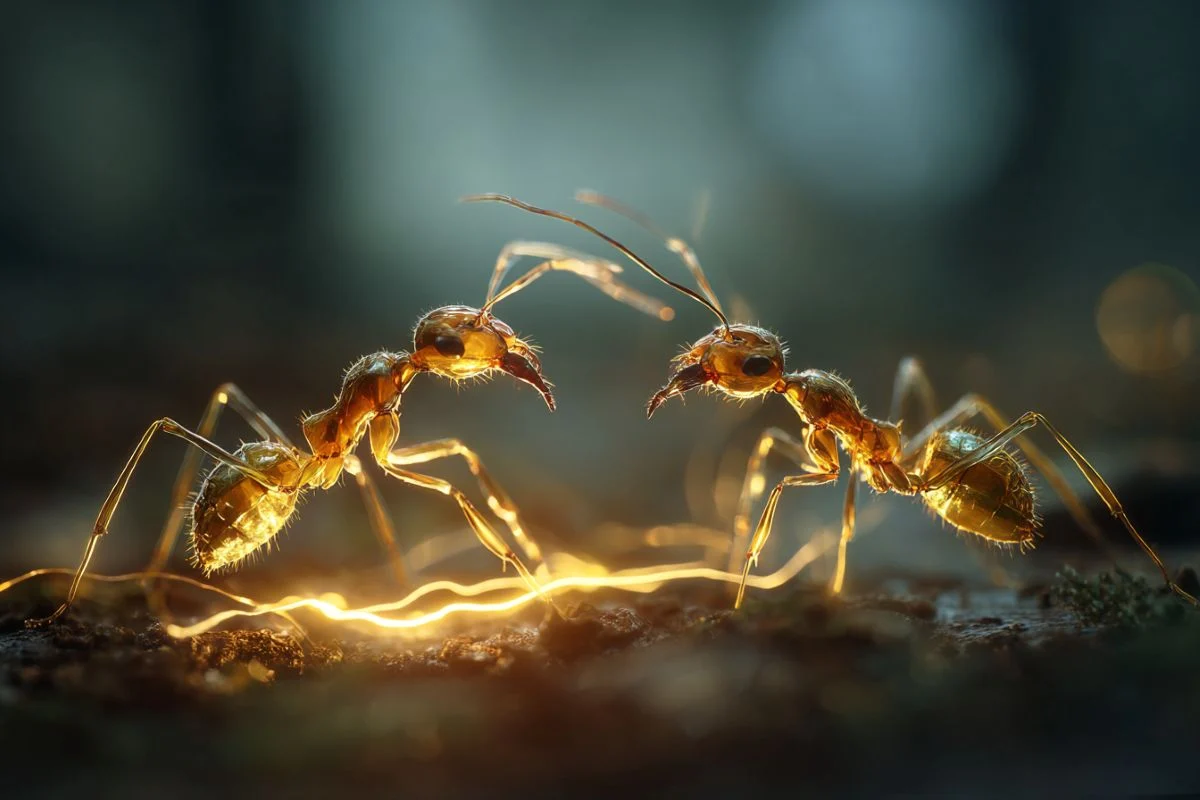
New groundbreaking research from Rockefeller University has fundamentally reshaped our understanding of how ant colonies manage their intricate social structures, revealing that the ability of ants to distinguish between nestmates and outsiders is a highly flexible, learned behavior rather than a rigid genetic program. This paradigm shift, detailed in a study published in Current Biology, demonstrates that while ants possess an intrinsic "sense of self" rooted in their own genotype, they can dynamically update their social recognition templates through repeated exposure to novel odors. This remarkable plasticity allows for the integration of outsiders into a colony, provided there is consistent contact to sustain this acquired tolerance, challenging long-held assumptions about the fixed nature of ant social identification.
The Intricate World of Ant Social Structures
Ants, found in nearly every terrestrial habitat on Earth, represent one of evolution’s most successful social experiments. With over 12,000 known species, these eusocial insects live in highly organized colonies that can range from a few dozen individuals to millions. The success of these "superorganisms" hinges on an exquisitely fine-tuned system of cooperation, division of labor, and, critically, kin recognition. The ability to instantly identify who belongs to the colony and who poses a potential threat – be it a rival, a parasite, or a competitor for resources – is paramount for survival. Historically, this recognition system was largely believed to be hardwired, an innate genetic program that dictated an ant’s response to others based on a fixed chemical signature.
Ants communicate primarily through chemical cues, specifically cuticular hydrocarbons (CHCs), which are waxy substances coating their exoskeleons. These CHCs form a complex "colony odor" that acts like a chemical barcode, unique to each colony. Nestmates share a similar CHC profile, which allows them to recognize each other. Outsiders, bearing different CHC profiles, are typically met with aggression, ranging from biting to outright killing. This chemical language is vital for maintaining colony integrity, preventing resource theft, and defending against social parasites that attempt to infiltrate and exploit the colony’s resources.
Unveiling the Flexibility of Ant Identity
The research team, led by Daniel Kronauer, head of the Laboratory of Social Evolution and Behavior at Rockefeller University, and postdoctoral associate Tiphaine Bailly, sought to challenge the prevailing view of this rigid system. "We’ve known for a long time that ants are very good at distinguishing between an ant from a different colony and one of their own, but less was known about how flexible this behavior is," Kronauer explained. "This work is a first step toward figuring out, on a behavioral level, how ants make that distinction, and it will help inform future experiments into the neurobiological underpinnings of ant society."
To investigate this flexibility, the researchers turned to a unique model species: the clonal raider ant, Ooceraea biroi. This species is particularly well-suited for such studies because it reproduces asexually, allowing scientists to generate genetically identical individuals and colonies. This unparalleled experimental control enabled the team to create mixed-genotype colonies and precisely study how ants learn, adapt, and update their social cues in a controlled environment.
Chronology of Discovery and Experimental Design
The study involved a meticulous experimental design that unfolded in several key stages:
- Establishing Genetic Baselines: The researchers first established multiple genetically distinct clonal lineages of Ooceraea biroi. Chemical analyses confirmed that while these lineages shared the same basic chemical compounds, each possessed a distinct scent profile due to varying ratios of these compounds.
- Baseline Aggression Tests: To establish a baseline for recognition and aggression, single ants from foreign genotypes were introduced into standardized colonies. Observations consistently showed that ants aggressively attacked individuals bearing a foreign genetic signature, confirming the existence of a robust discrimination mechanism.
- Cross-Fostering and Exposure Therapy: The pivotal phase involved a cross-fostering design. Young ants, whose chemical profiles were still developing and less pronounced, were placed into foreign colonies. This "chronic exposure" was designed to test whether prolonged contact could alter their social recognition.
- Assessing Learned Tolerance: After one month of living among foreign nestmates, these cross-fostered ants were chemically analyzed and behaviorally tested. The results were striking: the foster ants’ chemical profiles had shifted to resemble those of their adoptive colonies, and, crucially, they showed no aggression toward their foster nestmates when tested separately. This demonstrated that prolonged exposure could indeed reshape both an ant’s chemical identity and its social behavior.
- Intrinsic Sense of Self: While learned tolerance was evident, the study also revealed a fascinating limit. Even ants separated from their genetic kin since the egg stage still accepted ants with their own genotype, regardless of their foster colony experience. This suggests an enduring, intrinsic recognition of their genetic "self" that experience can broaden but not entirely overwrite.
- The Fragility of Tolerance: To understand the dynamics of tolerance maintenance, researchers then severed contact between the integrated newcomers and their foster colonies. If contact was cut off for approximately a week, aggression from the foster colony returned. Simultaneously, the newcomer ants’ chemical profiles gradually drifted back towards their original genetic signature, eventually leading to their re-identification as outsiders and subsequent attack.
- Sporadic Exposure for Maintenance: In a crucial distinction, the study found that while chronic exposure was necessary to establish tolerance initially, even brief, occasional encounters were sufficient to maintain that tolerance once it had been established. This suggested a longer-lasting olfactory memory rather than short-lived sensory desensitization, as ants maintained tolerance even after five days of complete separation, significantly longer than typical desensitization effects that fade within hours.
The Ant Colony as a "Social Immune System"
The observed dynamics of learned tolerance in ants bear a striking conceptual resemblance to the human immune system’s function. In biology, the success of complex systems, whether multicellular organisms or highly cooperative societies, relies on the ability to distinguish "self" from "non-self." Just as immune cells must identify and neutralize invading pathogens without attacking the body’s own tissues, ant colonies must recognize their members while repelling social parasites.
The researchers drew a direct parallel to "exposure therapy" in immunology. For instance, allergy patients are often given small, controlled doses of an allergen. Over time, the immune system gradually learns to tolerate the substance instead of mounting a defensive allergic reaction. Similarly, ants, when consistently exposed to foreign colony odors, gradually stop perceiving them as threats. Once this tolerance is established, occasional "booster" encounters are enough to keep the learned recognition active, preventing a return to aggressive behavior.
"It’s a conceptual comparison, of course. At the molecular level, these things work quite differently," Kronauer clarified. "But the evolution of an ant colony is similar to the transition from a single-celled to a multicellular organism, and it is interesting to think about the parallels between major transitions in evolution. These parallels may run deeper than we thought." This analogy highlights the fundamental principles governing self-organizing biological systems, suggesting common evolutionary pressures for robust identity management.
Statements and Reactions from the Research Team
Tiphaine Bailly emphasized the broader significance of the findings: "We knew that ant societies depend on cooperation, and that recognizing who belongs to the colony and who does not is essential. Understanding how ants make this distinction would therefore help us uncover the mechanisms that maintain cooperation in complex societies." Her dedication to understanding these mechanisms underscores the profound implications for evolutionary biology.
Kronauer further elaborated on the future directions of this research: "Now we can combine the neurobiological tools with this behavioral system and image neural activity while an ant encounters a nestmate or a non-nestmate. With this foundation, we can finally begin to ask where learning and adaptation happens in the brain." This paves the way for deeper investigations into the neural circuitry underlying social learning and memory in ants, opening new frontiers in social neuroscience.
Broader Implications and Future Directions
The findings from Rockefeller University have significant implications across several scientific disciplines:
- Evolutionary Biology and Sociality: This study offers crucial insights into the evolutionary advantages of flexible recognition systems. In dynamic environments, colonies might need to integrate new members (e.g., orphaned broods, workers from struggling colonies) or adapt to changing chemical landscapes. A rigid, genetically predetermined system would limit such adaptability, potentially hindering survival. This flexibility suggests a more nuanced understanding of how cooperation is maintained and how social groups evolve in the face of environmental variability.
- Neuroscience of Social Learning: The discovery that ants can learn and update their social templates throughout adulthood provides a powerful model system for studying the neurobiological basis of social learning. By pinpointing the brain regions and neural circuits involved in processing social odors and mediating learned tolerance, researchers can gain a deeper understanding of how complex social memories are formed and maintained in simpler brains. This could offer comparative insights into social cognition across the animal kingdom.
- Chemical Ecology: The study further illuminates the sophisticated role of cuticular hydrocarbons in ant communication and social organization. It highlights not just their function as static identifiers but as dynamic chemical signals that can be learned, modified, and used to negotiate social boundaries. This dynamic interaction between chemical profile and behavioral response adds another layer of complexity to the field of chemical ecology.
- Robotics and Artificial Intelligence: Understanding the principles of decentralized, flexible identity management in ant colonies could inspire new designs for swarm robotics and distributed AI systems. Algorithms that allow individual units to learn and adapt their "identity" or group affiliation based on local interactions could lead to more robust and adaptable collective intelligence.
In essence, the study overturns the notion of ant colony identity as a fixed, unchangeable trait. Instead, it paints a picture of a sophisticated "social immune system" that is capable of remarkable adaptation. While an ant retains an inherent understanding of its genetic lineage, its social world is continuously shaped by experience and interaction. This delicate balance between innate recognition and learned plasticity allows ant colonies to maintain cohesion, defend against threats, and potentially adapt to new social challenges, cementing their status as some of the most complex and fascinating societies on Earth. The next frontier will undoubtedly involve delving into the neural mechanisms that enable these tiny creatures to navigate such a rich and dynamic social landscape.
Key Questions Answered:
- Q: Can an ant "forget" who its family is?
- A: Not exactly. While ants can learn to accept "strangers" through constant contact and incorporate them into their social circle, they never lose the internal biological template for their own genetic kin. Their intrinsic "sense of self" remains.
- Q: How is an ant colony like the human immune system?
- A: Both systems employ a form of "exposure therapy." Just as controlled, small doses of an allergen can train the human immune system not to mount an attack, constant exposure to a foreign scent trains an ant colony to gradually stop perceiving an outsider as a threat and instead integrate them.
- Q: What happens if an ant leaves the colony for a week?
- A: If an ant that has learned to be tolerated by a foster colony is separated for about a week, it can lose its "visa." Social tolerance requires consistent chemical reinforcement. Without this contact, the ant’s chemical profile drifts back toward its original form, and the foster nestmates will likely revert to treating it as an intruder and attack it.
- Q: Is initial exposure different from maintaining tolerance?
- A: Yes, significantly. Establishing tolerance in an ant colony requires chronic, prolonged exposure to the foreign individual. However, once that tolerance is established, it can be maintained by much less frequent, even sporadic, contact. This suggests distinct underlying mechanisms for the acquisition and maintenance phases of social learning.
About this Social Neuroscience Research News
Author: Katherine Fenz
Source: Rockefeller University
Contact: Katherine Fenz – Rockefeller University
Image: The image is credited to Neuroscience News
Original Research: Open access.
“Tolerance toward foreigners in ants requires chronic exposure for establishment but only sporadic exposure for maintenance” by Tiphaine P.M. Bailly, Matteo Rossi, Stephany Valdés-Rodríguez, Thomas Schmitt, Erik T. Frank, Daniel J.C. Kronauer. Current Biology
DOI:10.1016/j.cub.2026.02.041