admin
admin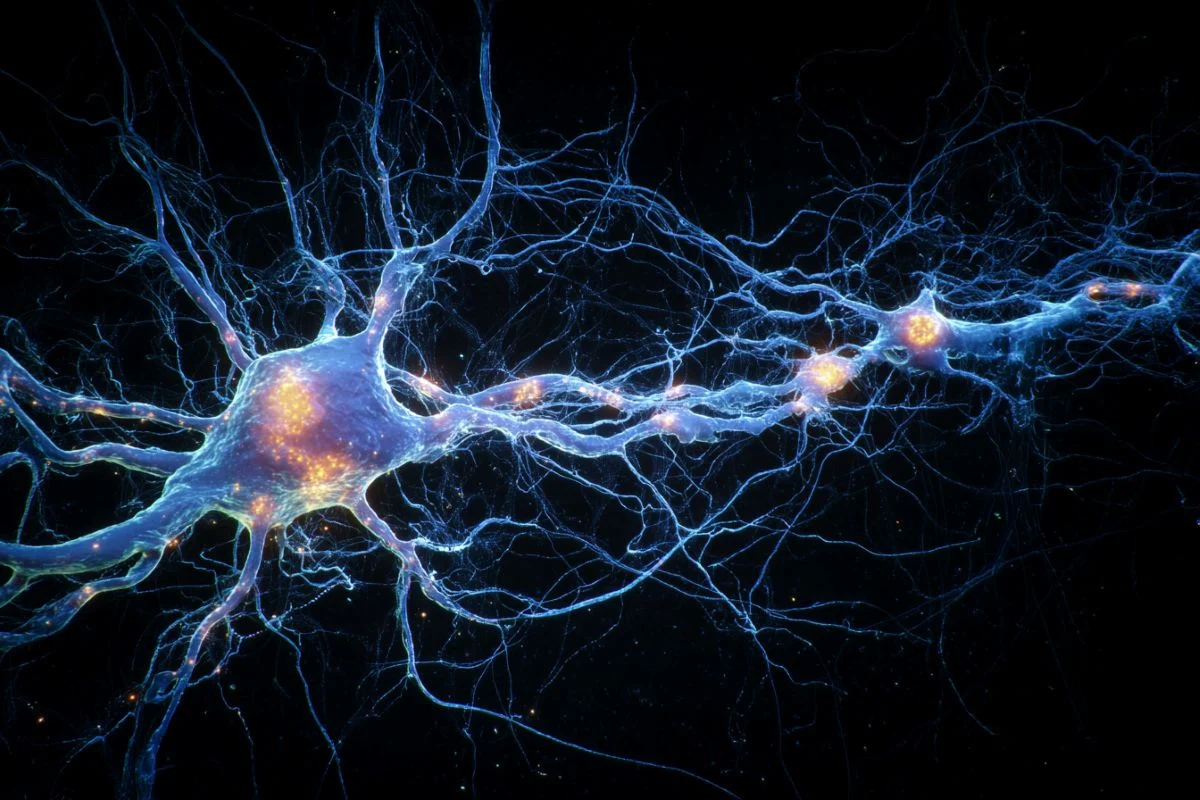
A landmark study has fundamentally reshaped our understanding of early human development, overturning a long-held biological dogma concerning when embryonic cells "decide" their future roles. Scientists at the University of Utah Health and the University of California San Diego have discovered that neural crest cells, critical precursors to the peripheral nervous system and many other tissues, commit to their specific identities weeks earlier than previously thought, even before they migrate from their original position within the embryonic neural tube. This paradigm-shifting revelation, published in the prestigious journal Nature, carries profound implications for our comprehension of congenital diseases, childhood cancers, and the crucial importance of early prenatal care.
For decades, the prevailing belief in developmental biology was that pluripotent embryonic cells, particularly neural crest cells, maintained their flexibility and only adopted their specialized functions after journeying to their final destinations throughout the nascent body. This new research, however, leveraging an innovative "mosaic barcode" system to meticulously retrace the genetic histories of adult cells, paints a dramatically different picture. It demonstrates that the blueprints for vital components of our nervous system are laid down far earlier in gestation, a discovery that could redefine therapeutic approaches for a range of developmental disorders.
A Challenge to Established Dogma: The Early Decision-Making of Neural Crest Cells
The human body is an intricate network of specialized cells, each performing a unique function. At the heart of this complexity lies the process of embryonic development, where a single fertilized egg transforms into a multi-cellular organism through an orchestrated sequence of cell division, migration, and differentiation. Among the most remarkable and versatile cell populations in early development are neural crest cells. These cells emerge from the neural tube – the embryonic precursor to the brain and spinal cord – and embark on extensive migratory journeys, ultimately giving rise to an astonishing array of tissues, including the peripheral nervous system (PNS), parts of the skull and face, pigment cells (melanocytes), and various connective tissues.
The long-standing scientific consensus held that these highly migratory neural crest cells remained largely undifferentiated, or multipotent, during their migration. The prevailing model suggested that environmental cues encountered at their destination sites were the primary drivers dictating their ultimate fate. For instance, a neural crest cell migrating to the gut might become a neuron of the enteric nervous system, while another moving to the skin might become a melanocyte. The "decision-making" was thought to be a late-stage event, post-migration.
However, the team led by Xiaoxu Yang, Ph.D., at University of Utah Health, and Keng Ioi Vong, Ph.D., and Joseph Gleeson, M.D., at the University of California San Diego, has decisively challenged this dogma. Their findings indicate that the commitment to specific neural crest fates, particularly for components of the peripheral nervous system, occurs while these cells are still nestled within the embryonic neural tube, weeks before their outward migration begins. This means that the intrinsic programming of these cells is established much earlier, suggesting a more predetermined developmental trajectory than previously conceived.
Unlocking Human Developmental Secrets: The Mosaic Barcode System
Studying human embryonic development directly presents significant ethical and practical challenges. Much of our knowledge has traditionally come from model organisms like mice, chickens, and zebrafish, whose developmental processes, while often analogous, can differ significantly from humans in crucial aspects. Recognizing this limitation, the researchers developed and employed a sophisticated methodology termed "mosaic barcode analysis" to delve into the developmental histories of human adult cells.
The brilliance of this technique lies in its exploitation of a fundamental biological process: DNA replication. Every time a cell divides, its DNA is copied. This copying process is remarkably accurate but not entirely flawless. Tiny, spontaneous changes, known as somatic mutations or "typos," are inevitably introduced into the DNA sequence. Crucially, these mutations are then passed on to all subsequent daughter cells, creating a unique genetic signature or "barcode" within a cell lineage.
Imagine a family tree where each new generation inherits specific traits (mutations) from its ancestors. By meticulously analyzing the patterns of shared mutations across different adult cells and tissues, scientists can reconstruct their ancestral relationships and trace them back to their common progenitor cells in the early embryo. This "mosaic barcode" effectively allows researchers to look back in time, providing an unprecedented window into the otherwise inaccessible early stages of human development.
Dr. Yang emphasized the power of this novel approach: "We can use this mosaic barcode analysis system to really see a lot of human-specific, early developmental trajectories that nobody has seen before." This human-centric approach circumvented the limitations of relying solely on animal models, allowing the team to uncover developmental events that might be uniquely human and critical for understanding human health and disease.
Tracing Early Commitments: Sensory and Sympathetic Ganglia
The research specifically focused on the origins of two vital types of nerve clusters found adjacent to the spine: sensory ganglia and sympathetic ganglia. Sensory ganglia are crucial for relaying sensory information, such as touch, pain, temperature, and proprioception (body position), from the periphery to the central nervous system. Sympathetic ganglia, on the other hand, are integral components of the autonomic nervous system, responsible for regulating involuntary bodily functions like heart rate, breathing, digestion, and the "fight or flight" response.
Using their mosaic barcode method on human tissues, the researchers discovered compelling evidence that the cells destined to become sensory ganglia and those destined to become sympathetic ganglia originated from distinct populations of neural crest cells. Crucially, this divergence occurred before these cells migrated away from the neural tube. This finding directly contradicts the prevailing view that such commitment happens much later, during or after migration.
To further validate and visualize these observations, the team complemented their human studies with experiments on model organisms like mice and quail embryos. These animal models allowed for real-time monitoring of cell movements and developmental processes. They observed that after leaving the neural tube, neural crest cells dispersed both rostrally (towards the head) and caudally (towards the tail) in a highly organized and carefully choreographed manner. This migration pattern was guided by specific molecular signals, and the precise sequence of these events was found to be critical for the neural crest cells to mature into their respective subtypes of ganglia that innervate different regions of the body.
The confluence of evidence from both human genetic lineage tracing and live imaging in animal models solidified their revolutionary conclusion. Dr. Vong succinctly summarized the core finding: "Most neural crest cells commit to their future identity before they even leave the neural tube." This implies a much earlier and more intrinsic determination of cell fate than previously understood, shifting the focus of developmental decision-making from environmental cues at the destination to internal programming within the neural tube itself.
Chronology of a Discovery: Shifting the Developmental Timeline
The journey of this discovery can be understood through a chronological lens of scientific inquiry. For decades, the hypothesis of post-migration commitment for neural crest cells stood largely unchallenged due to technological limitations in observing human development at such a granular level. The early 2000s saw advancements in lineage tracing using genetic markers in animal models, but direct human evidence remained elusive.
The development of the "mosaic barcode" system by Dr. Gleeson, Dr. Yang, and their colleagues represents a significant technological leap. This system allowed them to bypass the ethical constraints of direct human embryonic observation by retrospectively analyzing genetic "footprints" in adult human cells. The initial application of this method to investigate the origins of sensory and sympathetic ganglia marked the turning point.
The first indication of early commitment emerged from the barcode analysis of human tissues, revealing distinct progenitor populations. This groundbreaking insight then propelled further experimental validation in mice and quail, where the team could visually confirm the migration patterns and the guiding signals that reinforce this early commitment. This iterative process, moving from human genetic evidence to animal model validation, built an unassailable case for overturning the long-standing dogma. The publication of these findings in Nature solidified their impact, marking a new chapter in developmental biology.
Profound Implications for Disease Understanding and Therapeutic Development
The implications of this discovery are far-reaching, particularly in the fields of medicine and public health. By shifting the timeline of cellular commitment, the research opens new avenues for understanding and potentially treating a variety of congenital disorders and childhood cancers.
Congenital Nerve Disorders: Many birth defects and neurological conditions arise from errors during early embryonic development. If neural crest cells are already "pre-programmed" within the neural tube, it suggests that the origins of some congenital nerve disorders could be traced back to much earlier stages of pregnancy than previously considered. This could lead to earlier diagnostic capabilities and, crucially, the development of more targeted and effective interventions. Understanding when and where a cell’s fate is sealed provides critical windows for intervention, potentially preventing the manifestation of debilitating conditions.
Childhood Cancers: Neural crest cells are known to be the progenitors of several aggressive childhood cancers, including neuroblastoma and neurofibromatosis. Neuroblastoma, for instance, is a cancer of immature nerve cells that often originates in the adrenal glands but can arise in nerve tissue throughout the body. Neurofibromatosis causes tumors to grow on nerves. Dr. Yang highlighted this connection, stating, "If they’re determined at a relatively early stage, we can design more specific treatments." Knowing that the cancerous cells’ identity was locked in weeks earlier means that therapies could potentially target these specific early developmental pathways or cellular states, rather than attempting to reverse a fully differentiated and malignant cell. This precision medicine approach holds immense promise for improving outcomes for young patients.
Personalized Medicine: In the future, this understanding could contribute to personalized medicine. If an individual’s unique embryonic "barcode" could be deciphered or predicted, it might offer insights into predispositions for certain developmental anomalies or cancers. While speculative, the fundamental knowledge of early cell fate determination is a necessary precursor for such advanced applications.
Rethinking Prenatal Health and Public Health Guidance
This research profoundly reinforces the concept of a "critical window" during early pregnancy, emphasizing that the earliest stages of embryonic development are extraordinarily sensitive to external factors. The formation and early commitment of neural crest cells occur within the first few weeks after conception, often before a woman even realizes she is pregnant.
This underscores the vital importance of maintaining optimal health and nutrition even in the preconception period and immediately after conception. Dr. Yang cautioned, "We know the neural crest cells are forming a lot of very important organs and tissues in our body. If there are environmental or behavioral factors that affect this procedure, it might be affecting the final outcomes very early on."
The findings specifically amplify the long-standing public health recommendation for women of childbearing age to take folic acid supplements. Folic acid is crucial for proper neural tube development, and deficiencies are linked to severe birth defects like spina bifida and anencephaly. The new research suggests that since the "blueprint" for the entire peripheral nervous system is being locked in almost immediately after conception, ensuring adequate folic acid intake and avoiding harmful environmental exposures during this period is even more critical than previously understood. This early commitment means that detrimental influences can have lasting consequences on fundamental cellular programming, setting the stage for developmental issues much earlier in the gestational timeline.
Future Directions and the Evolving Landscape of Developmental Biology
The study marks a significant milestone but also opens numerous avenues for future research. Scientists can now explore whether this early commitment pattern applies to other neural crest derivatives, such as cranial neural crest cells that form facial bones and cartilage, or melanocytes. The mosaic barcode system itself can be refined and applied to unravel the developmental histories of other complex tissues and organs.
Furthermore, this discovery reignites debates within developmental biology regarding the interplay between intrinsic cellular programming and extrinsic environmental cues. While this study highlights early intrinsic commitment, the role of environmental signals in guiding migration and fine-tuning differentiation undoubtedly remains crucial. Future research will likely explore the precise molecular mechanisms that govern these early commitment decisions within the neural tube and how these interact with later environmental signals.
The work also underscores the growing importance of human-specific developmental studies. While animal models remain invaluable, the unique aspects of human development, particularly those that may contribute to human-specific diseases, necessitate innovative approaches like the mosaic barcode system. This research paves the way for a deeper, more accurate understanding of how we are formed, offering unprecedented insights into the earliest moments of life and promising new strategies for preventing and treating devastating diseases.
In conclusion, the groundbreaking research from the University of Utah Health and the University of California San Diego has not only overturned a decades-old dogma but has also provided an invaluable new lens through which to view human embryonic development. By revealing the early commitment of neural crest cells, this study transforms our understanding of when fundamental biological decisions are made, with profound implications for medical science, therapeutic innovation, and public health guidance for generations to come.
About this Neurodevelopment Research News
Author: Julie Kiefer
Source: University of Utah
Contact: Julie Kiefer – University of Utah
Image: The image is credited to Neuroscience News
Original Research: Closed access.
“Developmental organization of sensory and sympathetic ganglia” by Keng Ioi Vong, Yanina D. Alvarez, Qingquan Zhang, Jiaming Weng, Geoffroy Noel, Scott T. Barton, Changuk Chung, Robyn Howarth, Naomi Meave, Fiza Jiwani, Sai B. Patarlapalli, Fenyong Yao, Fugui Zhu, Chelsea Barrows, Arzoo Patel, Jian Xiong Wang, Neil C. Chi, Stephen F. Kingsmore, Melanie D. White, Xiaoxu Yang (杨晓旭) & Joseph G. Gleeson. Nature
DOI: 10.1038/s41586-026-10313-0