admin
admin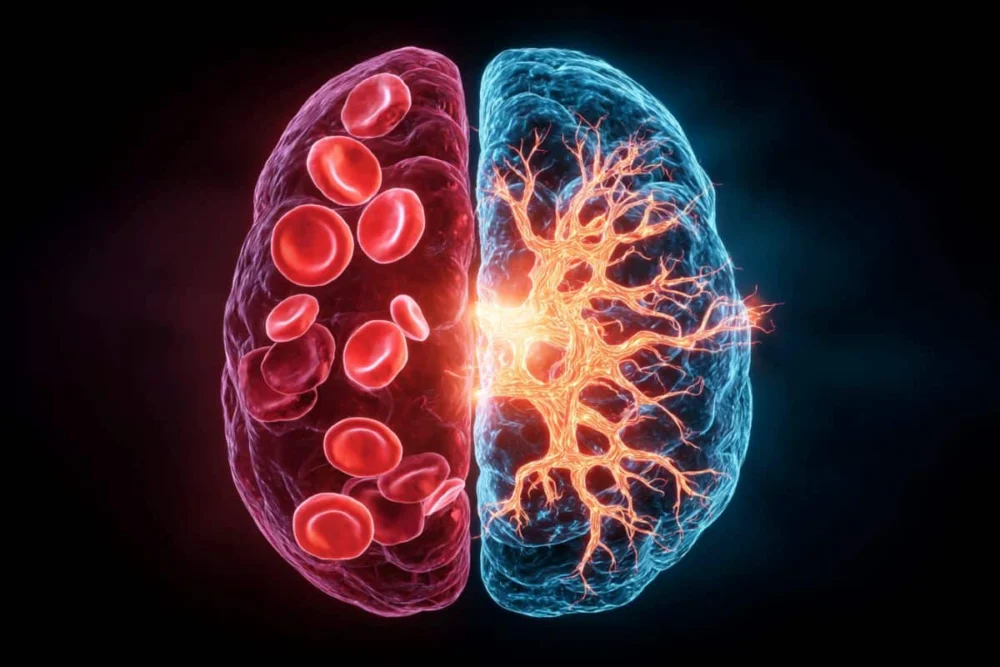
Sickle cell disease (SCD), traditionally understood primarily as a severe blood disorder, has a far more pervasive impact on human physiology than previously recognized, fundamentally altering the very architecture and function of the brain. New groundbreaking research from Carnegie Mellon University’s Wood Neuro Research Group provides compelling, measurable evidence that the brains of individuals living with SCD undergo significant "rewiring" to compensate for the chronic oxygen deprivation inherent to the disease. This adaptive reorganization allows patients to maintain higher cognitive functions, such as decision-making, even as their brains are forced to work substantially harder, recruiting additional support from attention networks. The findings underscore an urgent need for specialized neurological care for adults with SCD, challenging the conventional, hematology-centric approach to treatment.
Understanding Sickle Cell Disease: A Complex Genetic Challenge
Sickle cell disease is a lifelong, inherited blood disorder caused by a mutation in the beta-globin gene, which is responsible for producing part of hemoglobin, the protein in red blood cells that carries oxygen. This genetic defect leads to the production of abnormal hemoglobin S (HbS), which, under certain conditions (like low oxygen), causes red blood cells to become rigid, sticky, and crescent-shaped – like a sickle. These "sickled" cells struggle to pass through small blood vessels, leading to blockages (vaso-occlusion) that deprive tissues and organs of vital oxygen and nutrients.
The consequences of SCD are profound and wide-ranging. Patients experience chronic pain crises, anemia, increased risk of stroke, acute chest syndrome, kidney failure, and damage to virtually every organ system. Globally, SCD affects millions, particularly individuals of African, Mediterranean, South Asian, and Middle Eastern descent, making it a significant public health challenge with considerable healthcare disparities. While significant advancements have been made in managing the hematological aspects of the disease, particularly in pediatric care, its neurological impact in adults has often been overlooked or underestimated, partly due to the brain’s remarkable compensatory abilities.
The Research Breakthrough: Beyond Functional Connectivity
Previous neuroimaging studies had hinted at altered brain function in adults with SCD, often using methods like functional connectivity. Functional connectivity measures the statistical dependencies or correlations between brain regions, showing that different areas activate together or in sequence. While informative, this method has limitations; it cannot determine the directionality of information flow or the causal influence one network exerts over another. Understanding this directional influence is critical to deciphering how the brain adapts to chronic conditions.
The Wood Neuro Research Group’s study, published in Human Brain Mapping, addressed this gap by employing a more sophisticated analytical approach: effective connectivity, specifically utilizing Granger causality (GC) analysis. Granger causality, originally developed as an econometric tool to analyze causal relationships between economic time series, has found powerful applications in neuroscience. It allows researchers to determine if past values of one brain region’s activity can predict the future values of another, thereby inferring directional influence and information flow. This method, combined with ultra-high-field 7T MRI – which offers superior spatial resolution and signal-to-noise ratio compared to standard clinical MRI – provided an unprecedented level of detail into the brain’s operational dynamics.
Nahom Mossazghi, a biomedical engineering Ph.D. student and the study’s first author, explained the core physiological challenge: "Red blood cells that carry oxygen to the brain are altered by the disease, resulting in reduced oxygen delivery to all regions of the brain and long-term changes in how it functions." He emphasized that "the brain actively recruits other regions to help process information, which we do not see in people without the disease." The study involved 51 adult patients with SCD and 44 age-, sex-, and race-matched healthy controls, providing a robust dataset for comparative analysis.
The Brain’s Ingenious Adaptation: Rewiring for Survival
The central finding of the research is that the brain in SCD patients doesn’t simply function less effectively; it actively reorganizes itself. This "rewiring" is a complex compensatory mechanism designed to maintain cognitive performance despite persistent oxygen shortages. The study meticulously tracked information flow between key resting-state networks, particularly focusing on the executive control network (ECN), and the attention networks.
The ECN is a crucial hub for higher cognitive functions. It’s responsible for complex tasks like decision-making, problem-solving, working memory, and goal-directed behavior. The research revealed that in patients with SCD, the ECN consistently recruits significant support from the brain’s attention networks. These networks, while distinct, work in concert to manage our focus and response to stimuli:
- Dorsal Attention Network (DAN): Primarily involved in goal-directed, top-down attention. This means it helps us maintain focus on a specific task or goal, ignoring distractions.
- Ventral Attention Network (VAN): Involved in stimulus-driven, bottom-up attention. It acts as an "alert system," detecting salient or unexpected events and reorienting our attention.
The study found a fascinating distinction based on disease severity. Patients with milder complications of SCD tended to rely more heavily on the dorsal attention network, essentially "tightening their focus" to maintain cognitive tasks. In contrast, patients more severely impacted by the condition showed a greater reliance on the ventral attention network, suggesting their brains were constantly on alert, reacting and reorienting attention to compensate for unpredictable or more profound deficits. "This shows the brain is compensating for oxygen shortages by reorganizing its network to maintain function," Mossazghi affirmed.
Furthermore, the study quantified this compensatory effort, demonstrating that patients with SCD exhibited a significantly higher magnitude of information flow compared to controls, especially evident at the brain region level. This heightened activity, particularly pronounced in severe SCD subtypes, suggests that their brains are expending considerably more energy and recruiting more resources to achieve the same cognitive output as a healthy brain.
Unmasking Hidden Cognitive Burdens
One of the most critical insights from this research is why cognitive challenges in adults with SCD have often been overlooked. As Sossena Wood, assistant professor of biomedical engineering and senior author of the study, highlighted, "Even if patients seem to function normally, their brain is networked and rewired differently." She explained, "Their task accuracy may match healthy controls, but their behavioral and neural response speed is slower, showing unseen compensation."
This means that while an adult with SCD might complete a cognitive task with the same accuracy as someone without the disease, their brain is doing a considerable amount of extra work behind the scenes. This constant, elevated effort can lead to chronic cognitive fatigue, slower processing speeds, and reduced cognitive reserve, impacting daily life in profound ways, from academic performance and professional productivity to the ability to manage complex personal affairs. The "unseen compensation" can mask a significant underlying neurological burden, making it challenging for both patients and clinicians to recognize the extent of the cognitive impact.
Transforming Patient Care: A Call for Integrated Neurology
Traditionally, SCD care has focused predominantly on children and hematological management. Many regions lack specialized adult SCD clinics, and access to comprehensive, multidisciplinary care remains a significant challenge for adult patients. The current research strongly advocates for a paradigm shift, emphasizing the urgent need for more involved neurological assessment and care for adults living with SCD.
The findings highlight that managing SCD effectively requires more than just addressing blood health; it necessitates understanding and supporting brain health. By identifying the specific brain networks involved in compensation and the distinct ways mild versus severe SCD impacts these networks, clinicians can begin to develop more targeted interventions. For instance, the identification of specific "circuits" working overtime opens the door for non-invasive neuromodulation techniques, such as transcranial magnetic stimulation (TMS) or transcranial direct current stimulation (tDCS), which could potentially alleviate some of the compensatory rewiring, reduce cognitive fatigue, and improve overall cognitive efficiency.
"We hope that this evidence paired with novel therapeutics helps alleviate some of the rewiring caused by the disease," Wood stated, envisioning a future where interventions go beyond managing symptoms to actively improving brain function. The presence of one of the few adult sickle cell disease clinics in Pittsburgh, where this research was conducted, serves as a crucial model for integrated care that can incorporate neurological assessments and interventions into standard treatment protocols.
Addressing Healthcare Equity and Broader Implications
The study also subtly underscores a critical aspect of healthcare equity. Sickle cell disease disproportionately affects underserved communities, and the lack of specialized adult care, particularly neurological support, exacerbates existing health disparities. By raising awareness of the profound cognitive impacts of SCD and advocating for integrated neurological care, this research contributes to the broader effort to achieve health equity for all patients, regardless of their genetic background or socioeconomic status.
Furthermore, the methodological innovation of applying Granger causality, an economic-style analytical approach, to brain networks in SCD holds broader implications. As Mossazghi noted, "This could transform how adults with sickle cell disease are cared for and help us understand how the brain compensates for chronic conditions more broadly." The framework established by this study could be applied to investigate compensatory mechanisms in other chronic conditions characterized by subtle or overt neurological impairments, such as chronic fatigue syndrome, long COVID, or other forms of chronic hypoxia.
Future Research Horizons
Looking ahead, the Wood Neuro Research Group is already planning the next phase of their investigations. They aim to study how these rewired networks respond during specific cognitive tasks, rather than just at rest. By combining advanced MRI with simultaneous electroencephalography (EEG), researchers hope to gain an even more granular understanding of neural circuit dynamics. EEG provides higher temporal resolution, allowing for the capture of real-time brain activity during cognitive challenges, which can complement the excellent spatial resolution of MRI. This combined approach could pinpoint the precise neural circuits that could be targeted with non-invasive interventions, further refining treatment strategies to improve cognitive function and quality of life for individuals with SCD.
This study, supported by NIH and internal funding, marks a significant milestone in SCD research. It is the first to employ Granger causality-based effective connectivity analysis in this patient population, providing a novel framework for understanding brain compensation in adult patients. The findings not only offer crucial insights into how SCD impacts brain network organization and cognitive function but also set the stage for a new era of care that integrates neurological health with hematological management, ultimately aiming to enhance the overall well-being and cognitive vitality of those living with sickle cell disease.