 admin
admin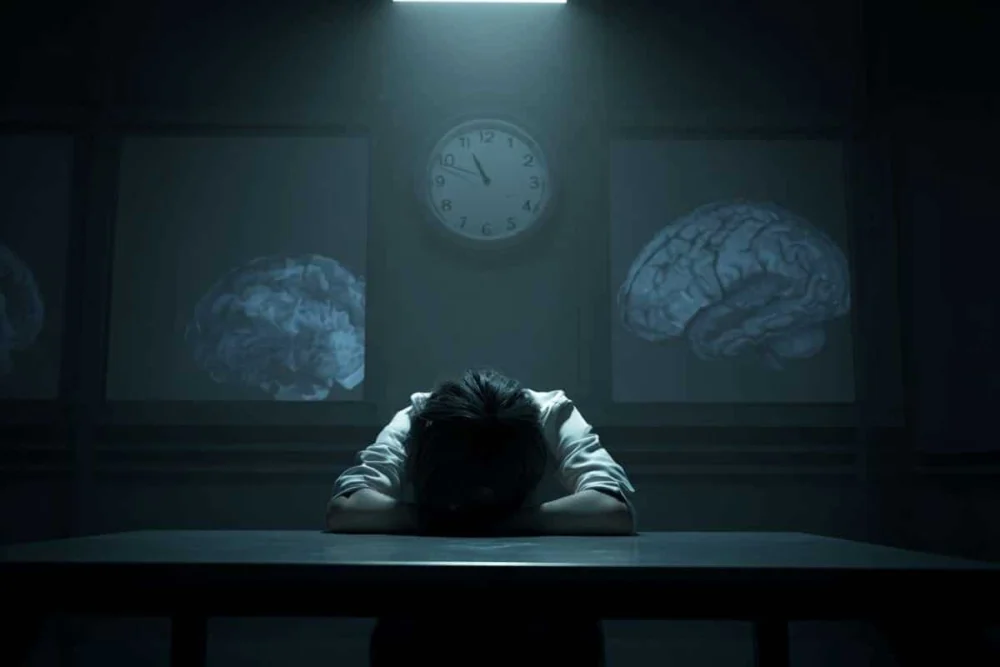
The U.S. criminal justice system, historically attuned to the vulnerabilities posed by intellectual disabilities and intoxication, is facing a critical re-evaluation of its practices following a groundbreaking research synthesis from Iowa State University. This new study reveals that sleep deprivation, a far more ubiquitous condition, profoundly alters an individual’s cognitive functions, significantly impairing their ability to recall events accurately, resist suggestive questioning, and comprehend their legal rights. Researchers contend that being awake for 24 hours can render a suspect more cognitively compromised than being legally intoxicated, substantially increasing the propensity for false confessions simply to terminate a stressful situation. This oversight, the study argues, has significant implications for the fairness and reliability of evidence gathered in investigations, potentially undermining the very foundation of justice.
The Overlooked Factor: Sleep Deprivation’s Cognitive Erosion
For decades, legal psychology has meticulously examined factors influencing the veracity of statements, ranging from eyewitness accounts to victim testimonies and confessions. Efforts have largely concentrated on stable conditions like intellectual disabilities and mental health issues, or acute influences such as momentary stress, alcohol, and drug intoxication. However, the pervasive impact of sleep deprivation has remained conspicuously underexplored, despite its known detrimental effects on cognitive and emotional functioning.
Zlatan Krizan, a professor of psychology at Iowa State University, highlights this critical gap. "Many people who interact with the justice system — from suspects to witnesses — are exhausted, anxious and significantly sleep-deprived," Krizan states. "These factors can affect the statements people give." He emphasizes that while extensive research has illuminated how sleep-related fatigue impairs clear thinking, judgment, and accurate recall, its specific role in determining the evidentiary value of statements and confessions within the legal framework has received scant attention.
The new research synthesis, published in Psychology, Public Policy, and Law, a journal of the American Psychological Association, was co-authored by Krizan, Breanna Curran (a fourth-year doctoral student in social psychology at Iowa State), and Richard Leo (professor of law and psychology at the University of San Francisco School of Law). Their collective work aims to bridge this critical knowledge deficit, providing a comprehensive understanding of the ramifications when fatigued individuals become entangled in the legal process.
The Science of Fatigue: More Impairing Than Intoxication
The study underscores that sleep is not merely a period of rest but a fundamental biological process essential for brain health and optimal behavioral functioning. Disruptions to the quantity or quality of sleep lead to a cascade of impairments affecting attention, emotional regulation, and social behavior. From a public health perspective, large-scale epidemiological studies consistently demonstrate that individuals who frequently interact with the criminal justice system — particularly those with repeated police contact or histories of violence and trauma — experience poorer and more disrupted sleep patterns compared to the general population.
This demographic vulnerability is compounded by the operational realities of law enforcement. Many police interrogations and interviews are conducted at night, often extending for hours. Consequently, individuals frequently provide statements during periods of peak physiological fatigue, or at their natural nadir of alertness, making sleep-related impairment especially probable during these critical interactions.
The researchers draw a stark comparison: "Being awake for 24 hours can impair a suspect more than being legally drunk." This statement is buttressed by scientific findings that demonstrate 24 hours of sustained wakefulness results in cognitive deficits equivalent to a blood alcohol concentration (BAC) of 0.10%. This level is significantly above the legal driving limit in all U.S. states (typically 0.08% BAC). The implication is profound: while the justice system would never permit a legally intoxicated individual to knowingly and intelligently waive their Miranda rights, it routinely allows severely sleep-deprived individuals to do so, often without acknowledging the profound cognitive impairment at play.
Legal Precedents and Their Inadequacy in Addressing Fatigue
Current U.S. legal standards for admitting confessions primarily hinge on two foundational principles: the Miranda requirement that any waiver of rights must be "knowing, intelligent, and voluntary," and the Fourteenth Amendment’s "voluntariness test," which prohibits confessions obtained through coercive tactics that overpower a suspect’s free will.
However, Krizan notes a significant blind spot: "Courts rarely suppress confessions simply because a suspect was sleep-deprived." This occurs despite overwhelming evidence that fatigue can severely compromise an individual’s capacity to understand or voluntarily waive their rights. The lone significant legal precedent addressing prolonged interrogation and sleep deprivation dates back to a 1944 Supreme Court ruling that deemed 36 hours of continuous interrogation inherently coercive. Beyond this specific ruling, there are virtually no firm legal standards dictating what level of sleep loss, especially when interrogations occur in intermittent bouts, renders a confession involuntary. This absence of clear guidelines leaves a critical vulnerability in the justice system, allowing for the potential exploitation of individuals whose cognitive capacities are severely diminished by exhaustion.
Stages of Distortion: How Fatigue Compromises Statements
The research synthesis meticulously identifies three distinct stages at which sleep-related fatigue can distort the evidentiary value of statements:
- Prior to Reporting: Even before an individual interacts with law enforcement, fatigue can weaken memory consolidation and recall. Sleep loss is known to impair the brain’s ability to accurately encode, store, and retrieve autobiographical details, making eyewitness accounts and initial statements less reliable from the outset.
- During Initial Police Contact: At the very first interaction, tiredness can profoundly affect an individual’s demeanor, clarity of communication, and overall cooperativeness. An exhausted person may appear disoriented, irritable, or unresponsive, which could be misinterpreted by officers as evasiveness, guilt, or lack of cooperation, potentially escalating the situation.
- During Custodial Questioning: This stage represents the most critical vulnerability. Fatigue makes individuals far more susceptible to pressure, leading to an increased likelihood of giving a false confession. The stress of an interrogation, already intense, becomes overwhelming under the weight of sleep deprivation. As Krizan explains, "When someone is exhausted, they’re more likely to focus on getting out of the stressful moment rather than thinking about long-term consequences, which can push them toward complying just to make the situation stop."
Extreme fatigue further exacerbates this vulnerability by fostering confusion and self-doubt. Individuals may begin to question their own memories, making them highly susceptible to suggestive tactics and even leading to the internalization of false information. This phenomenon, where an individual comes to believe they committed an act they did not, is a documented risk of prolonged and high-pressure interrogations on sleep-deprived individuals. "Overall, sleep loss can lead people to make decisions that create relief in the moment but are far worse for them later — and especially problematic if they’re innocent," Krizan concludes.
A Call for Reform: Proposed Science-Based Benchmarks
To address this systemic failing, Krizan and his co-authors advocate for the implementation of evidence-based standards within law enforcement and the courts to recognize and account for sleep disruption. They propose three simple, science-based benchmarks designed to assist judges and investigators in evaluating the impact of sleep deprivation on statements:
- Documentation of Sleep History: Investigators should be mandated to inquire about and document a suspect’s recent sleep history, including the last time they slept and for how long. This information is crucial for establishing a baseline of their cognitive state.
- Monitoring for Signs of Fatigue: Law enforcement personnel should be trained to recognize and document observable signs of significant fatigue during interviews and interrogations, such as impaired attention, slow response times, repeated yawning, or disoriented behavior. Routine video recording of all custodial interrogations can aid in objectively capturing this information.
- Admissibility Standards Based on Sleep Deprivation: Statements obtained from individuals who have been awake for a prolonged period (e.g., more than 24 hours) should be treated with heightened skepticism, similar to how statements from intoxicated or cognitively impaired individuals are currently handled. This might involve requiring corroborating evidence or establishing a higher bar for admissibility.
"Investigators should note when interviews occur, how long they last, along any signs of significant fatigue," Krizan asserts. "Sleep-deprived witnesses and suspects are more prone to errors, much like those who are intoxicated or cognitively impaired. Simple protocols and routine video recording can help capture this information." He further emphasizes that overnight or extended interrogations disproportionately increase vulnerability to coercion and false confessions due to their direct impact on sleep disruption and induced fatigue.
Broader Implications for Justice and Public Trust
The implications of this research extend far beyond individual cases, touching upon the fundamental principles of truth, fairness, and due process. The continued oversight of sleep deprivation as a critical factor in legal proceedings risks contributing to wrongful convictions, eroding public trust in the justice system, and incurring substantial societal costs. Wrongful convictions not only devastate the lives of the innocent but also allow actual perpetrators to remain at large, posing ongoing threats to public safety.
Defense attorneys, particularly those representing indigent clients, are likely to seize upon these findings to challenge the admissibility of confessions obtained under conditions of severe fatigue. Civil liberties advocates may push for legislative changes requiring mandatory breaks during interrogations, limits on interrogation duration, and the presence of legal counsel from the outset, especially for vulnerable populations. Prosecutors, while seeking to uphold convictions, may face increased pressure to ensure that confessions are not the sole or primary piece of evidence, particularly when questions of sleep deprivation arise.
Police departments may need to revise their training protocols and interrogation techniques to incorporate an understanding of sleep’s impact. This could involve scheduling interrogations during daytime hours when possible, providing opportunities for rest, and employing less confrontational methods when a suspect is clearly fatigued. Such reforms, while potentially seen as burdensome by some, would ultimately enhance the reliability of evidence and strengthen the integrity of investigations.
The Path Forward: A Call for Systemic Change and Continued Research
The Iowa State University research team’s review delivers a clear and urgent message: "If we care about truth, fairness and due process, we cannot afford to treat sleep disruption as an afterthought." They argue for better documentation, increased awareness, and refined legal standards. Simultaneously, the scientific community is called upon to further investigate the intricate mechanisms by which tiredness affects decision-making, stress responses, and confidence in one’s own memories, particularly within the high-stakes environment of legal questioning.
Future research could explore the efficacy of specific interventions, such as mandatory rest periods, or the development of objective measures of fatigue that could be deployed in a legal context. Longitudinal studies tracking individuals through the criminal justice system could provide invaluable data on the prevalence and impact of sleep deprivation at various stages.
Ultimately, "Sleep loss isn’t a minor variable; it shapes the reliability of the evidence on which justice depends," Krizan concludes. Integrating the science of sleep into criminal justice practices is not merely an academic exercise but a necessary evolution for a system striving to be truly just, equitable, and evidence-based. Ignoring this pervasive biological reality risks perpetuating errors and undermining the very pursuit of truth that the justice system is designed to uphold.